Quotessence
Home / Quotes / Quote by Paolo Bacigalupi

Quote by Paolo Bacigalupi

“The idea made Mahlia’s chest tighten. It was her own fantasy, the secret one she sometimes curled up to when she went to bed, knowing that it was stupid, but still wanting it, wanting it to somehow all make sense.”

Quote by Paolo Bacigalupi

Work

The Drowned Cities

Browse quotes and source details for this work. more
Author

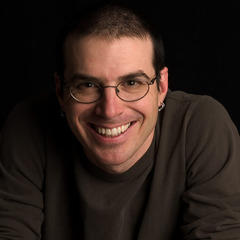
Paolo Bacigalupi
Paolo Bacigalupi

Paolo Bacigalupi is an American science fiction writer known for his profound insights into environmental issues and his unique imagination of the future world. His works often explore themes of climate change, resource depletion, and the relationship between humans and nature. more

You May Also Like

“In one sense the cause of suicide is simple: overwhelming pain. This overwhelming pain, however, is the aggregate of thousands of pains. Any hurt that we have ever suffered, if it remains consciously or unconsciously lodged within us, can contribute to suicide. This may range from being an incest victim 50 years ago, to losing a job 10 years ago, to having a car battery stolen yesterday. The pains come from everywhere: ill-health, family, peers, school, work, community, caregivers. For each suicide there was a finite point at which this aggregate became too much. Although "The straw that broke the back," is frequently an accurate metaphor, no one pain is ever the cause of suicide. Suicidal pain is decomposable into thousands of pains, and nearly all of these pains are decomposable into painful constituents. Sexual abuse, job loss, and personal theft each have numerous painful constituents. The search for the single cause is a fundamentally wrongheaded approach to the understanding and prevention of suicide. It is inaccurate to say simply that pain causes suicide, since a level of pain that is lethal for one person may not be lethal for someone with greater resources. Similarly, deficiency in resources cannot be regarded as the cause of suicide, since two people may have equal resources and unequal pain. Our resources may also come from everywhere; even such trivial distractions as going to a movie can contribute to coping with suicidal pain.”

“And what about this. When we’re thrust into it, we anxious folk can often deal with the present really rather well. It’s worth remembering this. As real, present-moment disasters occur, we invariably cope, and often better than others. The day after no sleep, I get on with things. At funerals, or when I’ve fallen off my bike, or the time I had to attend to my grandmother when she stopped breathing, or whenever a major work disaster plays out leaving my team in a panic, I’m a picture of calm. Dad used to call me “the tower of strength” in such moments. I also don’t tend to have a lot of bog-standard fear (as opposed to anxiety). In fact, I relish real, present-moment fear and actively seek it out.”

“Anyhow, tired to the point of collapse was a default state. The expectation was simply that, through some combination of strong coffee and Lembas Bread, one pushed through until all deadlines were met and one could collapse into an indefinite coma without consequence. Alice had spent most of graduate school in this state, and it was not so bad.”

“Many of us are in a place where we know the bottom is falling out, but we can't put a name on it. We don't know how much we can take before the bottom falls out, so we just find coping mechanisms. Instead of speaking clearly about my emotions, what I found was a collection of coping mechanisms to numb myself from the need to express what I was feeling. This is where I found myself in the middle of this cycle of depression. Most of us don't know that we're coping. We can't recognize that our obsessive behaviors are actually addictions that empower us to avoid our deeper issues. Then we ignore how serious they are to justify ourselves. We make it through our hardships by any means necessary.”