Quotessence
Home / Quotes / Quote by Victor Hugo

Quote by Victor Hugo

Work

Les Misérables

Victor Hugo's 'Les Misérables' is an epic narrative that delves into the lives of various characters, including Jean Valjean, a former convict seeking redemption, and Fantine, a woman struggling in poverty. The story is rich in historical detail and moral complexity, offering a profound examination of society's flaws and the resilience of the human spirit. more
Author

Victor Hugo
Victor Hugo

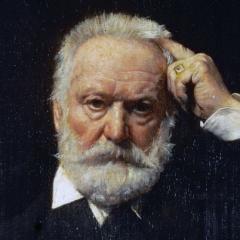
Victor Hugo, a French romantic poet, novelist, and playwright, was born on February 26, 1802, and died on May 22, 1885. He is considered one of the greatest writers in French literary history, known for his profound humanistic concerns and rich imagination. more

You May Also Like

“Imagine a skilled botanist accompanied by someone like myself who is largely ignorant of botany taking part in a field trip into the Australian bush, with the objective of collecting observable facts about the native flora. It is undoubtedly the case that the botanist will be capable of collecting facts that are far more numerous and discerning than those I am able to observe and formulate, and the reason is clear. The botanist has a more elaborate conceptual scheme to exploit than myself, and that is because he or she knows more botany than I do. A knowledge of botany is a prerequisite for the formulation of the observation statements that might constitute its factual basis. Thus, the recording of observable facts requires more than the reception of the stimuli, in the form of light rays, that impinge on the eye. It requires the knowledge of the appropriate conceptual scheme and how to apply it.”

“Além disso, somos individualmente o produto de forças que não escolhemos e que mal compreendemos. Não escolhemos nossos pais nem a época em que nascemos, e assim recebemos uma determinada herança genética sobre a qual não temos controle algum, mas que, até um ponto significante, tem controle sobre nós. Essa herança determina, em parte, as doenças a que somos suscetíveis e os limites de nossas capacidades intelectuais, atléticas e morais. Talvez não totalmente, mas o suficiente. Nascemos num ambiente que vai preencher o pouco espaço que sobra do que foi determinado geneticamente, um ambiente que, novamente, não escolhemos e sobre o qual mal temos controle, pelo menos durante nossos anos de formação. A maneira como somos e aquilo que fazemos são resultados de nossos genes e nosso ambiente, que, juntos, exercem em nós uma influência que compreendemos de forma bastante nebulosa. Era isso que os filósofos existencialistas, com Jean-Paul Sartre, por exemplo, queriam dizer quando afirmavam que somos jogados no mundo.”

“What I'd like to read is a scientific review, by a scientific psychologist--if any exists--of 'A Scientific Man and the Bible'. By what route do otherwise sane men come to believe such palpable nonsense? How is it possible for a human brain to be divided into two insulated halves, one functioning normally, naturally and even brilliantly, and the other capable only of such ghastly balderdash which issues from the minds of Baptist evangelists? Such balderdash takes various forms, but it is at its worst when it is religious. Why should this be so? What is there in religion that completely flabbergasts the wits of those who believe in it? I see no logical necessity for that flabbergasting. Religion, after all, is nothing but an hypothesis framed to account for what is evidentially unaccounted for. In other fields such hypotheses are common, and yet they do no apparent damage to those who incline to them. But in the religious field they quickly rush the believer to the intellectual Bad Lands. He not only becomes anaesthetic to objective fact; he becomes a violent enemy of objective fact. It annoys and irritates him. He sweeps it away as something somehow evil...”