Quotessence
Home / Quotes / Quote by Elizabeth Gaskell

Quote by Elizabeth Gaskell

Work

North and South

Elizabeth Gaskell's classic novel delves into the lives of Margaret Hale and her family as they relocate from the North to the industrialized South of England. The story examines themes of social reform, class struggle, and personal growth amidst the backdrop of the burgeoning industrial revolution. more
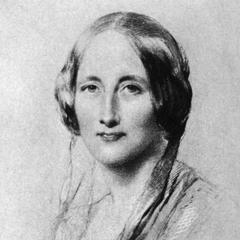
Author

Elizabeth Gaskell
Elizabeth Gaskell

Elizabeth Gaskell was a British novelist born on September 29, 1810, in Manchester. Her works primarily depicted the social life of Britain during the Industrial Revolution, focusing on the lives of the working class. Gaskell is renowned for her delicate emotional portrayal and profound social insight, with notable works including 'Mary Barton' and 'North and South'. more

You May Also Like

“It is divine simplicity that enables Christians to meaningfully confess that God is most absolute in his existence and attributes. adherents to this doctrine reason that of God were composed of parts in any sense he would be dependent upon those parts for his very being and thus the parts would be ontologically prior to him. If this were the case he would not be most absolute, that is, wholly self-sufficient and the first principle of all other things. Thus, only if God is "without parts" can he be "most absolute." God without parts, pg. 9-10”

“This ground-plan, conceived by a great architect, exhibits a fundamental metaphysical dualism in Plato’s thought. [...] In politics, it is the opposition between the one collective, the state, which may attain perfection and autarchy, and the great mass of the people—the many individuals, the particular men who must remain imperfect and dependent, and whose particularity is to be suppressed for the sake of the unity of the state (see the next chapter). And this whole dualist philosophy, I believe, originated from the urgent wish to explain the contrast between the vision of an ideal society, and the hateful actual state of affairs in the social field—the contrast between a stable society, and a society in the process of revolution.”

“Over the years more than one friend or acquaintance had asked Tricia why she was so enamored of the mystery genre. How could she actually enjoy stories that celebrated violent death? They had it all wrong. The books didn't celebrate death, but triumph for justice. Too often real-life villains got away with murder, but in fiction, justice was usually assured. Sometimes she wished life better imitated art.”

“Happiness is an undercurrent of sensitivity and leads a surreptitious life: it is an internal eventuality. We can feel it in stillness and it stands the test of time. Joy is an eruption of cheerful moments and we want to express it: it is an external eventuality. We might shout it out, as it conveys a dynamic of fleeting instants. Joy gives voice to “en-joy-ment”. ("The grass was greener over there")”

“I wanna know something,” Lexi said. “In mystery books, clues come flying out of nowhere in every single chapter. Why is ours so slow?” I thought a second. “Books aren't like real life, I guess. Mom says we read books to escape. Like when we read Sally-Anne books, we go back to when everyone wore saddle shoes and poodle skirts and went to soda shops.”

“Why did I lie? I hadn’t planned on lying. When that stranger handed me the journal and looked at me with his big, desperate eyes, I wasn’t planning anything. I intended to give it to whoever asked for it. But when I was standing there in front of Officer Keating and his suspicious-looking partner, I didn’t. It wasn’t some elaborate plan or a scheme. I just didn’t open my mouth. It was like my mind decided without me that I should hang on to it.”