Quotessence
Home / Quotes / Quote by Paul Lafargue

Quote by Paul Lafargue

“The militant socialists, following the example of the encyclopedists of the eighteenth century, have to make a merciless criticism of the economic, political, historical, philosophical, moral and religious ideas of the capitalist class in order to prepare in all spheres of thought the triumph of the new ideology which the proletariat introduces into the world.”

Quote by Paul Lafargue

Work

The Right To Be Lazy

This book delves into the cultural, psychological, and philosophical aspects of laziness, examining its impact on productivity, creativity, and personal fulfillment. more

Author

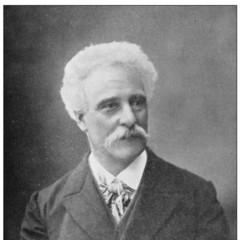
Paul Lafargue
Paul Lafargue

Paul Lafargue, born on January 15, 1842, was a prominent French journalist. He played a significant role in the European social movements of the late 19th and early 20th centuries, particularly in the labor movement and socialist movement. Lafargue was known for his incisive pen and profound social analysis, and his works had a profound impact on later socialist and Marxist thinkers. more

You May Also Like

“The Marxist critique of the postulates of bourgeois democracy is in fact based on the definition of the class character of modern society. It demonstrates the theoretical inconsistency and the practical deception of a system which pretends to reconcile political equality with the division of society into social classes determined by the nature of the mode of production.”

“Always remain calm and unruffled, no matter what happens. If your coachman has a heart attack, your carriage crashes, your hat blows off and your drawers fall down, just say: 'Goodness me, such excitement,' and get in a hansom. Remember that the country is better than the town, idleness is superior to work, old is preferable to new and rank is more important than money. Know a little about everything, but never be an expert.”

“The real contradiction between Marx's scientific socialism and all bourgeois philosophy and sciences consists entirely in the fact that scientific socialism is the theoretical expression of a revolutionary process, which will end with the total abolition of these bourgeois philosophies and sciences, together with the abolition of the material relations that find their ideological expression in them.”

“Braid Scots is still in most Scottish communities (in one or other Anglicised modification) the speech of bed and board and street and plough, the speech of emotional ecstasy and emotional stress. But it is not genteel. It is to the bourgeoisie of Scotland coarse and low and common and loutish, a matter for laughter, well enough for hinds and the like, but for the genteel to be quoted in vocal inverted commas... But for the truly Scots writer it remains a real and haunting thing, even while he tries his best to forget its existence and to write as a good Englishman.”

“Il n'y a pas deux sortes de mouvement révolutionnaire, de nature différente, l'un d'espèce bourgeoise et l'autre d'essence prolétarienne; la Révolution tout court, cette vieille taupe, comme disait Marx, poursuit son bonhomme de chemin, d'abord à travers une même crise révolutionnaire, et ensuite de crise révolutionnaire en crise révolutionnaire. Même quand elle paraît assoupie, elle creuse encore. Une crise révolutionnaire n'est que la continuation directe de la crise précédente. Il n'est pas possible de placer quelque part un poteau frontière et d'y inscrire: REVOLUTION BOURGEOISE ! DEFENSE D'ALLER PLUS LOIN !”

“It would be a much happier situation if Queen Elizabeth were functioning as an opiate to forestall the coming socialist revolution. The truth is many degrees more dismal. She and her pyramid of lackeys constitute a dead-weight repressing - to so speak - the revolution before last in Britain. Their ideological force is built upon a now ancient loss of radical nerve by the bourgeoisie itself - upon the inner capitulation of last century, mosts strikingly expressed for us by the virtual disappearance of middle-class republicanism in Victoria's reign. The 'magic' of our monarchs is the sweet odour of decay arising from this mountainous dungheap of unfinished bourgeois business.”

“If the crises demonstrate the incapacity of the bourgeoisie for managing any longer modern productive forces, the transformation of the great establishments for production and distribution into joint-stock companies, trusts, and State property, show how unnecessary the bourgeoisie are for that purpose. All the social functions of the capitalist has no further social function than that of pocketing dividends, tearing off coupons, and gambling on the Stock Exchange, where the different capitalists despoil one another of their capital. At first, the capitalistic mode of production forces out the workers. Now, it forces out the capitalists, and reduces them, just as it reduced the workers, to the ranks of the surplus-population, although not immediately into those of the industrial reserve army.”