Quotessence
Home / Quotes / Quote by Jeffrey Moussaieff Masson

Quote by Jeffrey Moussaieff Masson

“What still frightens me is that society is fickle. There was a time when nobody believed in the reality of abuse, and now it seems that just about everyone does, and yet, I realize we could still move backwards. It is important to stay firm: It took many years for the truth about sexual abuse to come to the fore. It is still fragile, and must be constantly nourished by research, reflection and above all, listening with empathy and an open heart to the stories of people who have been the victims of child abuse in its many forms and are now survivors. They have much to teach.”

Quote by Jeffrey Moussaieff Masson

Author
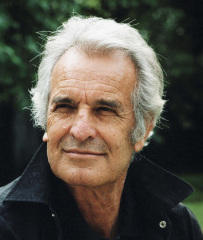
Jeffrey Moussaieff Masson

Jeffrey Moussaieff Masson is a renowned author born on March 28, 1941. His works span across various fields including animal psychology, child psychology, and literary criticism. Masson is known for his in-depth research in animal psychology, particularly in the study of wolves and cats. His books 'The Call of the Wild: The Wisdom of the Wolves' and 'The Enigma of the Cat: A Feline Reflection' have been highly appreciated by readers. more

You May Also Like

“It is a political fight between a group of well-financed, well-organized people whose freedom, livelihood, finances, reputations, or liberty is being threatened by disclosures of child sexual abuse and--on the other hand--a group of well-meaning, ill-organized, underfinanced, and often terribly naive academics who expect fair play.”

“Women involved in out-patient treatment for substance abuse were interviewed to examine their recollections of childhood sexual abuse. Overall, 54% of the 105 women reported a history of childhood sexual abuse. Of these, the majority (81 %) remembered all or part of the abuse their whole lives; 19% reported they forgot the abuse for a period of time, and later the memory returned. Women who remembered the abuse their whole lives reported a clearer memory, with a more detailed picture. They also reported greater intensity of feelings at the time the abuse happened.”

“Despite its popularity amongst critical criminologists, the empirical basis of the moral panic account of sexual abuse has been shown to be substantially untrue. There is no evidence of an increase in reckless or baseless sexual abuse prosecutions during the 1990s, which was supposedly the height of the “moral panic” (Cross, Walsh, Simone, & Jones, 2003).”

“In the past, child abuse has been a problem without a solution, with distressing case after case accumulating in public awareness without apparent end. At least the ‘false memory’ narrative offered a potential, if illusory and damaging, resolution to this intolerable situation, in the (re)suppression of victim complaints.”

“Many survivors have such profound deficiencies in self-protection that they can barely imagine themselves in a position of agency or choice. The idea of saying no to the emotional demands of a parent, spouse, lover or authority figure may be practically inconceivable. Thus, it is not uncommon to find adult survivors who continue to minister to the needs of those who once abused them and who continue to permit major intrusions without boundaries or limits. Adult survivors may nurse their abusers in illness, defend them in adversity, and even, in extreme cases, continue to submit to their sexual demands.”

“To forget and to repress would be a good solution if there were no more to it than that. But repressed pain blocks emotional life and leads to physical symptoms. And the worst thing is that although the feelings of the abused child have been silenced at the point of origin, that is, in the presence of those who caused the pain, they find their voice when the battered child has children of his own.”

“If I, as a child, claim that something awful has happened—that someone has done something terrible to me—and everyone around me acts as if nothing is the matter, then either I must be crazy, or all of them are. And when you’re a kid and your life depends on all these people, there is no choice: of course, I must be crazy.”