Quotessence
Home / Quotes / Quote by Friedrich Nietzsche

Quote by Friedrich Nietzsche

“It was suffering and incapacity that created all afterworlds - this, and that brief madness of bliss which is experienced only by those who suffer deeply. Weariness that wants to reach the ultimate with one leap, with one fatal leap, a poor ignorant weariness that does not want to want any more: this created all gods and afterworlds.”

Quote by Friedrich Nietzsche

Work

Thus Spoke Zarathustra

Thus Spoke Zarathustra is a philosophical novel that delves into profound themes such as the will to power, the eternal recurrence, and the concept of the Übermensch. The book is a collection of aphorisms and dialogues narrated by the character Zarathustra, who seeks to inspire others to embrace life and strive for self-overcoming. Written by the German philosopher Friedrich Nietzsche, the work is considered a cornerstone of modern Western philosophy. more

Author
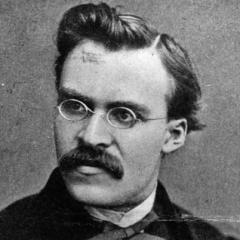
Friedrich Nietzsche
Friedrich Nietzsche

Friedrich Nietzsche was a German philosopher, cultural critic, poet, and writer whose works have had a profound impact on subsequent philosophy, literature, and thought. His ideas revolve around concepts such as the 'will to power', the 'Übermensch', and the 'eternal recurrence'. more

You May Also Like

“Do you know what it is?' [Toby] said thoughtfully. 'It's that they haven't had anything really awful happen to them. No wonder they seem so superficial and unfeeling.' It was certainly an interesting theory, ... [but] surely one didn't need to have suffered in order to possess empathy for those who had? All it required was a bit of imagination and a well-stocked library.”

“After working for more than twenty-five years, I understood that I don’t do what I do because it’s required or necessary or important. I don’t do it because I have no choice. I do what I do because I’m broken, too. My years of struggling against inequality, abusive power, poverty, oppression, and injustice had finally revealed something to me about myself. Being close to suffering, death, executions, and cruel punishments didn’t just illuminate the brokenness of others; in a moment of anguish and heartbreak, it also exposed my own brokenness. You can’t effectively fight abusive power, poverty, inequality, illness, oppression, or injustice and not be broken by it. We are all broken by something. We have all hurt someone and have been hurt. We all share the condition of brokenness even if our brokenness is not equivalent.”

“E qui bisogna menzionare anche quanto scritto da Walter Rathenau nelle sue Briefe an eine Liebende: “Le ho detto ciò che penso della morte volontaria, e le dirò ciò su cui non mi sono mai pronunciato: ma poi non voglio più né parlarne né sentirne parlare. […] Ritengo questa fine un'ingiustizia metafisica, un'ingiustizia nei confronti dello spirito. Una mancanza di fiducia nella Bontà eterna, una rivolta contro l'intimo dovere di obbedire alla legge universale. Chi si uccide, uccide e non solo se stesso, ma anche un altro essere. Perché l'uomo non è un'isola. Questa morte, ne sono profondamente convinto, non è una liberazione come quella naturale e incolpevole. Ogni violenza nel mondo ha delle conseguenze, come ogni azione. Esistiamo per prendere su di noi un po' del dolore del mondo offrendo il nostro petto, non per moltiplicarlo facendo a nostra volta violenza. So che lei soffre e io soffro con Lei. Sia indulgente con questo dolore, ed esso sarà indulgente con lei. I desideri e la collera lo accrescono; con la dolcezza esso si addormenta come un bambino. Lei è cosi ricca di amore, lo rivolga tutto agli esseri umani, ai bambini, alle cose e alle sue sofferenze. Non si chiuda nella solitudine, non voglia essere sola. Superi l'ostacolo, lo guardi negli occhi: non è nulla”.”