Quotessence
Home / Quotes / Quote by Philip K. Dick

Quote by Philip K. Dick

“Където и да отидеш - заговори старецът, - от теб винаги ще искат да твориш зло. Такъв е основният принцип на живота - насилието спрямо собствената личност. Всяко живо същество в някой момент от живота си се изправя пред този избор.Това е неизбежната сянка, фаталната клопка на сътворението, проклятието, което се храни от всичко живо във вселената.”

Quote by Philip K. Dick

Work

Do Androids Dream of Electric Sheep?

Set in a dystopian future, the story follows Rick Deckard, a bounty hunter tasked with terminating rogue androids. The narrative delves into themes of identity, consciousness, and the human condition. more

Author
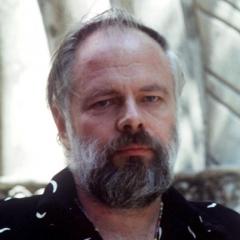
Philip K. Dick
Philip K. Dick

Philip K. Dick was an American science fiction novelist known for his unique philosophical thinking and profound futuristic imagination. His works often explore the boundaries between individuals and society, reality and illusion, and have had a profound impact on science fiction literature. more

You May Also Like

“Had God kept from being made those who through His goodness were to have existence, but who by their own choice were to become evil, then evil would have prevailed over the goodness of God. Thus, all things which God makes He makes good, but each one becomes good or evil by his own choice. So, even if the Lord did say: 'It were better for him if that man had not been born,' He did not say so in deprecation of His own creature, but in deprecation of that creature's choice and rashness.”

“As a trauma-focused therapist, experience has taught me that effective trauma therapy usually begins with building safety and stability, because deeper processing is most helpful when a person has enough internal and external support. Sometimes that means working together for a year or more before you see clients consistently practicing those skills...and that’s really okay. In fact, that kind of steady engagement is meaningful progress.”

“Richard Dawkins regards faith as an evil to be eliminated; he takes all religious faith to be blind faith. (Dawkins says) ‘Scientific belief is based on publicly checkable evidence, religious faith not only lacks evidence, its independence from evidence is its joy, shouted from the rooftops.’ However, taking Dawkins own advice we ask: where is the evidence that religious faith is not based on evidence? Mainstream Christianity will insist that faith and evidence are inseparable. Indeed, faith is a response to evidence, not a rejoicing in the absence of evidence. The apostle Paul says what many pioneers of modern science believed, that nature itself is part of the evidence for the existence of God ,‘ Since the creation of the world, God’s invisible qualities- his eternal power and divine nature – have been clearly seen, being understood from what has been made. So that men are without an excuse.’ Dawkins’ definition of faith turns out to be the direct opposite of the biblical one. Curious that he does not seem to be aware of the discrepancy.”

“I have a very simple morality: not to do good or evil to anyone. Not to do evil, because it seems only fair that others enjoy the same right I demand for myself – not to be disturbed – and also because I think that the world doesn’t need more than the natural evils it already has. All of us in this world are living on board a ship that is sailing from one unknown port to another, and we should treat each other with a traveller’s cordiality. Not to do good, because I don’t know what good is, nor even if I do it when I think I do. How do I know what evils I generate if I give a beggar money? How do I know what evils I produce if I teach or instruct? Not knowing, I refrain. And besides, I think that to help or clarify is, in a certain way, to commit the evil of interfering in the lives of others. Kindness depends on a whim of our mood, and we have no right to make others the victims of our whims, however humane or kind-hearted they may be. Good deeds are impositions; that’s why I categorically abhor them.”