Quotessence
Home / Quotes / Quote by George Orwell

Quote by George Orwell

Work

Animal Farm

George Orwell's novel depicts the rise and fall of a group of animals who overthrow their human masters and establish their own society, only to find that power corrupts and the original ideals are lost. more
Author

George Orwell
George Orwell

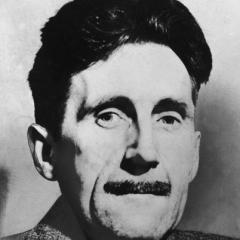
George Orwell, born Eric Arthur Blair, was a British novelist and political critic. Known for his sharp social criticism and profound insights into totalitarianism, Orwell is best remembered for his novels '1984' and 'Animal Farm', which remain influential to this day. more

You May Also Like

“Being Scared-off by Evil Lastly, we deny the presence of evil because we are terrified by the horrendously hurtful, cruel, and bloody kinds of evil people tell us about—if we are willing to listen. This was poignantly brought home during an interdisciplinary case conference involving a resident who was counseling for the first time a woman who had been sexually abused. As we worked with him, it became clear that he was resisting entering what he called the 'psychic cave" of her sealed—off experience from which she was shouting for assistance. Because of his resistance, he was not providing her the support and guidance she so desperately needed, and he was not facilitating her working through the abuse and hurt that were continuing to impact her life. As he was confronted about this at one point in the conference, he stated tearfully: "I'm afraid if I help her move into her memories. I will have to go with her, and if I go with her, my view of the world as a basically good and safe place will be shattered. I'm not sure I can handle that for myself, or be able to think about the fact that my wife and kids may be more vulnerable living in this world than I can be comfortable believing" (Means 1995, 299).”

“God, in the dream, illumined the animal's brutishness and he understood the reasons, and accepted his destiny; but when he awoke there was only a dark resignation, a valiant ignorance, for the machinery of the world is far too complex for the simplicity of a wild beast. Years later, Dante was dying in Ravenna, as unjustified and as lonely as any other man. In a dream, God declared to him the secret purpose of his life and work; Dante, in wonderment, knew at last who and what he was and blessed the bitterness of his life....upon waking, he felt that he had received and lost an infinite thing, something that he would not be able to recuperate or even glimpse, for the machinery of the world is much too complex for the simplicity of a man.”

“To paraphrase Hannah Arendt—as portrayed in the recently released movie of the same name—the Nazi war criminal’s actions stemmed from her well-known phrase “banality of evil,” not as a result of mental illness but as a result of a lack of thinking. Their greatest error was delegating the process of thinking and decision-making to their higher ups. In Rudolf Höss’s case, this would have been his superiors, particularly Heinrich Himmler. To many this conclusion is troubling, for it suggests that if everyday, “normal,” sane men and women are capable of evil, then the atrocities perpetrated during the Holocaust and other genocides could be repeated today and into the future. Yet, this is exactly the lesson we must learn from the war criminals at Nuremberg. We must be ever wary of those who do not take responsibility for their actions. And we ourselves must be extra vigilant, particularly in this day of accelerated technological power, heightened state surveillance, and global corporate reach, that we do not delegate our thinking to others.”