Quotessence
Home / Quotes / Quote by Marcel Proust

Quote by Marcel Proust

Work

Author

Marcel Proust
Marcel Proust

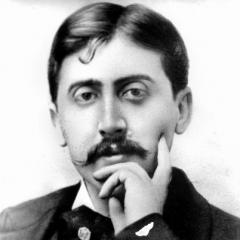
Marcel Proust was a French novelist renowned for his magnum opus, 'In Search of Lost Time'. This novel is considered a classic of 20th-century literature, known for its intricate psychological portrayals and profound exploration of memory. more

You May Also Like

“Takamasa Saegusa: 'Seigen, a mere member of the Toudouza, had the effrontery to sully the sacred dueling ground. For that reason, our lord had already decided to subject him to tu-uchi before long. Cut off his head immediately, and stick it on a pike!' Gennosuke could hardly believe his ears. Such an insult to Irako Seigen was unwarranted. It was pride. For Gennosuke, Irako Seigen was pride itself. Takamasa Saegusa: 'Fujiki Gennosuke! It is the way of the samurai to take the head of the defeated enemy on the battleground. Do not hesitate! If you are a samurai, you must carry out the duty of a samurai!' Samurai... Saegusa, Lord of Izu, continued shouting, but Gennosuke did not attend. That word 'samurai' alone reverberated through his body. If one aims at the juncture between the base of the skull and the spine, decapitation is not that difficult, but Gennosuke could muster no more strength than a baby. He grew pale and trembled with the strain. He could only hack with his sword as if he were sawing wood. He felt nauseated, as if his own cells one after another were being annihilated. But this... Lord Tokugawa Tadanaga: 'I approve.' Takamasa Saegusa: 'Fujiki Gennosuke, for this splendid action you have received words of thanks from our lord. As a sign of his exceptional approval, you shall be given employment at Sunpu Castle. This great debt will by no means be forgotten. From this day forward you must offer your life to our lord!' Prostrating himself, Gennosuke vomited.”

“You had to have these peasant leaders quickly in this sort of war and a real peasant leader might be a little too much like Pablo. You couldn't wait for the real Peasant Leader to arrive and he might have too many peasant characteristics when he did. So you had to manifacture one. At that, from what he had seen of Campesino, with his black beard, his thick negroid lips, and his feverish, staring eyes, he thought he might give almost as much trouble as a real peasant leader. The last time he had seen him he seemed to have gotten to believe his own publicity and think he was a peasant.”

“She observed the dumb-show by which her neighbour was expressing her passion for music, but she refrained from copying it. This was not to say that, for once that she had consented to spend a few minutes in Mme. de Saint-Euverte's house, the Princesse des Laumes would not have wished (so that the act of politeness to her hostess which she had performed by coming might, so to speak, 'count double') to shew herself as friendly and obliging as possible. But she had a natural horror of what she called 'exaggerating,' and always made a point of letting people see that she 'simply must not' indulge in any display of emotion that was not in keeping with the tone of the circle in which she moved, although such displays never failed to make an impression upon her, by virtue of that spirit of imitation, akin to timidity, which is developed in the most self-confident persons, by contact with an unfamiliar environment, even though it be inferior to their own. She began to ask herself whether these gesticulations might not, perhaps, be a necessary concomitant of the piece of music that was being played, a piece which, it might be, was in a different category from all the music that she had ever heard before; and whether to abstain from them was not a sign of her own inability to understand the music, and of discourtesy towards the lady of the house; with the result that, in order to express by a compromise both of her contradictory inclinations in turn, at one moment she would merely straighten her shoulder-straps or feel in her golden hair for the little balls of coral or of pink enamel, frosted with tiny diamonds, which formed its simple but effective ornament, studying, with a cold interest, her impassioned neighbour, while at another she would beat time for a few bars with her fan, but, so as not to forfeit her independence, she would beat a different time from the pianist's.”

“It is common knowledge that a well-bred man should as far as possible have no face. That is to say, not so much be completely without one, but rather, should have a face and yet at the same time appear faceless. It should not stand out, just as a shirt made by a good tailor does not stand out. Needless to say, the face of a well-bred man should be exactly like that of other (well-bred) men and of course in no circumstances whatsoever should it alter. Naturally houses, trees, streets, sky and everything else in the world must satisfy the same conditions to have honor of being known as respectable and well-bred.”

“Actual class struggles apart, one of the aesthetic ways you could prove that there was a class system in America was by cogitating on the word, or acronym, 'WASP.' First minted by E. Digby Baltzell in his book The Protestant Establishment , the term stood for 'White Anglo-Saxon Protestant.' Except that, as I never grew tired of pointing out, the 'W' was something of a redundancy (there being by definition no BASPs or JASPs for anyone to be confused with, or confused about). 'ASP,' on the other hand, lacked some of the all-important tone. There being so relatively few Anglo-Saxon Catholics in the United States, the 'S' [sic] was arguably surplus to requirements as well. But then the acronym AS would scarcely do, either. And it would raise an additional difficulty. If 'Anglo-Saxon' descent was the qualifying thing, which surely it was, then why were George Wallace and Jerry Falwell not WASPs? After all, they were not merely white and Anglo-Saxon and Protestant, but very emphatic about all three things. Whereas a man like William F. Buckley, say, despite being a white Irish Catholic, radiated the very sort of demeanor for which the word WASP had been coined to begin with. So, for the matter of that, did the dapper gentleman from Richmond, Virginia, Tom Wolfe. Could it be, then, that WASP was really a term of class rather than ethnicity? Q.E.D.”

“We are the same, you and I. Whether samurai or night-hawk, the Suruga Dainagon or member of the Toudouza, it makes no difference. My sword is the proof...." These words, wrung from the very depths of his soul, surprised even Seigen himself. He had not risen in the world merely in order to satisfy his ambition, but in order to repudiate hierarchical society and the fixed class system.”

“What does it mean to be cultured? Who is the cultured person? The cultured individual is not defined nor determined by status in society nor by wealth; but the cultured individual is determined and defined by his or her sense for the art of life. And what is the art of life? The art of life is the reflection of the mind and the soul upon the world, upon other people, upon the respect and understanding of other people and upon the things that are in this world and beyond. There is a joy that is always sought in beautiful things. Being cultured is being conscious, reflective, understanding, feeling, aware. Knowing how to feel, to listen, to understand. A desire to find or to create joy in many things— that is the art of life. And these things define a cultured person.”