Quotessence
Home / Quotes / Quote by Erin Merryn

Quote by Erin Merryn

Work

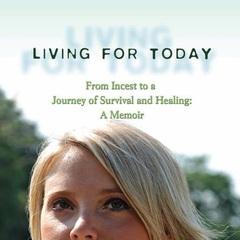
Living for Today: From Incest and Molestation to Fearlessness and Forgiveness

This memoir offers a deeply personal account of the author's struggle with the aftermath of incest and molestation. It chronicles the author's path to healing and self-empowerment, highlighting the challenges faced and the lessons learned along the way. more

Author
Erin Merryn
Erin Merryn

Erin Merryn is an active social activist, born in 1985. Her life and professional background are not publicly detailed, but her efforts in social welfare and advocacy have gained widespread attention. more

You May Also Like

“Without realizing it, I fought to keep my two worlds separated. Without ever knowing why, I made sure, whenever possible, that nothing passed between the compartmentalization I had created between the day child and the night child.” (2003, p. 26)”

“interview from Ross E. Cheit about The Witch-Hunt Narrative: Politics, Psychology, and the Sexual Abuse of Children (Oxford University Press, February 2014). In the foreword to your book you mention a book titled Satan’s Silence was the catalyst for your research. Tell us about that. Cheit: Debbie Nathan and Michael Snedeker solidified the witch-hunt narrative in their 1995 book, Satan’s Silence: Ritual Abuse and the Making of a Modern American Witch Hunt, which included some of these cases. I was initially skeptical of the book’s argument for personal reasons. It seemed implausible to me that we had overreacted to child abuse because everything in my own personal history said we hadn’t. When I read the book closely, my skepticism increased. Satan’s Silence has been widely reviewed as meticulously researched. As someone with legal training, I looked for how many citations referred to the trial transcripts. The answer was almost none. Readers were also persuaded by long list of [presumably innocent] convicted sex offenders to whom they dedicated the book. If I’m dedicating a book to fifty-four people, all of whom I think have been falsely convicted, I’m going to mention every one of these cases somewhere in the book. Most weren’t mentioned at all beyond that dedication. The witch-hunt narrative is so sparsely documented that it’s shocking.”

“I am inundated with feeling. I feel like a pinball machine on tilt. All the buzzers are ringing, lights are flashing, and I am about to fry my circuits. Nothing is coming in,and nothing is going out. I feel electrified. The wires ignited, sparked, and fizzled. I want it all to slow down. I go right to the water to douse my flame. I immerse myself in the hot water. I want to wash the smells off my body. I can smell Isabella's hair, her breath, and her child vaginal scent. My hair smells of smoke,and I want to wash Francis off me.”

“While my sister and I were reminded we did not cause this pain, it was knowing that because we broke our silence about what had been done to us, our parents were hurting. That knowledge was hard on us.”

“An undergraduate researching the "witch hunt" cases asked for evidence that there had been more than one hundred cases, noting that the major lists of such cases added up to about fifty. There was no reply that provided documentation to support the claim.[34] The members of the list were generally strong proponents of the witch-hunt narrative. They knew the answer to the question “Is there a child sex abuse witch hunt?” These “witch hunters,” as those on this list soon came to describe themselves, were increasingly activists who used the internet to exchange information and ideas. Jonathan Harris may have done more than anyone else to disseminate the witch-hunt narrative in the mid 1990s and beyond.[35]”

“Denial is commonly found among persons with dissociative disorders. My favorite quotation from such a client is, "We are not multiple, we made it all up." I have heard this from several different clients. When I hear it, I politely inquire, "And who is we?”

“The healing process is best described as a spiral. Survivors go through the stages once, sometimes many times; sometimes in one order, sometimes in another. Each time they hit a stage again, they move up the spiral: they can integrate new information and a broader range of feelings, utilize more resources, take better care of themselves, and make deeper changes.” Allies in Healing by Laura Davis”