Quotessence
Home / Quotes / Quote by Aberjhani

Quote by Aberjhani

Work

Author

Aberjhani
Aberjhani

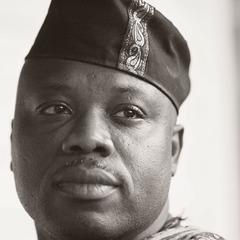
Aberjhani, born on July 8, 1957, is an accomplished columnist whose work spans a wide range of topics including culture, history, and literature. Renowned for his profound insights and unique writing style, Aberjhani's articles often provoke deep thought among readers. more

You May Also Like

“Discourse and critical thinking are essential tools when it comes to securing progress in a democratic society. But in the end, unity and engaged participation are what make it happen.”

“The acknowledgement of a single possibility can change everything.”

“People are far more revealing by the questions they ask than the answer they give. To get closer to understanding what is really on someone’s mind, answer their questions briefly so they ask follow-up questions. By their third question you’ll get a glimpse of their biggest fear or desire on the topic.”

“As we encounter each other, we see our diversity — of background, race, ethnicity, belief – and how we handle that diversity will have much to say about whether we will in the end be able to rise successfully to the great challenges we face today.”

“One of the most wonderful things about Pride and Prejudice is the variety of voices it embodies. There are so many different forms of dialogue: between several people, between two people, internal dialogue and dialogue through letters. All tensions are created and resolved through dialogue. Austen's ability to create such multivocality, such diverse voices and intonations in relation and in confrontation within a cohesive structure, is one of the best examples of the democratic aspect of the novel. In Austen's novels, there are spaces for oppositions that do not need to eliminate each other in order to exist. There is also space - not just space but a necessity - for self-reflection and self-criticism. Such reflection is the cause of change. We needed no message, no outright call for plurality, to prove our point. All we needed was to reach and appreciate the cacophony of voices to understand its democratic imperative. There was where Austen's danger lay.”

“I quickly realized that there are two main kinds of diversity—demographic and moral. ... Once you make this distinction, you see that nobody can coherently even want moral diversity. If you are pro-choice on the issue of abortion, would you prefer that there be a wide variety of opinions and no dominant one? Or would you prefer that everyone agree with you and the laws of the land reflect that agreement? If you prefer diversity on an issue, the issue is not a moral issue for you; it is a matter of personal taste.”

“Laurie piped up again. 'At State, everybody calls diversity dispersity. What happens is, everybody has their own clubs, their own signs, their own sections where they all sit in the dining hall--all the African Americans are over there? . . . and all the Asians sit over't these other tables? -- except for the Koreans? -- because they don't get along with the Japanese so they sit way over there? Everybody's dispersed into their own little groups -- and everybody's told to distrust everybody else? Everybody's told that everybody else is trying to screw them over--oops!' -- Laurie pulled a face and put her fingertips over her lips -- 'I'm sorry!' She rolled eyes and smiled. 'Anyway, the idea is, every other group is like prejudiced against your group, and no matter what they say, they're only out to take advantage of you, and you should have nothing to do with them -- unless your white, in which case all the others are not prejudiced against you, they're like totally right, because you really are a racist and everything, even if you don't know it? Everybody ends up dispersed into their own like turtle shells, suspicious of everybody else and being careful not to fraternize with them. Is it like that at Dupont?”