Quotessence
Home / Quotes / Quote by Elizabeth Strout

Quote by Elizabeth Strout

Work

My Name Is Lucy Barton

Browse quotes and source details for this work. more

Author
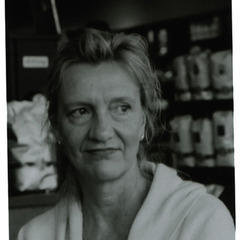
Elizabeth Strout
Elizabeth Strout

Elizabeth Strout (born January 6, 1956) is an acclaimed American author known for her nuanced portrayals of small-town life and human complexity. Born in Portland, Maine, she grew up in a literary family. Strout won the Pulitzer Prize for Fiction in 2009 for her novel 'Olive Kitteridge,' which was adapted into an award-winning HBO miniseries. Her other notable works include 'Amy and Isabelle,' 'The Burgess Boys,' and 'Anything Is Possible.' Strout's writing often explores themes of loneliness, family, love, and loss through the lives of ordinary people. She is praised for her concise yet powerful prose and deep psychological insight. Her works have been translated into multiple languages and have a global readership. more

You May Also Like

“We have a task before us which must be speedily performed. We know that it will be ruinous to make delay. The most important crisis of our life calls, trumpet-tongued, for immediate energy and action. We glow, we are consumed with eagerness to commence the work, with the anticipation of whose glorious result our whole souls are on fire. It must, it shall be undertaken to-day, and yet we put it off until to-morrow; and why? There is no answer, except that we feel perverse, using the word with no comprehension of the principle. To-morrow arrives, and with it a more impatient anxiety to do our duty, but with this very increase of anxiety arrives, also, a nameless, a positively fearful, because unfathomable, craving for delay. This craving gathers strength as the moments fly. The last hour for action is at hand. We tremble with the violence of the conflict within us, — of the definite with the indefinite — of the substance with the shadow. But, if the contest have proceeded thus far, it is the shadow which prevails, — we struggle in vain. The clock strikes, and is the knell of our welfare. At the same time, it is the chanticleer-note to the ghost that has so long overawed us. It flies — it disappears — we are free. The old energy returns. We will labor now. Alas, it is too late!”

“This world is a place of business. What an infinite bustle! I am awaked almost every night by the panting of the locomotive. It interrupts my dreams. There is no sabbath. It would be glorious to see mankind at leisure for once. It is nothing but work, work, work. I cannot easily buy a blank-book to write thoughts in; they are commonly ruled for dollars and cents. An Irishman, seeing me making a minute in the fields, took it for granted that I was calculating my wages. If a man was tossed out of a window when an infant, and so made a cripple for life, or scared out of his wits by the Indians, it is regretted chiefly because he was thus incapacitated for—business! I think that there is nothing, not even crime, more opposed to poetry, to philosophy, ay, to life itself, than this incessant business.”

“We sensible often resist intrusive love and its chaos practically, employing measures to prevent the former for fear of the latter. But for all our wit and work, that desperation for control also prevents the pure, transcendental freedom more often delivered by both.”

“The same teen who can't legally operate a four-wheeler, or [ATV]...in a farm lane workplace environment can operate a jacked-up F-250 pickup on a crowded urban expressway. By denying these [farm work] opportunities to bring value to their own lives and the community around them, we've relegated our young adults to teenage foolishness. Then as a culture we walk around shaking our heads in bewilderment at these young people with retarded maturity. Never in life do people have as much energy as in their teens, and to criminalize leveraging it is certainly one of our nation's greatest resource blunders.”