Quotessence
Home / Quotes / Quote by Jane Goodall

Quote by Jane Goodall

“Of course, a great deal of our onslaught on Mother Nature is not really lack of intelligence but a lack of compassion for future generations and the health of the planet: sheer selfish greed for short-term benefits to increase the wealth and power of individuals, corporations and governments. The rest is due to thoughtlessness, lack of education, and poverty. In other words, there seems to be a disconnect between our clever brain and our compassionate heart. True wisdom requires both thinking with our head and understanding with our heart.”

Quote by Jane Goodall

Work

The Book of Hope: A Survival Guide for Trying Times

Browse quotes and source details for this work. more

Author
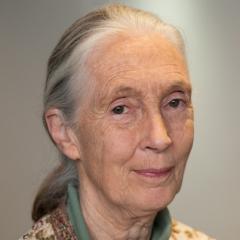
Jane Goodall
Jane Goodall

Jane Goodall, born on April 3, 1934, is a renowned primatologist. She is best known for her groundbreaking research on chimpanzees and is considered one of the founders of modern primatology. Dr. Goodall's work has had a profound impact on our understanding of animal behavior. more

You May Also Like

“I come from a land whose democracy from the very beginning has been tainted with race prejudice born of slavery, and whose richness has been poured through the narrow channels of greed into the hands of the few. I come to the Second International Writers Congress representing my country, America, but most especially the Negro peoples of America, and the poor peoples of America—because I am both a Negro and poor. And that combination of color and of poverty gives me the right then to speak for the most oppressed group in America, that group that has known so little of American democracy, the fifteen million Negroes who dwell within our borders. We are the people who have long known in actual practice the meaning of the word Fascism—for the American attitude towards us has always been one of economic and social discrimination: in many states of our country Negroes are not permitted to vote or to hold political office. In some sections freedom of movement is greatly hindered, especially if we happen to be sharecroppers on the cotton farms of the South. All over America we know what it is to be refused admittance to schools and colleges, to theatres and concert halls, to hotels and restaurants. We know Jim Crow cars, race riots, lynchings, we know the sorrows of the nine Scottsboro boys, innocent young Negroes imprisoned some six years now for a crime that even the trial judge declared them not guilty of having committed, and for which some of them have not yet come to trial. Yes, we Negroes in America do not have to be told what Fascism is in action. We know. Its theories of Nordic supremacy and economic suppression have long been realities to us.”

“Poets who write mostly about love, roses and moonlight, sunsets and snow, must lead a very quiet life. Seldom, I imagine, does their poetry get them into difficulties. Beauty and lyricism are really related to another world, to ivory towers, to your head in the clouds, feet floating off the earth. Unfortunately, having been born poor--and also colored--in Missouri, I was stuck in the mud from the beginning. Try as I might to float off into the clouds, poverty and Jim Crow would grab me by the heels, and right back on earth I would land.”

“Only those who have been on the receiving end of poverty, unemployment, homelessess, mental illness, domestic violence, racism, sexism or ageism can fully identify with others' reactions to those distressing experiences. Only those who have been members of marginalised minority can fully appreciate how that feels. [p50]”

“Have luncheon there this afternoon, all you jobless. Why not? Dine with some of the men and women who got rich off of your labor, who clip coupons with clean white fingers because your hands dug coal, drilled stone, sewed garments, poured steel to let other people draw dividends and live easy.”

“God to Hungry Child Hungry child, I didn't make this world for you. You didn't buy any stock in my railroad, You didn't invest in my corporation. Where are your shares in standard oil? I made the world for the rich And the will-be-rich And the have-always-been-rich. Not for you, Hungry child.”

“So goes the life of social poet. I am sure none of these things would ever have happened to me had I limited the subject matter of my poems to roses and moonlight. But, unfortunately, I was born poor--and colored--and almost all the prettiest roses I have seen have been in rich white people's yards--not in mine. That is why I cannot write exclusively about roses and moonlight--for sometimes in the moonlight my brothers see a fiery cross and a circle of Klansmen's hoods. Sometimes in the moonlight a dark body sways from a lynching tree--but for his funeral there are no roses.”

“Oh, Lawd, I done forgot Harlem! Say, you colored folks, hungry a long time in 135th Street--they got swell music at the Waldorf-Astoria. It sure is a mighty nice place to shake hips in, too. There's dancing after supper in a big warm room. It's cold as hell on Lenox Avenue. All you've had all day is a cup of coffee. Your pawnshop overcoat's a ragged banner on your hungry frame. You know, downtown folks are just crazy about Paul Robeson! Maybe they'll like you, too, black mob from Harlem. Drop in at the Waldorf this afternoon for tea. Stay to dinner. Give Park Avenue a lot of darkie color--free for nothing!”