Quotessence
Home / Quotes / Quote by Naomi Mitchison

Quote by Naomi Mitchison

“A lot of buildings were burnt out, others badly racked and unsafe, some completely smashed. Off the main road it was worse; here and there houses were being demolished, blasting going on sometimes, traffic being cleared, here a bridge being propped up, there a loudspeaker van telling people where to go for money or food. All windows gone everywhere... everywhere was the smell of plaster and burning, everywhere this incredible mess, everywhere people trailing about with a mattress or a bundle or a few pots and pans.”

Quote by Naomi Mitchison

Work

Author

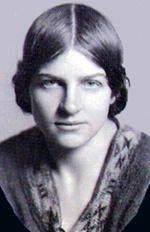
Naomi Mitchison
Naomi Mitchison

Naomi Mitchison was a Scottish novelist recognized for her extensive and diverse body of work. Born on November 1, 1897, in Edinburgh, Scotland, she passed away on January 11, 1999. Mitchison's writing often delved into themes of science, socialism, and the supernatural, making her a prominent figure in 20th-century literature. more

You May Also Like

“It was easy for complacent centuries like the Nineteenth, which knew no overwhelming disasters, to say that the Great Fire was a blessing because it swept out of existence a vast conglomeration of insanitary streets and made way for the cleaner brick-and-stone London of Stuart and later times; but we of to-day, who have seen so much that we loved go up in flames, are probably in a better position to feel sympathy for those of our forebears who suffered the tragedy of the Great Fire.”

“...carrying water to flush toilets and whoever could taking the prints and negs home to do at night if they happened to have the sacred combination of gas, electricity, and water, in fact we slept on the floor of the kitchen corridor and sometimes had ten or more friends, either bombed out of their own flats--or isolated by the presence of a time bomb--or just thinking that Hampstead [was safer].”

“If I can write, who possibly can’t. Even drawing a line in the sand is writing”

“Nothing looks the same after a trip to the Congo. The world back home no longer makes sense. It is difficult to reconcile how it even inhabits the same planet. Neatly arranged mountains of vegetables at grocery stores seem vulgar. Bright lights and flushing toilets seem like sorcery. Clean air and water feel like a crime. The markers of wealth and consumption appear violent.”

“No one can know, of course, accurate population figures from an era before there was a census, but many officials on the ground at the time and later historians, demographers, and anthropologists have made estimates of great loss.”

“On another point: King Leopold’s Ghost reproduces some of the photographs of Congo atrocities that fueled the worldwide protests against Leopold’s rule during the first decade of the twentieth century. These “fake photos,” Gilley declares, were “staged” by the photographer. Yes, some images appear posed—something true of most photos everywhere in an era when cameras were bulky contraptions on tripods whose subjects had to remain still for a few seconds.”

“Adam Hochschild has enjoyed a long run of success with King Leopold’s Ghost, his distortionary 1998 tale about the État Indépendant du Congo (EIC). So long, in fact, that he appears unable to come clean about its many fabrications. It is not just the doctoring of the quotation that anchors the story of “chopped hands for red rubber” (which I am grateful he has admitted), but the vast skein of distortion in which that little dodge is embedded.”

“Hochschild is correct that the demographer Léon de St. Moulin assayed the 50 percent decline possibility (in 1987 and 1990 works). But Hochschild fails to mention that Moulin, like the later Vansina, believed that the EIC and rubber had nothing to do with it. The causes for Moulin were, in order, sleeping sickness, smallpox, Spanish flu, and venereal diseases. Moulin did not even mention the EIC or rubber in his 1990 chapter. Like the later Vansina, he recognized that these were footnotes in the demographic history of the Congo.”