Quotessence
Home / Authors / Adrian Tchaikovsky Biography
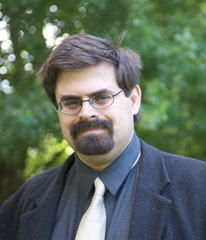
Adrian Tchaikovsky

Adrian Tchaikovsky Biography

Author

Related Quotes

“We couldn't trust them. They couldn't trust us. Mutual attempts at destruction are the only logical result. He thought of human dreams - both Old Empire and new - of contacting some extra-terrestrial intelligence such as nobody had ever truly encountered. Why? Why would we ever want to? We'd never be able to communicate, and even if we could, we'd still be those same two prisoners forced to trust - and risk - or to damn the other in trying to save slightly more of our own hides.”

“All things die,' she told him. Such a truism, it was the trite utterance of any street-corner philosopher, but coming from Inaspe Raimm it sounded different. 'All things reach the end of their journey, be they trees, insects, people or even principalities. All things die so that others may take their place. To die is no tragedy. The tragedy is dying with a purpose unfulfilled.”

“I get a prompt about using my Dissociative Cognition System. It takes considerable effort to make even that decision, but I manage to give my systems the OK and immediately I can step back from the crushing burden of misery, cut off from certain aspects of my own biochemistry so that I can function and make rational decisions. It was an essential mod, for someone who was going to be on their own for long periods of time without any social contact. My emotions are still out there, and I can get fascinating readouts about what that locked-away part of me is actually feeling, good, indifferent, bad, worse, but it doesn't touch me unless I choose to open the door again. It's a fine line, I suspect, between useful logic and that pathological numbness that true depression can often lead to, where doing or wanting anything seems like climbing uphill.”

“He could smash it. He could sunder that hairy shell and scatter pieces of its crooked legs. He could be human in that last moment. He could exalt in his ability to destroy. But there were more of them crawling through the breach, and he was old, and Lain was older now, and he sought that other human quality, so scarce of late, and put his arms around her, holding the woman as tightly to him as he dared, the stick clattering to the floor.”

“We hated ourselves for what we were made to do but we couldn't live with that hate, so we made it a hate of you, for being too weak to defend all that beauty." He was silent for a long while, and she put her arm around his shoulders. " And we enjoyed it , of course. Like the Kinslayer knew we would, like he'd primed us to because if you hate yourself enough and hate others enough, then doing terrible things to them becomes your only pastime, your only pleasure because in the moment where you wrack them with fire or slip their blade behind their eyeball, you have control, and that means something. It means something when the kinslayer is your master, and that's the only control you'll ever have.”

“I cannot hope to make you understand how the world is truly made,' he told her. 'Metaphor, then: the world is a weave, like threads woven into cloth.' His hand came out of his sleeve with a strip of his red ribbon. 'If you say so.' 'Everything, stone, trees, beasts, the sky, the waters, all are a weave of fabric,' he said patiently. 'But when you think, it is different. Your thinking snarls the fabric, knots it. If you were a magician, you could use the knot of your mind to pull on other threads. That is magic, and now you see how every simple it is. I wonder everyone does not become an enchanter.”

“You opened your own eyes when you infected the terraforming team, didn't you? When you became Lante, and you realized that the great big world that was her neocortex was just a window onto something bigger, that must have really whipped the ground out from under you. You're tiny, but Lante knew she was tiny, and compared to the universe one of your cells and Lante's whole body aren't so different. And it's big, that universe. Lante knew she'd never see more than a few grains of sand out of that whole beach. Did it eat at her? At you? It ate at me. And I grasped more of it than any human being before or since. I was the queen of the human space colonization programme, and I knew it was just drops of spit into an infinite hurricane.”

“I was young at Myna, that first time. When had the change come? He had retreated to here, to Collegium, to spin his awkward webs of intrigue and to lecture at the College. Then, years on, the call had come for action. He had gone to that chest in which he stored his youth and found that, like some armour long unworn, it had rusted away. He tried to tell himself that this was not like the grumbling of any other man who finds the prime of his life behind him. I need my youth and strength now, as never before. A shame that one could no husband time until one needed it. All his thoughts rang hollow. He was past his best and that was the thorn that would not be plucked from his side. He was no different from any tradesman or scholar who, during a life of indolence, pauses partway up the stairs to think, This was not so hard, yesterday.”

“Ah, but it is an interesting thing, that these things can so seldom be proved. If I were to perform some piece of, hrmf, magic for you, here in this room, you would claim a thousand ways it could have been done. Indeed, those ways might be exceedingly unlikely, but you would cling to them rather than accept the, mmn, the chance that magic, the eternal inexplicable, might be the true agent, and if you were strong enough in yourself, unafraid, unthreatened, here in your own chambers, well perhaps there would be no magic worked at all. It is a subjective force, you see, whereas the physical laws of the artificers are objective. A gear-train will turn without faith, but magic may not. And so, when your people demand, mmn, proof, there is none, but when you have forgotten and dismissed it, then magic creeps back into the gaps where you do not look for it.”

“I don't really believe that people can predict the future,' he admitted. 'People predict the future every day, Stenwold Maker,' she replied, studying the rainbow carefully as the glass panels shifted slightly on the creaking wooded framework. 'If you drop a stone, you may predict that it shall fall. If you know a man to be dishonest, you may predict that he will cheat you. If you know one army is better trained and led, you may predict that it will win the battle.' He could not help smiling at that. 'But that is different. That is using knowledge already gained about the world to guess at the most likely outcome.' 'And that is also predicting the future, Stenwold Maker,' she said. 'The only difference is your source of knowledge. Everything that happens has a cause, which same cause has itself a cause. It is a chain stretching into the most distant past, and forged by necessity, inclination, bitter memories, the urge of duty. Nothing happens without a reason. Predicting the future does not require predestination, Stenwold Maker. It only requires a world where one thing will most likely lead to another.”

“In Collegium it had been the fashion, while he had been resident there, to paint death as a grey-skinned, balding Beetle man in plain robes, perhaps with a doctor's bag but more often an artificer's toolstrip and apron, like the man who came in, at the close of the day, to put out the lamps and still the workings of the machines. Among his own people, death was a swift insect, gleaming black, its wings a blur - too fast to be outrun and too agile to be avoided, the unplumbed void in which he swam was but the depth of a single facet of its darkly jewelled eyes.”

“You're not like other Wasps." "Aren't I?" Aagen smiled, but it was a painful smile. "No doubt you've killed my kinsmen by the score." "A few," Salma allowed. "Well, next time you shed my kinden's blood, think on this: we are but men, no less nor more than other men, and we strive and feel joy and fail as men have always done. We live in the darkness that is the birthright of us all, that of hurt and ignorance, only sometimes... sometimes there comes the sun." He let the bowl fall from his fingers to the floor, watching it spin and settle, unbroken.”