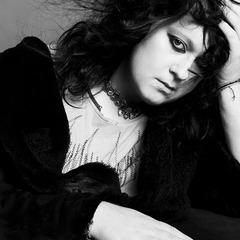
“History has been male and the future is female. Leaning on women as a body and the female archetype, and not just women but men - we're asking men to dig deep and deconstruct their seat of privilege. Because this is an emergency. We're in threat of losing our homes, the future of our future generations, and the biological paradise that we're apart of. It's in the interest of all people that we lean on the feminine archetype in our movement forward.” PeopleMenHas BeensHomeBodyInterestGenerationsMovementLosingFemaleAskingThreatMalesPrivilegeParadiseSeatsFeminineOur FutureEmergenciesFuture GenerationArchetypeDig Deep Author:Antony Hegarty
“I am transgender, so 'he' is not appropriate and 'she' is problematic. I haven't been one to wage war with society to force people to address me a certain way. I let people make that decision for themselves. I don't identify as a man, so 'he' is silly in a way. Being called 'she' as a trans person, trans in the sense that I'm trans, is to be honoured in an aspect of yourself.” PeopleMenWayPersonsWarCertainForceDecisionHavensAspectSillyAddressesAppropriateTransgenderTrans Author:Antony Hegarty
“No matter how public your work is, it's just a relationship with yourself. And you have to create a little sacred space inside yourself to treasure that... because when you die, that's still what you have. It's what you're born with and what you leave with. It's kind of a story of the way you accompanied yourself through your life.” WayKindLittlesStillsMatterStoriesDiesBornSpaceSacredTreasureSacred Space Author:Antony Hegarty
“Any woman who says she's not a feminist is just someone who's afraid of being penalised for saying she wants to advocate for women.” WantFeminist Author:Antony Hegarty
“Everyone has a spectrum of masculinity and femininity inside them. In every individual, a war of misogyny is raging. Every man is repressing and oppressing the femininity within themselves, raising up male values as governing values. Because that's what we've been taught to do, just as every woman has. Misogyny isn't just something that affects women. It affects men.” MenWarValuesIndividualTaughtMalesRageEvery ManMisogynyMasculinityFemininitySpectrumGoverning Author:Antony Hegarty
“I think what everyone can do is start creating spaces and forums, talk to peers, friends and family, and start deconstructing these things we take for granted, unpack these old systems, in order to understand ourselves more deeply, to understand why we do the things we do and how our privileges affect other people's lack of privilege.” PeopleThinkingOrderCan DoSpaceCreatingPrivilegeGrantedPeersFamily And FriendsForumsThings We Take For Granted Author:Antony Hegarty
“There are so many more productive things to do than sit around feeling shame and guilt. Beyond touching on shame and guilt in a perfunctory manner, I wouldn't bother with that at all.” FeelingsShameGuiltBotherThings To DoProductiveTouchingShame And Guilt Author:Antony Hegarty
“Every interview is as much an impression of the journalist as it is the artist or subject. You look at interviews and you see a portrait of two people. The worst thing that can happen is if you're misquoted and then that quote is misquoted. That does drive one crazy. The most embarrassing thing is when your words are misrepresented or sometimes you say something stupid and you live to regret it.” PeopleIfsLooksDoeTwoSometimesHappensArtistCrazyWorstSubjectsStupidRegretImpressionJournalistInterviewsPortraitsWorst ThingsEmbarrassing Author:Antony Hegarty
“I think what really separates artists from the rest of the world is that artists feel like they have permission to keep exploring and expressing their process. Most people censor that because they don't think it's good enough. Everything is measured against this patriarchal hierarchy of value, as if one person's singing voice is more important than another's.” PeopleIfsThinkingWorldFeelsPersonsImportantEnoughArtistValuesProcessVoiceSingingGood EnoughPermissionExploringHierarchy Author:Antony Hegarty
“I think what holds people up in creative processes is the expectation of what it is they're doing. It's also the sense of judgement, you know, people editing themselves.” PeopleThinkingKnowsProcessCreativeExpectationsJudgementCreative ProcessEditing Author:Antony Hegarty
“You need to release yourself of any expectation of what that material should be. Just start letting it be what it's naturally evolving into, even if it means just pulling words out of the dictionary and laying them one after another. Words are everywhere.” IfsNeedsShouldMeanMaterialsExpectationsReleaseEvolvePullingDictionary Author:Antony Hegarty
“I just feel like [creativity] is a reflection of the world around me and I don't think you can divorce yourself from that. So I don't really think in terms of, 'Do you still have it?' Even if I was doing something new, I think I would be engaged in the same process.” IfsThinkingWorldFeelsStillsWould BeProcessTermCreativityReflectionDivorceEngagedSomething New Author:Antony Hegarty
“The creative process is just a process and you can't really separate it from life. Growing your hair is a creative process. Your body is creating hair. Being alive is a creative process. Whether it's growing something in the garden or growing a song, the material accumulates. It's the process of being alive; it's the passage of time. Things change.” BodySongProcessCreativeAliveGrowingMaterialsHairCreatingGardenYour BodyPassagesCreative ProcessThings ChangePassage Of Time Author:Antony Hegarty
“My creative process isn't a long one, so I could have started a song 10 years ago and then finish it 10 years later. It's all just about pushing around words and melodies, for me. The material is kind of shape-shifting.” YearsKindLongSongProcessCreativeMaterialsShapesYears AgoPushingMelodyCreative ProcessShifting Author:Antony Hegarty
“I see everything as creative material. If I pick up a shell of a song that I wrote 10 years ago, all that matters is the reality of that material as it's living today.” IfsYearsMatterRealityTodaySongCreativeMaterialsPicksYears AgoShells Author:Antony Hegarty
“I think, with music in general, people just inevitably connect with feeling. The opportunity to hear expressed feeling. That's what has always drawn me towards music. It's something where, by connecting to someone else's voice, I feel less lonely. I feel more alive. I feel more connected to the world and to the rest of humanity. Sometimes a voice can be like a lifeline.” PeopleThinkingWorldFeelsSometimesFeelingsHumanityOpportunityVoiceAliveLonelyConnectedConnectingLifelines Author:Antony Hegarty
“I went to New York to be where the beautiful people were and it didn't disappoint me. It's so open. It's a great platform to do your own thing or start new things. When I got there, I started living for the first time.” PeopleFirstsBeautifulNew YorkFirst TimePlatformsNew ThingsDisappointBeautiful People Author:Antony Hegarty
“I was about 17 or 18 when I first started performing in public. I had a teacher when I was a freshman in college and she came up to me afterwards and said she had been crying while I had been singing, and it really shocked me.” FirstsSaidTeacherCryCollegeSingingPerformingShockedFreshman Author:Antony Hegarty
“When I was a junior in college I moved to New York and went to this performance school the Experimental Theatre Wing. We had singing class and again, some of the other students would cry when I was singing, and I really didn't know why. I started to realize that there was something in the tone of my voice that was evocative for them.” KnowsSchoolVoiceRealizingClassCryNew YorkStudentsCollegeSingingPerformancesMovedWingsTheatreToneJuniors Author:Antony Hegarty
“Every year I used to write a musical inspired by John Waters, and I would get all my friends together and put on this perverse, emotional, tragic musical.” WritingYearsTogetherUsedWaterEmotionalMy FriendsInspiredMusicalTragic Author:Antony Hegarty
“I think, with music in general, people just inevitably connect with feeling. The opportunity to hear expressed feeling. And that's what has always drawn me towards music. It's something where, by connecting to someone else's voice, I feel less lonely. I feel more alive. I feel more connected to the world and to the rest of humanity. Sometimes a voice can be like a lifeline.” PeopleThinkingWorldSometimesFeelingsHumanityOpportunityLonely Author:Antony Hegarty
“I feel very grateful that for some reason I was raised to believe that I had permission to explore the creative world. I'm very aware of what a privilege that is, because most people don't grant themselves that permission, and I really think that's the only thing that separates people that call themselves artists from the rest of the world. It's suspending self-judgment for long enough to do something expressive.” PeopleThinkingWorldBelieveLongReasonEnoughArtistCreativeGrateful Author:Antony Hegarty
“What separates people that create from the people that don't is just one's ability to take action despite the fear, you know? Or to suspend the fear, or more commonly, the voice of judgment within yourself that says, "This isn't good enough. You don't deserve to do this. You're not worthy. Your expression isn't meaningful. You have nothing to contribute, just get back to your 9-to-5 job." It's not so much that I don't have all those same voices, it's more just that for some reason as a kid I was shameless enough that could plow through them for long enough to get something on the table.” PeopleLongReasonEnoughKidsActionAbilityJudgmentDeserveWorthyMeaningfulGood EnoughShamelessNot Worthy Author:Antony Hegarty
“I'm always feeling excruciatingly embarrassed after a concert; it's such an unnatural thing to do. On one hand, it's so unnatural to step in front of so many people and try to do something like I do, but on the other hand, it can be such a fantastic boon and such a wonderful ride.” PeopleTryingFeelingsWonderfulFantasticEmbarrassed Author:Antony Hegarty
“Diane Cluck is a virtuosic talent with an emotionality that feels at once ancient and alien. Her mastery of her voice as an ecstatic instrument is so compelling.” FeelsVoiceTalentInstrumentsAncientAliensMasteryCompellingEcstatic Author:Antony Hegarty