Quotessence
Home / Authors / Bill Mollison
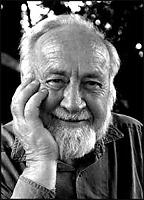
Bill Mollison

Bill Mollison Quotes

Author

Filter quotes by topic

Famous Bill Mollison Quotes

“Say you're working for a big overseas aid organization. You can't leave home in a Mercedes Benz, travel 80 kilometers to work in a great concrete structure where there are diesel engines thundering in the basement just to keep it cool enough for you to work in, and plan mud huts for Africa! You can't get the mud huts right if you haven't got things right where you are. You've got to get things right, working for you, and then go and say what that is.”

“The greatest change we need to make is from consumption to production, even if on a small scale, in our own gardens. If only 10% of us do this, there is enough for everyone. Hence the futility of revolutionaries who have no gardens, who depend on the very system they attack, and who produce words and bullets, not food and shelter.”

“It’s a revolution. But it’s the sort of revolution that no one will notice. It might get a little shadier. Buildings might function better. You might have less money to earn because your food is all around you and you don’t have any energy costs. Giant amounts of money might be freed up in society so that we can provide for ourselves better. So it’s a revolution. But permaculture is anti-political. There is no room for politicians or administrators or priests. And there are no laws either. The only ethics we obey are: care of the earth, care of people, and reinvestment in those ends.”

“Permaculture is the conscious design and maintenance of agriculturally productive ecosystems which have the diversity, stability, and resilience of natural ecosystems. It is the harmonious integration of landscape and people providing their food, energy, shelter and other material and non-material needs in a sustainable way. Without permanent agriculture there is no possibility of a stable social order.”

“Permaculture is a philosophy of working with, rather than against nature; of protracted and thoughtful observation rather than protracted and thoughtless labor; and of looking at plants and animals in all their functions, rather than treating any area as a single product system”