Quotessence
Home / Authors / Blaise Pascal
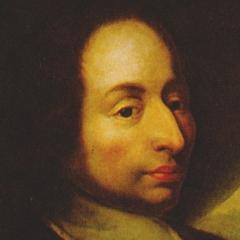
Blaise Pascal

Blaise Pascal Quotes

Mathematician

Filter quotes by topic

Famous Blaise Pascal Quotes

“When we do not know the truth of a thing, it is good that there should exist a common error which determines the mind of man, as, for example, the moon, to which is attributed the change of seasons, the progress of diseases, etc. For the chief malady of man is a restless curiosity about things which he cannot understand; and it is not so bad for him to be in error as to be curious to no purpose.”

“Man is so great that his greatness appears even in the consciousness of his misery. A tree does not know itself to be miserable. It is true that it is misery indeed to know one's self to be miserable; but then it is greatness also. In this way, all man's miseries go to prove his greatness. They are the miseries of a mighty potentate, of a dethroned monarch.”

“One-half of life is admitted by us to be passed in sleep, in which, however, it may appear otherwise, we have no perception of truth, and all our feelings are delusions; who knows but the other half of life, in which we think we are awake, is a sleep also, but in some respects different from the other, and from which we wake when we, as we call it, sleep. As a man dreams often that he is dreaming, crowding one dreamy delusion on another.”

“As we speak of poetical beauty, so ought we to speak of mathematical beauty and medical beauty. But we do not do so; and that reason is that we know well what is the object of mathematics, and that it consists in proofs, and what is the object of medicine, and that it consists in healing. But we do not know in what grace consists, which is the object of poetry.”

“Knowledge has two extremes. The first is the pure natural ignorance in which all men find themselves at birth. The other extreme is that reached by great minds, who, having run through all that men can know, find they know nothing, and come back again to that same natural ignorance from which they set out; this is a learned ignorance which is conscious of itself.”

“All the excesses, all the violence, and all the vanity of great men, come from the fact that they know not what they are: it being difficult for those who regard themselves at heart as equal with all men... For this it is necessary for one to forget himself, and to believe that he has some real excellence above them, in which consists this illusion that I am endeavoring to discover to you.”

“The man who knows God but does not know his own misery, becomes proud. The man who knows his own misery but does not know God, ends in despair...the knowledge of Jesus Christ constitutes the middle course because in him we find both God and our own misery. Jesus Christ is therefore a God whom we approach without pride, and before whom we humble ourselves without despair.”

“Just as I do not know where I came from, so I do not know where I am going. All I know is that when I leave this world I shall fall forever into oblivion, or into the hands of an angry God, without knowing which of the two will be my lot for eternity. Such is my state of mind, full of weakness and uncertainty. The only conclusion I can draw from all this is that I must pass my days without a thought of trying to find out what is going to happen to me.”

“It is dangerous to explain too clearly to man how like he is to the animals without pointing out his greatness. It is also dangerous to make too much of his greatness without his vileness. It is still more dangerous to leave him in ignorance of both, but it is most valuable to represent both to him. Man must not be allowed to believe that he is equal either to animals or to angels, nor to be unaware of either, but he must know both.”

“Man is only a reed, the weakest in nature, but he is a thinking reed. There is no need for the whole universe to take up arms to crush him: a vapour, a drop of water is enough to kill him. but even if the universe were to crush him, man would still be nobler than his slayer, because he knows that he is dying and the advantage the universe has over him. The universe knows none of this.”

“When a natural discourse paints a passion or an effect, one feels within oneself the truth of what one reads, which was there before, although one did not know it. Hence one is inclined to love him who makes us feel it, for he has not shown us his own riches, but ours. ...such community of intellect that we have with him necessarily inclines the heart to love.”

“We know that there is an infinite, and we know not its nature. As we know it to be false that numbers are finite, it is therefore true that there is a numerical infinity. But we know not of what kind; it is untrue that it is even, untrue that it is odd; for the addition of a unit does not change its nature; yet it is a number, and every number is odd or even (this certainly holds of every finite number). Thus we may quite well know that there is a God without knowing what He is.”