Quotessence
Home / Authors / Blaise Pascal
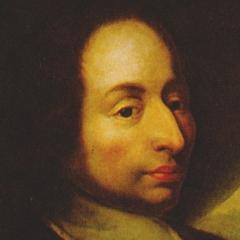
Blaise Pascal

Blaise Pascal Quotes

Mathematician

Filter quotes by topic

Famous Blaise Pascal Quotes

“One must know when it is right to doubt, to affirm, to submit. Anyone who does otherwise does not understand the force of reason. Some men run counter to these three principles, either affirming that everything can be proved, because they know nothing about proof, or doubting everything, because they do not know when to submit, or always submitting, because they do not know when judgment is called for.”

“Our imagination so magnifies this present existence, by the power of continual reflection on it, and so attenuates eternity, by not thinking of it at all, that we reduce an eternity to nothingness, and expand a mere nothing to an eternity; and this habit is so inveterately rooted in us that all the force of reason cannot induce us to lay it aside.”

“There are three means of believing--by inspiration, by reason, and by custom. Christianity, which is the only rational institution, does yet admit none for its sons who do not believe by inspiration. Nor does it injure reason or custom, or debar them of their proper force; on the contrary, it directs us to open our minds by the proofs of the former, and to confirm our minds by the authority of the latter.”

“St. Augustine teaches us that there is in each man a Serpent, an Eve, and an Adam. Our senses and natural propensities are the Serpent; the excitable desire is the Eve; and reason is the Adam. Our nature tempts us perpetually; criminal desire is often excited; but sin is not completed till reason consents.”

“The mind of the greatest man on earth is not so independent of circumstances as not to feel inconvenienced by the merest buzzing noise about him; it does not need the report of a cannon to disturb his thoughts. The creaking of a vane or a pully is quite enough. Do not wonder that he reasons ill just now; a fly is buzzing by his ear; it is quite enough to unfit him for giving good counsel.”

“As we speak of poetical beauty, so ought we to speak of mathematical beauty and medical beauty. But we do not do so; and that reason is that we know well what is the object of mathematics, and that it consists in proofs, and what is the object of medicine, and that it consists in healing. But we do not know in what grace consists, which is the object of poetry.”