Quotessence
Home / Authors / Chang-Rae Lee Books
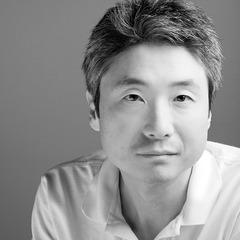
Chang-Rae Lee

Chang-Rae Lee Books

Novelist

Native Speaker

A source page for quotes linked to Chang-Rae Lee.
0 quotes

Related Quotes

“I told him I would go up there; he said no, no, everything was fine. I drove up anyway and when I opened the door to the house he was sitting alone in the kitchen, the kettle on the stove madly whistling away. He was fast asleep; after the stroke he sometimes nodded off in the middle of things. I woke him, and when he saw me he patted my cheek. 'Good boy,' he muttered. I made him change his clothes and then fixed us a dinner of fried rice from some leftovers.”

“Don't shame him! Your father is very proud. You don't know this, but he graduated from the best college in Korea, the very top, and he doesn't need to talk about selling fruits and vegetables. It's below him. He only does it for you, Byong-ho, he does everything for you. Now go and keep him company...I would learn in subsequent years that he had been trained as an industrial engineer, and had actually completed a master's degree.”

“I was to inherit them, the legacy unfurling before me this way: you worked from before sunrise to the dead of night. You were never unkind in your dealings, but then you were not generous. Your family was your life, though you rarely saw them. You kept close handsome sums of cash in small denominations. You were steadily cornering the market in self-pride. You drove a Chevy and then a Caddy and then a Benz. You never missed a mortgage payment or a day of church. You prayed furiously until you wept. You considered the only unseen forces to be those of capitalism and the love of Jesus Christ.”

“Part of writing a novel is being willing to leap into the blackness. You have very little idea, really, of what's going to happen. You have a broad sense, maybe, but it's this rash leap. It's like spelunking. You kind of create the right path for yourself. But, boy, are there so many points at which you think, absolutely, I'm going down the wrong hole here. And I can't get back to the right hole. I'm not going to be able to get this section back to the right hole - so I'm just going to have to cut it.”

“For each of us has a perch on the tree. After we are gone, that perch is marked by a notch, permanent, yes, but with its edges muting over time, assuming the tree is ever growing. Years from now someone can see that you were here, or there, and although you had little conception or care for the wider branching, in the next life there might be a sigh of wonder at how quietly flourishing it all was, if never majestic.”

“Not to any really influential effect, but certainly there have been comments that have surprised me. It's surprising sometimes to get particular perspectives on your work, and it's enlightening sometimes to know that non-writers and readers out there have certain assumptions about everything that I both want to keep in mind and want to forget about why I write, and about the connection between me as a private person and the stuff that I think about on the page.”

“It's just a weird idea to me because each book is a complete universe unto itself, so why would I want this other universe from this other galaxy that has nothing to do with mine? That's how I really feel about it. Let's be honest - I'm still the writer, so certain things will be common denominators. But that I just want to keep natural and not studied.”

“Some writers are writing one great, big book and just taking all these different avenues towards it. They might seem on the outside to be different, but they're really not. And that's a different kind of mindset. I don't know why it is, but I just feel like I really want to escape myself as much as I can - myself as the artist, or as the writer, or as the thinker - with each new project, because one, it's just boredom, but also, I guess I just feel most comfortable starting a new book if I just feel a little in the dark about it.”

“I try to be aware of what I'm concerned about, aware of how I feel about myself in the world, aware of how I feel about the issues of the day, but I guess I don't want to write essays in my head about my craft and maybe it's because I teach and talk about craft of other writers as a reader. I feel the moment I start doing that is when it's going to kill me.”

“I did a lot of reading of first person accounts from Koreans and combatants and aid workers. And I spoke to relatives. A lot of wonderful photographs were made available to me from that period - 1950-1956 - and those were given to me by a Korean newspaper in Seoul. Ruined villages, refugees streaming through a river valley, GI's and orphans and orphanages, those tiny details that you can only see in a picture.”