Quotessence
Home / Authors / Charles Kingsley
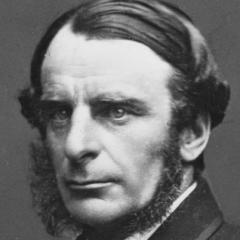
Charles Kingsley

Charles Kingsley Quotes

Professor

Filter quotes by topic

Famous Charles Kingsley Quotes

“So give me the political economist, the sanitary reformer, the engineer; and take your saints and virgins, relics and miracles. The spinning-jenny and the railroad, Cunard's liners and the electric telegraph, are to me, if not to you, signs that we are, on some points at least, in harmony with the universe; that there is a mighty spirit working among us, who cannot be your anarchic and destroying Devil, and therefore may be the Ordering and Creating God.”

“And what is the joy of Christ? The joy and delight which springs forever in His great heart, from feeling that He is forever doing good; from loving all, and living for all; from knowing that if not all, yet millions on millions are grateful to Him, and will be forever.”

“And how high is Christ's cross? As high as the highest heaven, and the throne of God, and the bosom of the Father that bosom out of which forever proceed all created things. Ay, as high as the highest heaven! for if you will receive it when Christ hung upon the cross, heaven came down on earth, and earth ascended into heaven.”

“Let us ask ourselves seriously and honestly, 'What do I believe after all? What manner of man am I after all? What sort of show would I make after all, if the people around me knew my heart and all my secret thoughts?" What sort of show then do I already make in the sight of Almighty God, who sees every man exactly as he is?'”

“If I am ever obscure in my expressions, do not fancy that therefore I am deep. If I were really deep, all the world would understand, though they might not appreciate. The perfectly popular style is the perfectly scientific one. To me an obscurity is a reason for suspecting a fallacy.”

“Now, to tell my story--if not as it ought to be told, at least as I can tell it,--I must go back sixteen years, to the days when Whitbury boasted of forty coaches per diem, instead of one railway, and set forth how in its southern suburb, there stood two pleasant house side by side, with their gardens sloping down to the Whit, and parted from each other only by the high brick fruit-wall, through which there used to be a door of communication; for the two occupiers were fast friends.”

“These glorious things-words-are man's right alone...Without words we should know no more of each other's hearts and thoughts than the dog knows of his fellow dog....for, if you will consider, you always think to yourself in words, though you do not speak them aloud; and without them all our thoughts would be mere blind longings, feelings which we could not understand ourselves.”

“You must not say that this cannot be, or that that is contrary to nature. You do not know what Nature is, or what she can do; and nobody knows; not even Sir Roderick Murchison, or Professor Huxley, or Mr. Darwin, or Professor Faraday, or Mr. Grove, or any other of the great men whom good boys are taught to respect. They are very wise men; and you must listen respectfully to all they say: but even if they should say, which I am sure they never would, 'That cannot exist. That is contrary to nature,' you must wait a little, and see; for perhaps even they may be wrong.”

“If you wish to be miserable, think about yourself, about what you want, what you like, what respect people ought to pay you, what people think of you; and then to you nothing will be pure. You will spoil everything you touch; you will make sin and misery for yourself out of everything God sends you; you will be as wretched as you choose.”

“Madame Nature allows no dangerous classes, in the modern sense. She has, doubtless for some wise reason, no mercy for the weak. She rewards each organism according to its works; and if anything grows too weak or stupid to take care of itself, she gives it its due deserts by letting it die and disappear.”

“Mathematical knowledge is not-as all Cambridge men are surely aware-the result of any special gift. It is merely the development of those conceptions of form and number which every human being possesses; and any person of average intellect can make himself a fair mathematician if he will only pay continuous attention; in plain English, think enough about the subject.”