Quotessence
Home / Authors / Colson Whitehead
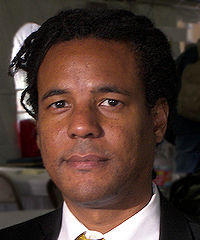
Colson Whitehead

Colson Whitehead Quotes

Novelist

Filter quotes by topic

Famous Colson Whitehead Quotes

“A jail within a jail. In those long hours, he struggled over Reverend King's equation. "Throw us in jail and we will love you ... But be assured that we will wear you down by our capacity to suffer, and one day we will win our freedom. We will not only win our freedom for ourselves, we will so appeal to your heart and your conscience that we will win you in the process and our victory will be a double victory." No he could not make that leap to love. He understood neither the impulse of the proposition nor the will to execute it.”

“The day-to-day horror of writing gave me a notion of tournament time. Writing novels is tedious. When will this book be finished, when will it reveal its bright and shining true self? it takes freakin’ years. At the poker table, you’re only playing a fraction of the hands, waiting for your shot. If you keep your wits, can keep from flying apart while those around you are self-destructing, devouring each other, you’re halfway there. … Let them flame out while you develop a new relationship with time, and they drift away from the table. 86-7 Coach Helen’s mantra: It’s OK to be scared, but don’t play scared. 90 [During a young adult trip to Los Vegas] I was contemplating the nickel in my hand. Before we pushed open the glass doors, what the heck, I dropped it into a one-armed bandit and won two dollars. In a dank utility room deep in the subbasements of my personality, a little man wiped his hands on his overalls and pulled the switch: More. Remembering it now, I hear a sizzling sound, like meat being thrown into a hot skillet. I didn't do risk, generally. So I thought. But I see now I'd been testing the House Rules the last few years. I'd always been a goody-goody. Study hard, obey your parents, hut-hut-hut through the training exercises of Decent Society. Then in college, now that no one was around, I started to push the boundaries, a little more each semester. I was an empty seat in lecture halls, slept late in a depressive funk, handed in term papers later and later to see how much I could get away with before the House swatted me down. Push it some more. We go to casinos to tell the everyday world that we will not submit. There are rules and codes and institutions, yes, but for a few hours in this temple of pure chaos, of random cards and inscrutable dice, we are in control of our fates. My little gambles were a way of pretending that no one was the boss of me. … The nickels poured into the basin, sweet music. If it worked once, it will work again. We hit the street. 106-8 [Matt Matros, 3x bracelet winner; wrote The Making of a Poker Player]: “One way or another you’re going to have a read, and you’re going to do something that you didn’t expect you were going to do before, right or wrong. Obviously it’s better if you’re right, but even if you’re wrong, it can be really satisfying to just have a read, a feeling, and go with it. Your gut.” I could play it safe, or I could really play. 180 Early on, you wanted to stay cool and keep out of expensive confrontations, but you also needed to feed the stack. The stack is hungry. 187 The awful knowledge that you did what you set out to do, and you would never, ever top it. It was gone the instant you put your hands on it. It was gambling. 224”

“Spoiler: I didn't win the Main Event. You had suspicions, you say? For one thing, the subtitle of this book would be "The Amazing Life-Affirming Story of an Unremarkable Jerk Who Won the World Series of Poker!" instead of having the word "Death" in it. For another, do these sound like the words of a motherfucker who won a million goddamn dollars?”

“He was born in Odessa and settled on Ludlow Street on the Lower East Side in 1906; his family's house had been burned down the previous October. Pogroms, massacres. America was in the massacre racket, too, Heshie observed, but they concentrated on Negroes and Indians for the most part. He figured they'd come for him once they ran out, but that might take years.”

“Improbable as it may be, the day still has a few indignities left. The day waters down indignity with frustration to make it last longer. Abomination, thy name is Subway. He cannot enter. They flood through turnstiles, hips banging rods, and will not let him enter. He must get home, but it's all he can do to get halfway in before another one charges at him. A fish out of school. Everybody knows how it works except for him. All of them from every floor are crammed into this one subway car: the makers of memos, the routers of memos, the indexers filers and shredders of memos, the always-at-their-desks and the never-around. How do they all fit. Squabbling like pigeons over stale crumbs of seats. Everyone thinks they are more deserving, everyone thinks their day has been harder than everyone else's, and everyone is correct.”

“I'm what the botanists call a hybrid," he said the first time Cora heard him speak, "A mixture of two different families. In flowers, such a concoction pleases the eye. When that amalgamation takes its shape in flesh and blood, some take great offence. In this room we recognize it for what it is - a new beauty come into the world, and it is in bloom all around us.”

“The iron horse still rumbled through the tunnel when she woke. Lumbly's words returned to her: "If you want to see what this nation is all about, you have to ride the rails. Look outside as you speed through, and you'll find the true face of America." It was a joke, then, from the start. There was only darkness outside the windows on her journeys, and only ever would be darkness.”

“Lieutenant Thomas R. Gilligan, thirty-seven, was off duty and out of uniform, checking out TVs in an electronics store. He went to investigate the commotion and stopped James Powell, a ninth grader who had joined the mob of angry students. Powell was unarmed, according to witnesses. Gilligan maintained that the boy flashed a knife. He shot him three times. Two days later, Harlem erupted. Pierce told Carney, "You have the people who are angry. Justifably so. And then there's the police force. How are they going to defend this shit? Again! And city hall and the activists. And in the way back of the room, you can barely hear a little voice, and that's the family. They've lost a son. Somebody has to speak for them." "They're going to sue?" "Sue and win. You know they ain't going to fire the bastard." Sermon crept into his voice here. "What kind of message will that send--that their police force is accountable? We'll sue, and it will take years, and the city will pay because millions and millions are still cheaper than putting a true price on killing a black boy.”

“HE remembered looking "agape" in his encyclopedia volume after he read Dr. King's speech in the DEFENDER. The newspaper ran the address in full after the reverend's appearance at Cornell College. If Elwood had come across the word before, through all those years of skipping around the book, it hadn't stuck in his head. King described "agape" as a divine love operating in the heart of man. A selfless love, an incandescent love, the highest there is. He called upon his Negro audience to cultivate that pure love for their oppressors, that it might carry them to the other side of the struggle. Elwood tried to get his head around it, now that it was no longer the abstraction floating in his head last spring. It was real now. "Throw us in jail and we will still love you. Bomb our homes and threaten our children, and, as difficult as it is, we will still love you. Send your hooded perpetrators of violence into our communities after midnight hours, and drag us out onto some wayside road, and beat us and leave us half-dead, and we will still love you. But be ye assured that we will wear you down by our capacity to suffer, and one day we will win our freedom. The capacity to suffer. Elwood--all the Nickel boys--existed in the capacity. Breathed in it, ate in it, dreamed in it. That was their lives now. Otherwise they would have perished. The beatings, the rapes, the unrelenting winnowing of themselves. They endured. But to love those who destroyed them? To make that leap? "We will meet your physical force with soul force. Do to us what you will and we will still love you." Elwood shook his head. What a thing to ask. What an impossible thing.”

“I always have a few ideas that are percolating, and then after I've finished a book and it's a year later, and things are sort of festering and things are disgusting in my house and I have to get back to work, whatever project I keep thinking about is the one I end up working on. Sort of a very simple process of elimination.”