Quotessence
Home / Authors / Daniel H. Pink Books
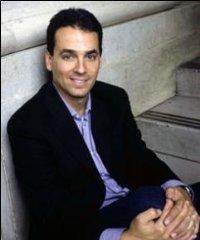
Daniel H. Pink

Daniel H. Pink Books

Author

Related Quotes

“Motivation 1.0 presumed that humans were biological creatures, struggling to obtain our basic needs for food, security and sex. Motivation 2.0 presumed that humans also responded to rewards and punishments. That worked fine for routine tasks but incompatible with how we organize what we do, how we think about what we do, and how we do what we do. We need an upgrade. Motivation 3.0, the upgrade we now need, presumes that humans also have a drive to learn, to create, and to better the world.”

“in flow, the relationship between what a person had to do and what he could do was perfect. The challenge wasn't too easy. Nor was it too difficult. It was a notch or two beyond his current abilities, which stretched the body and mind in a way that made the effort itself the most delicious reward. That balance produced a degree of focus and satisfaction that easily surpassed other, more quotidian, experiences. In flow, people lived so deeply in the moment, and felt so utterly in control, that their sense of time, place, and even self melted away. They were autonomous, of course. But more than that, they were engaged.”

“Because [self-esteem] offers indiscriminate affirmation unconnected to genuine accomplishment, self-esteem can foster narcissism, diminish empathy, and stoke aggression. It can also promote bias toward one's own group and prejudice toward other groups. Because self-esteem is comparative, to assess myself favorably, I often must denigrate others. The most powerful and promising alternative [to self-esteem] is called "self-compassion". Self-compassion encourages us to take the middle road in handling negative emotions - not suppressing them, but not exaggerating or over identifying with them either. Self-compassion delivers the benefits of self-esteem without its drawbacks.”

“In the American Regret Survey, twenty-year-olds had equal numbers of action and inaction regrets. But as people grew older, inaction regrets began to dominate. By age fifty, inaction regrets were twice as common as action regrets. Indeed, according to the data, age was by far the strongest predictor of regrets of inaction. When the universe of opportunities before them has dwindled (as it has with older folks), people seem to regret what they haven't done.”

“The capacity to see the big picture is perhaps the most important as an antidote to the variety of psychic woes brought forth by the remarkable prosperity and plentitude of our times. Many of us are crunched for time, deluged by information, and paralyzed by the weight of too many choices. The best prescription for these modern maladies may be to approach one's own life in a contextual, big picture fashion - to distinguish between what really matters and what merely annoys.”