Quotessence
Home / Authors / E.F. Benson Books
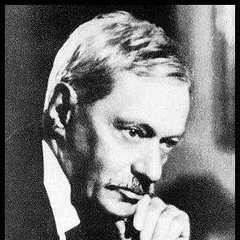
E.F. Benson

E.F. Benson Books

Novelist

Miss Mapp

A source page for quotes linked to E.F. Benson.
0 quotes

Mapp and Lucia

A source page for quotes linked to E.F. Benson.

0 quotes

The Rubicon

A source page for quotes linked to E.F. Benson.

0 quotes

As We Are

A source page for quotes linked to E.F. Benson.

0 quotes

Daisy's Aunt

A source page for quotes linked to E.F. Benson.

0 quotes

Paying Guests

A source page for quotes linked to E.F. Benson.

0 quotes

Queen Lucia

A source page for quotes linked to E.F. Benson.

0 quotes

Related Quotes

“He looked sharply towards the pollarded trees. 'Yes, just there,' he said. 'I saw it plainly, and equally plainly I saw it not. And then there's that telephone of yours.' I told him now about the ladder I had seen below the tree where he saw the dangling rope. 'Interesting,' he said, 'because it's so silly and unexpected. It is really tragic that I should be called away just now, for it looks as if the - well, the matter were coming out of the darkness into a shaft of light. But I'll be back, I hope, in thirty-six hours. Meantime, do observe very carefully, and whatever you do, don't make a theory. Darwin says somewhere that you can't observe without theory, but to make a theory is a great danger to an observer. It can't help influencing your imagination; you tend to see or hear what falls in with your hypothesis. So just observe; be as mechanical as a phonograph and a photographic lens.' Presently the dog-cart arrived and I went down to the gate with him. 'Whatever it is that is coming through, is coming through in bits,' he said. 'You heard a telephone; I saw a rope. We both saw a figure, but not simultaneously nor in the same place. I wish I didn't have to go.' I found myself sympathizing strongly with this wish, when after dinner I found myself with a solitary evening in front of me, and the pledge to 'observe' binding me. It was not mainly a scientific ardour that prompted this sympathy and the desire for independent combination, but, quite emphatically, fear of what might be coming out of the huge darkness which lies on all sides of human experience. I could no longer fail to connect together the fancied telephone bell, the rope, and the ladder, for what made the chain between them was the figure that both Philip and I had seen. Already my mind was seething with conjectural theory, but I would not let the ferment of it ascend to my surface consciousness; my business was not to aid but rather stifle my imagination. ("Expiation")”

“Lucia herself relied largely on psychic bids: in other words, whenever she announced a high contract in any suit, her partner had to guess whether she held, say, a positive tiara of diamonds, or whether she was being psychic. If he guessed wrong, a frightful disaster might result, and Elizabeth Mapp-Flint had once been justifiably sarcastic on the conclusion of one of these major debacles. 'I see, dear,' she said, 'when you declare four diamonds, it means you haven't got any and want to be taken out. I shall know better another time.”

“Miss Mapp had experienced a cruel disappointment last night, though the triumph of this morning had done something to soothe it, for Major Benjy's window had certainly been lit up to a very late hour, and so it was clear that he had not been able, twice in succession, to tear himself away from his diaries, or whatever else detained him, and go to bed at a proper time. Captain Puffin, however, had not sat up late; indeed he must have gone to bed quite unusually early, for his window was dark by half-past nine. To-night, again the position was reversed, and it seemed that Major Benjy was "good" and Captain Puffin was "bad". On the whole, then, there was cause for thankfulness, and as she added a tin of biscuits and two jars of Bovril to her prudent stores, she found herself a conscious sceptic about those Roman roads. Diaries (perhaps) were a little different, for egoism was a more potent force than archæology, and for her part she now definitely believed that Roman roads spelt some form of drink. She was sorry to believe it, but it was her duty to believe something of the kind, and she really did not know what else to believe. She did not go so far as mentally to accuse him of drunkenness, but considering the way he absorbed red-currant fool, it was clear that he was no foe to alcohol and probably watered the Roman roads with it.”

“Georgie, I've got it," she said. "I've guessed what it means." Now though Georgie was devoted to his Lucia, he was just as devoted to inductive reasoning, and Daisy Quantock was, with the exception of himself, far the most powerful logician in the place. "What is it, then?" he asked. "Stupid of me not to have thought of it at once," said Daisy. "Why, don't you see? Pepino is Auntie's heir, for she was unmarried, and he's the only nephew, and probably he has been left piles and piles. So naturally they say it's a terrible blow. Wouldn't do to be exultant. They must say it's a terrible blow, to show they don't care about the money. The more they're left, the sadder it is. So natural. I blame myself for not having thought of it at once...”

“Luck ever attends the bold and constructive thinker: the apple, for instance, fell from the tree precisely when Newton's mind was groping after the law of gravity, and as Diva stepped into her grocer's to begin her morning's shopping (for she had been occupied with roses ever since breakfast) the attendant was at the telephone at the back of the shop. He spoke in a lucid telephone-voice. "We've only two of the big tins of corned beef," he said; and there was a pause, during which, to a psychic, Diva's ears might have seemed to grow as pointed with attention as a satyr's. But she could only hear little hollow quacks from the other end. "Tongue as well. Very good. I'll send them up at once," he added, and came forward into the shop. "Good morning," said Diva. Her voice was tremulous with anxiety and investigation. "Got any big tins of corned beef? The ones that contain six pounds." "Very sorry, ma'am. We've only got two, and they've just been ordered." "A small pot of ginger then, please," said Diva recklessly. "Will you send it round immediately?" "Yes, ma'am. The boy's just going out." That was luck. Diva hurried into the street, and was absorbed by the headlines of the news outside the stationer's. This was a favourite place for observation, for you appeared to be quite taken up by the topics of the day, and kept an oblique eye on the true object of your scrutiny...”

“But why did she come back and take her card away?" asked Miss Mackintosh. "I told Florence that Miss Mapp had heard something dreadful about her. And how did she know that Lady Deal was coming here at all? The house was taken in my name." "That's just what we all long to find out," said Diva eagerly. "She said that somebody in London told her." "But who?" asked Miss Mackintosh. "Florence only settled to come at lunch time that day, and she told her butler to ring up Susie and say she would be arriving." Diva's eyes grew round and bright with inductive reasoning. "I believe we're on the right tack," she said. "Could she have received Lady Deal's butler's message, do you think? What's your number?" "Tilling 76," said Miss Mackintosh. Evie gave three ecstatic little squeaks. "Oh, that's it, that's it!" she said. "Elizabeth Mapp is Tilling 67. So careless of them, but all quite plain. And she did hear it from somebody in London. Quite true, and so dreadfully false and misleading, and so like her. Isn't it, Diva? Well, it does serve her right to be found out." Miss Mackintosh was evidently a true Tillingite. "How marvellous!" she said.”

“Miss Elizabeth Mapp might have been forty, and she had taken advantage of this opportunity by being just a year or two older. Her face was of high vivid colour and was corrugated by chronic rage and curiosity; but these vivifying emotions had preserved to her an astonishing activity of mind and body, which fully accounted for the comparative adolescence with which she would have been credited anywhere except in the charming little town which she had inhabited so long. Anger and the gravest suspicions about everybody had kept her young and on the boil.”

“They lived in a world of destruction and fortuitous death. All was chance, and it was not even the Devil who threw the dice, for he was part of the fairy-tale and perished with it. It had hardly been worth while to pick a bone with it, for the only thing to quarrel with was one's own credulity in having ever believed a tale that broke down at so many points when put to the test. Year by year boys fresh from school joined in the dance of death, and sweltered in the reeking, stinking heat, when they should have been playing cricket or swimming in cool waters, and they got trench-fever and were gassed, and young limbs swift to run and ripe for love were gashed by bullets and sawn off in hospitals. The fate of the world rested on their shoulders: they were the bewildered scapegoats who were driven out into this desert of death, to expiate the criminal pride and folly of those who had been in charge of world-affairs while they were yet unbreeched. Save for rare moments of panic, they maintained a cheerful carelessness, a studied unconsciousness of the surrounding horror, for to think about it, to realize it and speak of it was to go mad. A few went mad, and with bandaged eyes awaited the volley they would never hear. The rest carried on, dumb and gallant, saying nothing, except in a few blurted words to a friend, of that smouldering focus of resentment and despair.”

“The body is transmuted into other forms, worms batten on it, it helps to feed the grass, and some animal consumes the grass. But as for the survival of the individual spirit of a man, show me one tittle of scientific evidence to support it. Besides, if it did survive, all the evil and malice in it must surely survive too. Why should the death of the body purge that away? It's a nightmare to contemplate such a thing, and oddly enough, unhinged people like spiritualists want to persuade us for our consolation that the nightmare is true. ("Monkeys")”

“Miss Mackintosh waved her arms wildly. "Oh, please stop, and let me guess," she cried. "I shall go crazy with joy if I'm right. It was an old Peerage, and so she found that Lady Deal was Helena Herman--" "Whom she had seen ten years ago at a music hall as a male impersonator," cried Diva. "And didn't want to know her," interrupted Miss Mackintosh. "Yes, that's it, but that is not all. I hope you won't mind, but it's too rich. She saw you this morning coming out of your house in your bath-chair, and was quite sure that you were that Lady Deal." The three ladies rocked with laughter. Sometimes one recovered, and sometimes two, but they were re-infected by the third, and so they went on, solo and chorus, and duet and chorus, till exhaustion set in. "But there's still a mystery," said Diva at length, wiping her eyes. "Why did the Peerage say that Lady Deal was Helena Herman?" "Oh, that's the last Lady Deal," said Miss Mackintosh. "Helena Herman's Lord Deal died without children and Florence's Lord Deal, my Lady Deal, succeeded. Cousins." "If that isn't a lesson for Elizabeth Mapp," said Diva. "Better go to the expense of a new Peerage than make such a muddle. But what a long call we've made. We must go.”

“The subject dropped, and we sat on in the dusk that was rapidly deepening into night. The door into the hall was open at our backs, and a panel of light from the lamps within was cast out to the terrace. Wandering moths, invisible in the darkness, suddenly became manifest as they fluttered into this illumination, and vanished again as they passed out of it. One moment they were there, living things with life and motion of their own, the next they quite disappeared. How inexplicable that would be, I thought, if one did not know from long familiarity, that light of the appropriate sort and strength is needed to make material objects visible. Philip must have been following precisely the same train of thought, for his voice broke in, carrying it a little further. 'Look at that moth,' he said, 'and even while you look it has gone like a ghost, even as like a ghost it appeared. Light made it visible. And there are other sorts of light, interior psychical light which similarly makes visible the beings which people the darkness of our blindness.' ("Expiation")”

“Emotionally, I have no picture-book illustrated with memories of my first five years, but externally, I have impressions that possess a haunting vividness comparable only to the texture of dreams, when dreams are tumultuously alive.”

“Vermouth always makes me brilliant unless it makes me idiotic.”

“An idea so luminous flashed across her brain that she almost thought the room had leaped into light.”

“...vicinity to the sea is desirable, because it is easier to do nothing by the sea than anywhere else, and because bathing and basking on the shore cannot be considered an employment but only an apotheosis of loafing. ("Expiation")”