Quotessence
Home / Authors / Epictetus
Epictetus

Epictetus Quotes

Philosopher

Filter quotes by topic

Famous Epictetus Quotes

“Who exactly do you want to be? What kind of person do you want to be? What are your personal ideals? Whom do you admire? What are their special traits that you would make your own It's time to stop being vague. If you wish to be an extraordinary person, if you wish to become wise, then you should explicitly identify the kind of person you aspire to become. If you have a daybook, write down who you're trying to be, so that you can refer to this self-determination. Precisely describe the demeanor you want to adopt so that you may preserve it when you are by yourself or with other people.”

“Does a man reproach thee for being proud or ill-natured, envious or conceited, ignorant or detracting? Consider with thyself whether his reproaches are true. If they are not, consider that thou art not the person whom he reproaches, but that he reviles an imaginary being, and perhaps loves what thou really art, though he hates what thou appearest to be.”

“When therefore we are hindered, or disturbed, or grieved, let us never attribute it to others, but to ourselves; that is, to our own principles. An uninstructed person will lay the fault of his own bad condition upon others. Someone just starting instruction will lay the fault on himself. Some who is perfectly instructed will place blame neither on others nor on himself.”

“What hurts this person is not the occurrence itself, for another person might not feel oppressed by this situation at all. What is hurting this person is the response he or she has uncritically adopted. It is not a demonstration of kindness or friendship to the people we care about to join them in indulging in wrongheaded, negative feelings.”

“Don't just say you have read books. Show that through them you have learned to think better, to be a more discriminating and reflective person. Books are the training weights of the mind. They are very helpful, but it would be a bad mistake to suppose that one has made progress simply by having internalized their contents." Translation by Sharon Lebell”

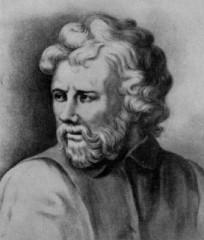
“To Epictetus, all external events are determined by fate, and are thus beyond our control, but we can accept whatever happens calmly and dispassionately. Individuals, however, are responsible for their own actions which they can examine and control through rigorous self-discipline. Suffering arises from trying to control what is uncontrollable, or from neglecting what is within our power. As part of the universal city that is the universe, human beings have a duty of care to all fellow humans. The person who followed these precepts would achieve happiness.”