Quotessence
Home / Authors / Ernst Cassirer Books
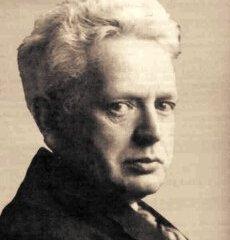
Ernst Cassirer

Ernst Cassirer Books

Philosopher

Related Quotes

“Such is the strange situation in which modern philosophy finds itself. No former age was ever in such a favourable position with regard to the sources of our knowledge of human nature. Psychology, ethnology, anthropology, and history have amassed an astoundingly rich and constantly increasing body of facts. Our technical instruments for observation and experimentation have been immensely improved, and our analyses have become sharper and more penetrating. We appear, nonetheless, not yet to have found a method for the mastery and organization of this material. When compared with our own abundance the past may seem very poor. But our wealth of facts is not necessarily a wealth of thoughts. Unless we succeed in finding a clue of Ariadne to lead us out of this labyrinth, we can have no real insight into the general character of human culture; we shall remain lost in a mass of disconnected and disintegrated data which seem to lack all conceptual unity.”

“It was a long evolutionary course which the human mind had to traverse, to pass from the belief in a physico-magical power comprised in the Word to a realization of its spiritual power. Indeed, it is the Word, it is language, that really reveals to man that world which is closer to him than any world of natural objects and touches his weal and woe more directly than physical nature. For it is language that makes his existence in a community possible; and only in society, in relation to a "Thee", can his subjectivity assert itself as a "Me.”

“...it would be a very naive sort of dogmatism to assume that there exists an absolute reality of things which is the same for all living beings. Reality is not a unique and homogeneous thing; it is immensely diversified, having as many different schemes and patterns as there are different organisms. Every organism is, so to speak, a monadic being. It has a world of its own because it has an experience of its own. The phenomena that we find in the life of a certain biological species are not transferable to any other species. The experiences - and therefore the realities - of two different organisms are incommensurable with one another. In the world of a fly, says Uexkull, we find only "fly things"; in the world of a sea urchin we find only "sea urchin things.”

“Religion claims to be in possession of an absolute truth; but its history is a history of errors and heresies. It gives us the promise and prospect of a transcendent world - far beyond the limits of our human experience - and it remains human, all too human.”

“We think of religion as the symbolic expression of our highest moral ideals; we think of magic as a crude aggregate of superstitions. Religious belief seems to become mere superstitious credulity if we admit any relationship with magic. On the other hand our anthropological and ethnographical material makes it extremely difficult to separate the two fields.”

“There is a conceptual depth as well as a purely visual depth. The first is discovered by science; the second is revealed in art. The first aids us in understanding the reasons of things; the second in seeing their forms. In science we try to trace phenomena back to their first causes, and to general laws and principles. In art we are absorbed in their immediate appearance, and we enjoy this appearance to the fullest extent in all its richness and variety. Here we are not concerned with the uniformity of laws but with the multiformity and diversity of intuitions.”

“Man is always inclined to regard the small circle in which he lives as the center of the world and to make his particular, private life the standard of the universe and to make his particular, private life the standard of the universe. But he must give up this vain pretense, this petty provincial way of thinking and judging.”