“The masters have been done away with; the morality of the common man has triumphed.”
Filter quotes by topic
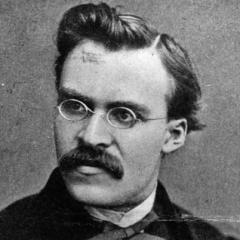
Famous Friedrich Nietzsche Quotes
Source: Delphi Complete Works of Friedrich Nietzsche (Illustrated): Friedrich Nietzsche
Source: Writings of Nietzsche: Volume III
Source: Delphi Complete Works of Friedrich Nietzsche (Illustrated): Friedrich Nietzsche
Source: Delphi Complete Works of Friedrich Nietzsche (Illustrated): Friedrich Nietzsche
Source: Nietzschean narratives
Source: Twilight of the Idols
“Love is more afraid of change than destruction.”
Source: A Book For Free Spirits 2: Human Book
Source: Nietzsche: Daybreak: Thoughts on the Prejudices of Morality
Source: Nietzsche: Daybreak: Thoughts on the Prejudices of Morality
Source: Nietzsche: Daybreak: Thoughts on the Prejudices of Morality
Source: Nietzsche: Daybreak: Thoughts on the Prejudices of Morality
Source: The Gay Science: With a Prelude in Rhymes and an Appendix of Songs
“Whatever we have words for, that we have already got beyond.”
Source: The Portable Nietzsche
“The value of a man can only be measured with regard to other men.”
Source: The Will to Power, Book I to IV: An Attempted Transvaluation of all Values (Complete)
“It is neither the best nor the worst things in a book that defy translation.”
Source: Nietzsche: Human, All Too Human: A Book for Free Spirits
Source: Nietzsche: Human, All Too Human: A Book for Free Spirits
Source: The Portable Nietzsche
“When the gratitude of many to one throws away all shame, we behold fame.”
Source: The Gay Science: With a Prelude in Rhymes and an Appendix of Songs
“Your soul will be dead even before your body: fear nothing further.”
Source: The Portable Nietzsche
“Without music, life would be an error. The German imagines even God singing songs”
Source: Delphi Complete Works of Friedrich Nietzsche (Illustrated): Friedrich Nietzsche
“Fathers and sons are much more considerate of one another than mothers and daughters.”
Source: The Gay Science
“Too long, the earth has been a madhouse!”
Source: On the Genealogy of Morals and Ecce Homo
“Marriage: that I call the will of two to create the one who is more than those who created it.”
Source: Thus spake Zarathustra
Source: Nietzsche: Human, All Too Human: A Book for Free Spirits
Source: A Nietzsche Reader
Source: Human, All Too Human: A Book for Free Spirits
“Be your self! All you are now doing, thinking, desiring, is not you yourself.”
Source: Nietzsche: Untimely Meditations
Source: Delphi Complete Works of Friedrich Nietzsche (Illustrated): Friedrich Nietzsche
Source: The Gay Science: With a Prelude in Rhymes and an Appendix of Songs
Source: Delphi Complete Works of Friedrich Nietzsche (Illustrated): Friedrich Nietzsche