Filter quotes by topic
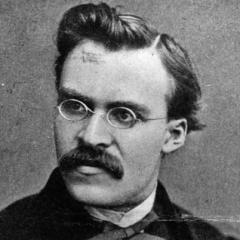
Famous Friedrich Nietzsche Quotes
Source: Nietzsche: Untimely Meditations
Source: Human, All-Too-Human: Parts One and Two
Source: Human, All-Too-Human: Parts One and Two
Source: Human, All-Too-Human: Parts One and Two
Source: The Will to Power
“Which is it? Is man only a blunder of God? Or is God only a blunder of man?”
Source: The Antichrist
Source: The Antichrist
“There exists above the "productive" man a yet higher species.”
Source: Nietzsche: Human, All Too Human: A Book for Free Spirits
Source: Human, All-Too-Human: Parts One and Two
Source: Basic Writings of Nietzsche
Source: Human, All-Too-Human: Parts One and Two
Source: The Portable Nietzsche
Source: The Portable Nietzsche
Source: Twilight of the Idols
Source: Basic Writings of Nietzsche
“The man loves danger and sport. That is why he loves woman, the most dangerous of all sports.”
“Under conditions of peace the warlike man attacks himself.”
Source: Beyond good and evil: prelude to a philosophy of the future
Source: Human, All Too Human: A Book for Free Spirits
“Without the errors which lie in the assumption of morality, man would have remained an animal.”
Source: Human, All-Too-Human: Parts One and Two
Source: The complete works of Friedrich Nietzsche: The first complete and authorized English translation
Source: The Portable Nietzsche
Source: Human, All-Too-Human: Parts One and Two
Source: Delphi Complete Works of Friedrich Nietzsche (Illustrated): Friedrich Nietzsche
Source: Human, All-Too-Human: Parts One and Two
Source: Human, All-Too-Human: Parts One and Two
“Man is more sensitive to the contempt of others than to self-contempt.”
Source: Human, All-Too-Human: Parts One and Two
“Men submit from habit to everything that seeks power.”
Source: Human, All-Too-Human: Parts One and Two
“Speaking is a beautiful folly; with that man dances over all things.”
Source: The Portable Nietzsche
Source: Human, All-Too-Human: Parts One and Two
“In the true man there is a child concealed who wants to play.”
“In solitude the lonely man is eaten up by himself, among crowds by the many.”
Source: Delphi Complete Works of Friedrich Nietzsche (Illustrated): Friedrich Nietzsche
Source: Human, All-Too-Human: Parts One and Two
Source: The Portable Nietzsche
Source: Beyond good and evil: prelude to a philosophy of the future