Quotessence
Home / Authors / George Santayana
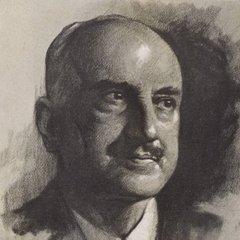
George Santayana

George Santayana Quotes

Philosopher

Filter quotes by topic

Famous George Santayana Quotes

“The circumstances of life are only the bases or instruments of life: the fruition of life is not in retrospect, not in description of the instruments, but in expression of the spirit itself, to which those instruments may prove useful; as music is not a criticism of violins, but a playing upon them. This expression need not resemble its ground. Experience is diversified by colours that are not produced by colours, sounds that are not conditioned by sounds, names that are not symbols for other names, fixed ideal objects that stand for ever-changing material processes. The mind is fundamentally lyrical, inventive, redundant. Its visions are its own offspring, hatched in the warmth of some favourable cosmic gale. The ambient weather may vary, and these visions be scattered; but the ideal world they pictured may some day be revealed again to some other poet similarly inspired; the possibility of restoring it, or something like it, is perpetual. It is precisely because Shelley's sense for things is so fluid, so illusive, that it opens to us emotionally what is a serious scientific probability; namely, that human life is not all life, nor the landscape of earth the only admired landscape in the universe; that the ancients who believed in gods and spirits were nearer the virtual truth (however anthropomorphically they may have expressed themselves) than any philosophy or religion that makes human affairs the centre and aim of the world. Such moral imagination is to be gained by sinking into oneself, rather than by observing remote happenings, because it is at its heart, not at its fingertips, that the human soul touches matter, and is akin to whatever other centres of life may people the infinite.”

“A conceived thing is doubly a product of mind, more a product of mind, if you will, than an idea, since ideas arise, so to speak,by the mind's inertia and conceptions of things by its activity. Ideas are mental sediment; conceived things are mental growths.”

“I love moving water, I love ships, I love the sharp definition, the concentrated humanity, the sublime solitude of life at sea. The dangers of it only make present to us the peril inherent in all existence, which the stupid, ignorant, un-travelled land-worm never discovers; and the art of it, so mathematical, so exact, so rewarding to intelligence, appeals to courage and clears the mind of superstition, while filling it with humility and true religion.”

“Even the most inspired verse, which boasts not without a relative justification to be immortal, becomes in the course of ages a scarcely legible hieroglyphic; the language it was written in dies, a learned education and an imaginative effort are requisite to catch even a vestige of its original force. Nothing is so irrevocable as mind.”

“To be interested in the changing seasons is a happier state of mind than to be hopelessly in love with spring.”

“Progress, far from consisting in change, depends on retentiveness. When change is absolute there remains no being to improve and no direction is set for possible improvement: and when experience is not retained, as among savages, infancy is perpetual. Those who cannot remember the past are condemned to repeat it. In the first stage of life the mind is frivolous and easily distracted; it misses progress by failing in consecutiveness and persistence. This is the condition of children and barbarians, in which instinct has learned nothing from experience.”

“With you a part of me hath passed away; For in the peopled forest of my mind A tree made leafless by this wintry wind Shall never don again its green array. Chapel and fireside, country road and bay, Have something of their friendliness resigned; Another, if I would, I could not find, And I am grown much older in a day. But yet I treasure in my memory Your gift of charity, and young hearts ease, And the dear honour of your amity; For these once mine, my life is rich with these. And I scarce know which part may greater be,-- What I keep of you, or you rob from me.”

“Experience has repeatedly confirmed that well-known maxim of Bacon's that 'a little philosophy inclineth a man's mind to atheism, but depth in philosophy bringeth men's minds about to religion.' At the same time, when Bacon penned that sage epigram... he forgot to add that the God to whom depth in philosophy brings back men's minds is far from being the same from whom a little philosophy estranges them.”

“Memory itself is an internal rumour; and when to this hearsay within the mind we add the falsified echoes that reach us from others, we have but a shifting and unseizable basis to build upon. The picture we frame of the past changes continually and grows every day less similar to the original experience which it purports to describe.”

“Happiness is impossible, and even inconceivable, to a mind without scope and without pause, a mind driven by craving, pleasure, or fear. To be happy, you must be reasonable, or you must be tamed. You must have taken the measure of your powers, tasted the fruits of your passion, and learned your place in the world and what things in it can really serve you. To be happy, you must be wise.”

“Whoever it was who searched the heavens with a telescope and found no God would not have found the human mind if he had searched the brain with a microscope.”