Quotessence
Home / Authors / George Sarton
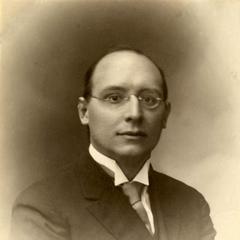
George Sarton

George Sarton Quotes

Historian of Science

Filter quotes by topic

Famous George Sarton Quotes

“The chief requisite for the making of a good chicken pie is chicken; no amount of culinary legerdemain can make up for the lack of chicken. In the same way, the chief requisite for the history of science is intimate scientific knowledge; no amount of philosophic legerdemain can make up for its absence.”

“The ability of nonintelligent people to understand the most complicated mechanisms and to use them has always been to me a cause of astonishment: their inability to understand simple questions is even more astonishing. The general acceptance of simple ideas is difficult and rare, and yet it is only when simple, fundamental, ideas have been accepted that further progress becomes possible on a higher level.”

“Hellenic science is a victory of rationalism, which appears greater, not smaller, when one is made to realize that it had been won in spite of the irrational beliefs of the Greek people; all in all, it was a triumph of reason in the face of unreason. Some knowledge of Greek superstitions is needed not only for a proper appreciation of that triumph but also for the justification of occasional failures, such as the many Platonic aberrations.”

“The rationalism of the creative minds was tempered by abundant fantasies, and the supreme beauty of the monuments was probably spoiled by the circumambient vanities and ugliness; in a few cases the Greeks came as close to perfection as it was possible to do, yet they were human and imperfect.”

“My main interest... is the love of truth, whether pleasant or not. Truth is self-sufficient, and there is nothing to which it can be subordinated without loss. When truth is made subservient to anything else, however great (say religion), it becomes impure and sordid.”

“The history of science should not be an instrument to defend any kind of social or philosophic theory; it should be used only for its own purpose, to illustrate impartially the working of reason against unreason, the gradual unfolding of truth, in all its forms, whether pleasant or unpleasant, useful of useless, welcome or unwelcome.”

“In ancient times there was no public education, except that of the forum, the theater, and the street, and the general degree of illiteracy was very high. The early men of science were left very much to themselves and such a phrase as "the scientific culture of Alexandria in the third century B.C." does not cover any reality. In a sense, this is still true today; the real pioneers are so far ahead of the crowd (even a very literate crowd) that they remain almost alone.”

“If we are generous enough, we can stretch our souls everywhere and everywhen else. If we succeed in doing so, we shall discover that our present embraces the past and the future and that the whole world is our province.”

“All men are our brothers. As far as the discovery of the truth is concerned, they are all working for the same purpose; they may be separated by the accidents of space and time, and by the exigencies of race, religion, nationality, and other groupings; from the point of view of eternity they are working together.”

“Men of science have made abundant mistakes of every kind; their knowledge has improved only because of their gradual abandonment of ancient errors, poor approximations, and premature conclusions.”

“Ancient portraits are symbolic images without any immediate relation to the individuals represented; they are not portraits as we understand them. It is remarkable that philologists who are capable of carrying accuracy to the extremes in the case of words are as credulous as babies when it comes to "images," and yet an image is so full of information that ten thousands words would not add up to it.”

“The Hellenistic world was international to a degree, polyglot and inspired by many religious faiths. ...the Greek ideals were pagan and the Hellenistic age witnessed their death struggle against Asiatic and Egyptian mysteries , on the one side, and against Judaism , on the other.”

“It would be foolish to give credit to Euclid for pangeometrical conceptions; the idea of geometry deifferent from the common-sense one never occurred to his mind. Yet, when he stated the fifth postulate, he stood at the parting of the ways. His subconscious prescience is astounding. There is nothing comperable to it in the whole history of science.”

“The main duty of the historian of mathematics, as well as his fondest privilege, is to explain the humanity of mathematics, to illustrate its greatness, beauty and dignity, and to describe how the incessant efforts and accumulated genius of many generations have built up that magnificent monument, the object of our most legitimate pride as men, and of our wonder, humility and thankfulness, as individuals. The study of the history of mathematics will not make better mathematicians but gentler ones, it will enrich their minds, mellow their hearts, and bring out their finer qualities.”