Quotessence
Home / Authors / George Washington
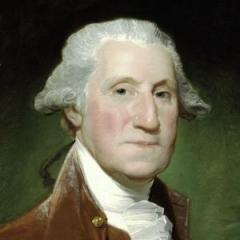
George Washington

George Washington Quotes

1st U.S. President

Filter quotes by topic

Famous George Washington Quotes

“Differences in political opinions are as unavoidable as, to a certain point, they may perhaps be necessary; but it is exceedingly to be regretted that subjects cannot be discussed with temper on the one hand, or decisions submitted to without having the motives, which led to them, improperly implicated on the other; and this regret borders on chagrin when we find that men of abilities, zealous patriots, having the same general objects in view, and the same upright intentions to prosecute them, will not exercise more charity in deciding on the opinions and actions of one another.”

“Much indeed to be regretted, party disputes are now carried to such a length, and truth is so enveloped in mist and false representation, that it is extremely difficult to know through what channel to seek it. This difficulty to one, who is of no party, and whose sole wish is to pursue with undeviating steps a path which would lead this country to respectability, wealth, and happiness, is exceedingly to be lamented. But such, for wise purposes, it is presumed, is the turbulence of human passions in party disputes, when victory more than truth is the palm contended for.”

“My ardent desire is... to keep the United States free from political connexions with every other Country. To see that they may be independent of all, and under the influence of none.”

“I have the consolation to believe, that, while choice and prudence invite me to quit the political scene, patriotism does not forbid it.”

“Impressed with a conviction that the due administration of justice is the firmest pillar of good Government, I have considered the first arrangement of the Judicial department as essential to the happiness of our Country, and to the stability of its political system.”

“The prospect, that a good general government will in all human probability be soon established in America, affords me more substantial satisfaction; than I have ever before derived from any political event. Because there is a rational ground for believing that not only the happiness of my own countrymen, but that of mankind in general, will be promoted by it.”

“I am persuaded, you will permit me to observe, that the path of true piety is so plain as to require but little political direction.”

“My observation is that whenever one person is found adequate to the discharge of a duty... it is worse executed by two persons, and scarcely done at all if three or more are employed therein.”

“In politics as in religion, my tenets are few and simple. The leading one of which, and indeed that which embraces most others, is to be honest and just ourselves and to exact it from others, meddling as little as possible in their affairs where our own are not involved. If this maxim was generally adopted, wars would cease and our swords would soon be converted into reap hooks and our harvests be more peaceful, abundant, and happy.”

“As Mankind becomes more liberal, they will be more apt to allow that all those who conduct themselves as worthy members of the community are equally entitled to the protections of civil government. I hope ever to see America among the foremost nations of justice and liberality.”

“The great rule of conduct for us, in regard to foreign nations, is, in extending our commercial relations, to have with them as little political connection as possible.”

“However [political parties] may now and then answer popular ends, they are likely in the course of time and things, to become potent engines, by which cunning, ambitious, and unprincipled men will be enabled to subvert the power of the people and to usurp for themselves the reins of government, destroying afterwards the very engines which have lifted them to unjust dominion.”

“Of all the dispositions and habits which lead to political prosperity, religion and morality are indispensable supports. In vain would that man claim tribute to patriotism who should labor to subvert these great pillars of human happiness - these firmest props of the duties of men and citizens. . . . reason and experience both forbid us to expect that national morality can prevail in exclusion of religious principles.”

“We ought to deprecate the hazard attending ardent and susceptible minds, from being too strongly, and too early prepossessed in favor of other political systems, before they are capable of appreciating their own.”

“It should be the highest ambition of every American to extend his views beyond himself, and to bear in mind that his conduct will not only affect himself, his country, and his immediate posterity; but that its influence may be co-extensive with the world, and stamp political happiness or misery on ages yet unborn.”

“Next Monday the Convention in Virginia will assemble; we have still good hopes of its adoption here: though by no great plurality of votes. South Carolina has probably decided favourably before this time. The plot thickens fast. A few short weeks will determine the political fate of America for the present generation, and probably produce no small influence on the happiness of society through a long succession of ages to come.”

“It is . . . [the citizens] choice, and depends upon their conduct, whether they will be respectable and prosperous, or contemptable and miserable as a Nation. This is the time of their political probation; this is the moment when the eyes of the World are turned upon them.”

“My ardent desire is, and my aim has been, to comply strictly with all our engagements, foreign and domestic, but to keep the United States free from political connections with every other country; to see that they may be independent of all and under the influence of none.”

“No morn ever dawned more favorable than ours did; and no day was every more clouded than the present! Wisdom, and good examples are necessary at this time to rescue the political machine from the impending storm.”

“The necessity of reciprocal checks in the exercise of political power, by dividing and distributing it into different depositories, and constituting each the guardian of the public weal against invasions by the others, has been evinced by experiments ancient and modern, some of them in our country and under our own eyes.”

“The spirit of encroachment tends to consolidate the powers of all the departments in one, and thus to create whatever the form of government, a real despotism. A just estimate of that love of power, and proneness to abuse it, which predominates in the human heart is sufficient to satisfy us of the truth of this position.”

“For myself the delay [in assuming the office of the President] may be compared with a reprieve; for in confidence I assure you, with the world it would obtain little credit that my movements to the chair of Government will be accompanied by feelings not unlike those of a culprit who is going to the place of his execution: so unwilling am I, in the evening of a life nearly consumed in public cares, to quit a peaceful abode for an Ocean of difficulties, without that competency of political skill, abilities and inclination which is necessary to manage the helm.”

“I am once more seated under my own vine and fig tree ... and hope to spend the remainder of my days in peaceful retirement, making political pursuits yield to the more rational amusement of cultivating the earth.”

“We ought not to look back, unless it is to derive useful lessons from past errors, and for the purpose of profiting by dear bought experience. To enveigh against things that are past and irremediable, is unpleasing; but to steer clear of the shelves and rocks we have struck upon, is the part of wisdom, equally as incumbent on political as other men, who have their own little bark, or that of others, to navigate through the intricate paths of life, or the trackless ocean, to the haven of security and rest.”

“It has always been a source of serious reflection and sincere regret with me that the youth of the United States should be sent to foreign countries for the purpose of education. Although there are many who escape the danger of contracting principles unfavorable to republican governments, yet we ought to deprecate the hazard attending ardent and susceptible minds from being too strongly and too early prejudiced in favor of other political systems, before they are capable of appreciating their own.”

“In his address of 19 September 1796, given as he prepared to leave office, President George Washington spoke about the importance of morality to the country's well-being: Of all the dispositions and habits which lead to political prosperity, Religion and Morality are indispensable supports. . . . And let us with caution indulge the supposition that morality can be maintained without religion. . . . Can it be that Providence has not connected the permanent felicity of a Nation with its virtue?”

“The great rule of conduct for us, in regard to foreign nations, is in extending our commercial relations to have as little political connection as possible... Why, by interweaving our destiny with that of any part of Europe, entangle our peace and prosperity in the toils of European ambition, rivalships, interest, humor, or caprice?... It is our true policy to steer clear of permanent alliances with any portion of the foreign world.”