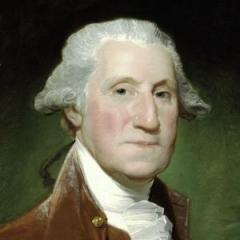
“Interwoven is the love of liberty with every ligament of the heart.”
“There is an opinion that parties in free countries are useful checks upon the administration of the government, and serve to keep alive the spirit of liberty. This, within certain limits, is probably true, and, in governments of a monarchical cast, patriotism may look with indulgence, if not with favor, upon the spirit of party. But in those of the popular character, in governments purely elective, it is a spirit not to be encouraged.”
Source: Journal of the convention of the state of Mississippi, and the act calling the same: with the Constitution of the United States, and Washington's Farewell Address
“I have already intimated to you the danger of parties in the state, with particular reference to the founding of them on geographical discriminations. Let me now take a more comprehensive view, and warn you in the most solemn manner against the baneful effects of the spirit of party, generally.”
Source: Monuments of Washington's Patriotism: Containing a Fac Simile of His Publick Accounts Kept During the Revolutionary War; and Some of the Most Interesting Documents Connected with His Military Command and Civil Administration; Embracing, Among Others, the Farewell Address to the People of the United States
“It will be worthy of a free, enlightened, and, at no distant period, a great nation, to give to mankind the magnanimous and too novel example of a people always guided by an exalted justice and benevolence.”
Source: Washington's Farewell Address to the People of the United States of America
“Europe has a set of primary interests, which to us have none, or a very remote relation. Hence she must be engaged in frequent controversies, the causes of which are essentially foreign to our concerns. Hence, therefore, it must be unwise in us to implicate ourselves, by artificial ties, in the ordinary vicissitudes of her politics or the ordinary combinations and collisions of her friendships or enmities.”
Source: Washington's Farewell Address to the People of the United States of America: Published in September, 1796
“In vain would that man claim the tribute of patriotism who should labor to subvert these great pillars.”
Source: Washington's Farewell Address to the People of the United States of America: Published in September, 1796
“One of the expedients of party to acquire influence, within particular districts, is to misrepresent the opinions and aims of other districts.”
Source: Washington's Farewell Address to the People of the United States of America: Published in September, 1796
“I have the consolation to believe, that, while choice and prudence invite me to quit the political scene, patriotism does not forbid it.”
Source: Monuments of Washington's patriotism: containing a fac simile of his publick accounts kept during the revolutionary war; and some of the documents connected with his military command and civil administration; together with an eulogium on the character of Washington, by W. Jackson
“Nothing is more essential, than that permanent, inveterate antipathies against particular Nations, and passionate attachments for others, should be excluded; and that, in place of them, just and amicable feelings towards all should be cultivated.”
Source: Washington's Farewell Address: The Proclamation of Jackson Against Nullification, and the Declaration of Independence
“The common and continual mischiefs of the spirit of party are sufficient to make it the interest and duty of a wise people to discourage and restrain it.”
Source: Washington's Farewell Address to the People of the United States
“Let me ... warn you in the most solemn manner against the baneful effects of the spirit of party.”
Source: Washington's Farewell Address: The Proclamation of Jackson Against Nullification, and the Declaration of Independence
“[The spirit of party] serves always to distract the public councils and enfeeble the public administration. It agitates the community with ill-founded jealousies and false alarms, kindles the animosity of one part against another.”
Source: Washington's Farewell Address: The Proclamation of Jackson Against Nullification, and the Declaration of Independence
“Guard against the impostures of pretended patriotism.”
Source: Washington's Farewell Address to the People of the United States
“Let us with caution indulge the supposition that morality can be maintained without religion. Reason and experience both forbid us to expect that national morality can prevail in exclusion of religious principle.”
Source: Elements of useful knowledge: containing a historical and geographical account of the United States
“Observe good faith and justice toward all nations. Cultivate peace and harmony with all.”
“The basis of our political system is the right of the people to make and to alter their constitutions of government.”
“There can be no greater error than to expect, or calculate, upon real favors from nation to nation. It is an illusion which experience must cure, which a just pride ought to discard.”
Source: Declaration of Independence ... with the Names, Places of Residence, &c. of the Signers. Constitution of the United States ...: Also, Address of George Washington ... on Declining Being Considered a Candidate for Their Future Suffrages. September 17, 1796
“The alternate domination of one faction over another, sharpened by the spirit of revenge natural to party dissension, which in different ages and countries has perpetrated the most horrid enormities, is itself a frightful despotism. But this leads at length to a more formal and permanent despotism.”
Source: The speeches, addresses and messages, of the several presidents of the United States, at the openings of Congress and at their respective inaugurations: Also, the Declaration of independence, the Constitution of the United States, and Washington's farewell address to his fellow-citizens
“Citizens by birth or choice of a common country, that country has a right to concentrate your affections. The name of American, which belongs to you, in your national capacity, must always exalt the just pride of Patriotism, more than any appellation derived from local discriminations.”
Source: Declaration of Independence ... with the Names, Places of Residence, &c. of the Signers. Constitution of the United States ...: Also, Address of George Washington ... on Declining Being Considered a Candidate for Their Future Suffrages. September 17, 1796
“The great rule of conduct for us, in regard to foreign nations, is, in extending our commercial relations, to have with them as little political connection as possible.”
Source: Washington's political legacies: To which is annexed an appendix, containing an account of his illness, death, and the national tributes of respect paid to his memory, with a biographical outline of his life and character
“However [political parties] may now and then answer popular ends, they are likely in the course of time and things, to become potent engines, by which cunning, ambitious, and unprincipled men will be enabled to subvert the power of the people and to usurp for themselves the reins of government, destroying afterwards the very engines which have lifted them to unjust dominion.”
Source: Maxims of George Washington: Political, Military, Social, Moral, and Religious
“Let us with Caution indulge the supposition that morality can be maintained without religion.”
Source: Washington's Farewell Address to the People of the United States of America: Published in September, 1796
“Excessive partiality for one foreign nation and excessive dislike of another cause those whom they actuate to see danger only on one side, and serve to veil and even second the arts of influence on the other. Real patriots who may resist the intrigues of the favorite are liable to become suspected and odious, while its tools and dupes usurp the applause and confidence of the people, to surrender their interests.”
Source: Maxims of Washington: Political, Social, Moral and Religious
“Interwoven as is the love of liberty with every ligament of your hearts, no recommendation of mine is necessary to fortify or confirm the attachment.”
Source: Washington's Farewell Address to the People of the United States
“It is our policy to steer clear of permanent alliances with any portion of the foreign world.”
“Can it be that Providence has not connected the permanent felicity of a nation with its virtue?”
Source: Washington's Farewell Address to the People of the United States of America
“Of all the dispositions and habits which lead to political prosperity, religion and morality are indispensable supports. In vain would that man claim tribute to patriotism who should labor to subvert these great pillars of human happiness - these firmest props of the duties of men and citizens. . . . reason and experience both forbid us to expect that national morality can prevail in exclusion of religious principles.”
“Promote then as an object of primary importance, Institutions for the general diffusion of knowledge. In proportion as the structure of a government gives force to public opinion, it is essential that public opinion should be enlightened.”
Source: The Life of General Washington: First President of the United States
“If, in the opinion of the people, the distribution or modification of the constitutional powers be in any particular wrong, let it be corrected by an amendment in the way which the Constitution designates. But let there be no change by usurpation; for though this, in one instance, may be the instrument of good, it is the customary weapon by which free governments are destroyed.”
Source: Washington's Farewell Address to the People of the United States of America
“Where is the security for property, for reputation, for life, if the sense of religious obligation deserts the oaths . . . ?”
Source: The Writings of George Washington: Being His Correspondence, Addresses, Messages, and Other Papers, Official and Private, Selected and Published from the Original Manuscripts; with a Life of the Author, Notes, and Illustrations
“Observe good faith and justice towards all Nations. Cultivate peace and harmony with all. Religion and morality enjoin this conduct; and can it be that good policy does not equally enjoin it?”
Source: Washington's Farewell Address to the People of the United States of America: Published in September, 1796
“The Constitution which at any time exists, 'till changed by an explicit and authentic act of the whole People is sacredly obligatory upon all.”
“Harmony, liberal intercourse with all Nations, are recommended by policy, humanity and interest. But even our Commercial policy should hold an equal and impartial hand: neither seeking nor granting exclusive favours or preferences; consulting the natural course of things; diffusing and diversifying by gentle means the streams of Commerce, but forcing nothing; establishing with Powers so disposed; in order to give trade a stable course.”
Source: Monuments of Washington's patriotism: containing a fac simile of his publick accounts kept during the revolutionary war; and some of the documents connected with his military command and civil administration; together with an eulogium on the character of Washington, by W. Jackson
“The inducements of interest for observing [neutral] conduct . . . has been to endeavour to gain time to our country to settle and mature its yet recent institutions, and to progress without interruption, to that degree of strength and consistency, which is necessary to give it, humanly speaking, the command of its own fortunes.”
Source: The Complete Works of George Washington: Military Journals, Rules of Civility, Writings on French and Indian War, Presidential Work, Inaugural Addresses, Messages to Congress, Letters & Biography
“Can it be, that Providence has not connected the permanent felicity of a Nation with its virtue? The experiment, at least, is recommended by every sentiment which ennobles human Nature. Alas! is it rendered impossible by its vices?”
Source: Washington's Farewell Address: The Proclamation of Jackson Against Nullification, and the Declaration of Independence
“The very idea of the power and the right of the people to establish government presupposes the duty of every individual to obey the established government.”
Source: Washington's Farewell Address to the People of the United States
“Against the insidious wiles of foreign influence, (I conjure you to believe me fellow citizens) the jealousy of a free people ought to be constantly awake; since history and experience prove that foreign influence is one of the most baneful foes of Republican Government.”
Source: Washington's Farewell Address: The Proclamation of Jackson Against Nullification, and the Declaration of Independence
“'Tis folly in one Nation to look for disinterested favors from another; that it must pay with a portion of its Independence for whatever it may accept under that character; that by such acceptance, it may place itself in the condition of having given equivalents for nominal favours and yet of being reproached with ingratitude for not giving more. There can be no greater error than to expect, or calculate upon real favours from Nation to Nation. 'Tis an illusion which experience must cure, which a just pride ought to discard.”
Source: The Political Economy of the American Revolution
“The nation which indulges towards another an habitual hatred, or an habitual fondness, is in some degree a slave. It is a slave to its animosity or to its affection, either of which is sufficient to lead it astray from its duty and its interest.”
“Sympathy for the favorite nation, facilitating the illusion of an imaginary common interest in cases where no real common interest exists, and infusing into one the enmities of the other, betrays the former into a participation in the quarrels and wars of the latter without adequate inducement or justification.”
Source: George Washington's Rules of Civility and Decent Behavior: ...And Other Important Writings
“Against the insidious wiles of foreign influence . . . the jealousy of a free people ought to be constantly awake.”
Source: Washington's Farewell Address: The Proclamation of Jackson Against Nullification, and the Declaration of Independence
“The duty of holding a Neutral conduct may be inferred, without any thing more, from the obligation which justice and humanity impose on every nation, in cases in which it is free to act, to maintain inviolate the relations of Peace and amity toward other Nations.”
Source: Washington's Farewell Address: The Proclamation of Jackson Against Nullification, and the Declaration of Independence
“If we remain one people, under an efficient government, the period is not far off when we may defy material injury from external annoyance; when we may take such an attitude as will cause the neutrality we may at any time resolve upon to be scrupulously respected; when belligerent nations, under the impossibility of making acquisitions upon us, will not lightly hazard the giving us provocation; when we may choose peace or war, as our interest, guided by justice, shall counsel.”
Source: Washington's Farewell Address to the People of the United States of America: Published in September, 1796
“The unity of government which constitutes you one people is also now dear to you. It is justly so, for it is a main pillar in the edifice of your real independence, the support of your tranquility at home, your peace abroad, of your safety, of your prosperity, of that very liberty which you so highly prize.”
Source: Washington's Farewell Address to the People of the United States
“The necessity of reciprocal checks in the exercise of political power, by dividing and distributing it into different depositories, and constituting each the guardian of the public weal against invasions by the others, has been evinced by experiments ancient and modern, some of them in our country and under our own eyes.”
Source: The Writings of George Washington: Being His Correspondence, Addresses, Messages, and Other Papers, Official and Private
“The spirit of encroachment tends to consolidate the powers of all the departments in one, and thus to create whatever the form of government, a real despotism. A just estimate of that love of power, and proneness to abuse it, which predominates in the human heart is sufficient to satisfy us of the truth of this position.”
Source: Washington's Farewell Address: The Proclamation of Jackson Against Nullification, and the Declaration of Independence
“Let me now warn you in the most solemn manner against the baneful effects of the spirit of party. The common and continual mischiefs of the spirit of party are sufficient to make it the interest and duty of a wise people to discourage and restrain it. It serves always to distract the public councils and enfeeble the public administration. It agitates the community with ill-founded jealousies and false alarms; kindles the animosity of one part against another. In governments purely elective, it is a spirit not to be encouraged.”
“As a very important source of strength and security, cherish public credit.”
Source: Washington's Farewell Address to the People of the United States of America
“It is important, likewise, that the habits of thinking in a free Country should inspire caution in those entrusted with its administration, to confine themselves within their respective Constitutional spheres; avoiding in the exercise of the Powers of one department to encroach upon another.”
Source: The speeches, addresses and messages, of the several presidents of the United States, at the openings of Congress and at their respective inaugurations: Also, the Declaration of independence, the Constitution of the United States, and Washington's farewell address to his fellow-citizens
“Every day the increasing weight of years admonishes me more and more, that the shade of retirement is as necessary to me as it will be welcome.”
Source: Washington's Farewell Address to the People of the United States of America: Published in September, 1796