Quotessence
Home / Authors / Hermann Hesse
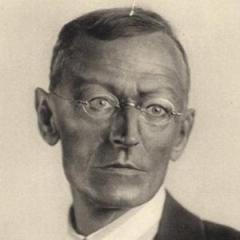
Hermann Hesse

Hermann Hesse Quotes

Poet

Filter quotes by topic

Famous Hermann Hesse Quotes

“Much he learned from her red, smart mouth. Much he learned from her tender supple hand. Him, who was, regarding love, still a boy and had a tendency to plunge blindly and insatiably into lust like into a bottomless pit, him she taught, thoroughly starting with the basics, about that school of thought which teaches that pleasure cannot be taken without giving pleasure, and that every gesture, every caress, every touch, every look, every spot of the body, however small it was, had its secret, which would bring happiness to those who know about it and unleash it. She taught him, that lovers must not part from one another after celebrating love, without one admiring the other, without being just as defeated as they have been victorious, so that with none of them should start feeling fed up or bored and get that evil feeling of having abused or having been abused. Wonderful hours he spent with the beautiful and smart artist, became her student, her lover, her friend.”

“There is much to be said for contentment and painlessness, for these bearable and submissive days, on which neither pain nor pleasure is audible, but pass by whispering and on tip-toe. But the worst of it is that it is just this contentment that I cannot endure. After a short time it fills me with irrepressible hatred and nausea. In desperation I have to escape and throw myself on the road to pleasure, or, if that cannot be, on the road to pain. When I have neither pleasure nor pain and have been breathing for a while the lukewarm insipid air of these so-called good and tolerable days, I feel so bad in my childish soul that I smash my mouldering lyre of thanksgiving in the face of the slumbering god of contentment and would rather feel the very devil burn in me than this warmth of a well-heated room. A wild longing for strong emotions and sensations seethes in me, a rage against this toneless, flat, normal and sterile life. I have a mad impulse to smash something, a warehouse, perhaps, or a cathedral, or myself, to commit outrages, to pull off the wigs of a few revered idols, to provide a few rebellious schoolboys with the longed-for ticket to Hamburg, or to stand one or two representatives of the established order on their heads. For what I always hated and detested and cursed above all things was this contentment, this healthiness and comfort, this carefully preserved optimism of the middle classes, this fat and prosperous brood of mediocrity.”

“If I were poet now, I would not resist the temptation to trace my life back through the delicate shadows of my childhood to the precious and sheltered sources of my earliest memories. But these possessions are far too dear and sacred for the person I now am to spoil for myself. All there is to say of my childhood is that it was good and happy. I was given the freedom to discover my own inclinations and talents, to fashion my inmost pleasures and sorrows myself and to regard the future not as an alien higher power but as the hope and product of my own strength.”

“If a bell failed to ring, if a stove smoked, if a wheel on a machine stuck, you knew at once where to look and did so with alacrity; you found the defect and knew how to cure it. But the thing within you, the secret mainspring that alone gave meaning to life, the thing within us that alone is living, alone is capable of feeling pleasure and pain, of craving happiness and experiencing it- that was unknown. You knew nothing about that, nothing at all, and if the mainspring failed there was no cure. Wasn't it insane?”

“The bourgeois treasures nothing more highly than the self.... And so at the cost of intensity he achieves his own preservation andsecurity. His harvest is a quiet mind which he prefers to being possessed by God, as he prefers comfort to pleasure, convenience to liberty, and a pleasant temperature to that deathly inner consuming fire.”

“When I have neither pleasure nor pain and have been breathing for a while the lukewarm insipid air of these so-called good and tolerable days, I feel so bad in my childish soul that I smash my rusty lyre of thanksgiving in the face of the slumbering god of contentment and would rather feel the most devilish pain burn in me than this warmth of a well-heated room. - Harry Haller”

“Whether it is good or evil, whether life in itself is pain or pleasure, whether it is uncertain-that it may perhaps be this is not important-but the unity of the world, the coherence of all events, the embracing of the big and the small from the same stream, from the same law of cause, of becoming and dying.”

“So she thoroughly taught him that one cannot take pleasure without giving pleasure, and that every gesture, every caress, every touch, every glance, every last bit of the body has its secret, which brings happiness to the person who knows how to wake it. She taught him that after a celebration of love the lovers should not part without admiring each other, without being conquered or having conquered, so that neither is bleak or glutted or has the bad feeling of being used or misused.”