Quotessence
Home / Authors / Hermann Hesse
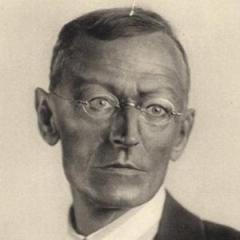
Hermann Hesse

Hermann Hesse Quotes

Poet

Filter quotes by topic

Famous Hermann Hesse Quotes

“I do want something more. I’m not content to be happy, that’s not what I’m cut out to be, not what fate intended for me. I’m destined to be the very opposite. I had more than my fair share of unhappiness but my unhappiness was stupid, barren... Because if I wanted to die, and I did, I ought not to have been so afraid of death. The unhappiness I’m in need of and longing for is different. It’s of a kind that will make me hunger for suffering and lust for death. That’s the sort of unhappiness, or happiness, I am waiting for. There is nothing wrong with this happiness. On the contrary, I love it, feel grateful for it. It’s as beautiful as a sunny day in a summer of rain. But I sense that it can’t last, so it is barren too, this happiness. It is satisfying, but satisfaction is not the nourishment I need. It’s enough to fill Steppenwolf’s stomach and send him to sleep, but it’s not the kind of happiness to die for. I am very satisfied with my happiness. It’s something I can live with for quite a while yet, but if it occasionally deserts me for an hour or so, allowing me to wake from my sleep and experience a longing for something, what I long for with all my being is not this happiness, not that it should last for ever. Rather, I long to experience suffering again, only more exquisitely, more richly this time. What I yearn for are the kinds of suffering that will make me ready and willing to die.”

“For it cannot be denied that all over the world and in all ages there are beings who are perceived to be extraordinary, charming, and appealing, and whom many honor as benevolent spirits, because they make one think of a more beautiful, a freer, a more winged life than the one we lead.”

“Pjesnik čiji nas stihovi ushićuju možda je bio tužan usamljenik a glazbenik neki sjetan sanjar, ali i tada njegovo djelo dijeli vedrinu bogova i zvijezda. Ono što nam umjetnik daje, to više nije njegov mrak, njegova patnja ili tjeskoba, to je kaplja čišste svjetlosti, vječite vedrine. Kad i cijeli narodi i jezici pokušavaju doprijeti do dubine svijeta, u mitovima, kozmologiji i raznim religijama, ono posljednje i najviše što mogu dostići, to je ta vedrina. Sjećas li se starih Indijaca, naš je stari waldzellski učitelj jednom o njima pričao: svijt patnje, razmišljanja, pokore, askeze; ali posljednja velika otkrića njegova duha bila su svijetla i vedra, vedar je smješak onih koji su preboljeli svijet i smješak Buddhe, vedri su likovi njegove dubokoumne mitologije.”

“And many years later, as an adult student of history, Knecht was to perceive more distinctly that history cannot come into being without the substance and the dynamism of this sinful world of egoism and instinctuality, and that even such sublime creations as the Order were born in this cloudy torrent and sooner or later will be swallowed up by it again...Nor was this ever merely an intellectual problem for him. Rather, it engaged his innermost self more than any other problem, and he felt it as partly his responsibility. His was one of those natures which can sicken, languish, and die when they see an ideal they have believed in, or the country and community they love, afflicted with ills.”

“For much longer, he could have stayed with Kamaswami, made money, wasted money, filled his stomach, and let his soul die of thirst; for much longer he could have lived in this soft, well upholstered hell, if this had not happened: the moment of complete hopelessness and despair, that most extreme moment, when he hang over the rushing waters and was ready to destroy himself. That he had felt this despair, this deep disgust, and that he had not succumbed to it, that the bird, the joyful source and voice in him was still alive after all, this was why he felt joy, this was why he laughed, this was why his face was smiling brightly under his hair which had turned gray.”

“Son dovuto passare attraverso tanta sciocchezza, tanta bruttura, tanto errore, tanto disgusto e delusione e dolore, solo per ridiventare bambino e poter ricominciare da capo. Ma è stato giusto, il mio cuore lo approva, gli occhi miei ne ridono. Ho dovuto provare la disperazione, ho dovuto abbassarmi fino al più stolto di tutti i pensieri, al pensiero del suicidio, per poter rivivere la grazia, per riapprendere l'Om, per poter di nuovo dormire tranquillo e risvegliarmi sereno. Ho dovuto essere un pazzo, per sentire di nuovo l'Atman. Ho dovuto peccare per poter rivivere. Dove può ancora condurmi il mio cammino? Stolto è questo cammino, va strisciando obliquamente, forse va in cerchio. Ma vada come vuole, io son contento di seguirlo.”

“So she thoroughly taught him that one cannot take pleasure without giving pleasure, and that every gesture, every caress, every touch, every glance, every last bit of the body has its secret, which brings happiness to the person who knows how to wake it. She taught him that after a celebration of love the lovers should not part without admiring each other, without being conquered or having conquered, so that neither is bleak or glutted or has the bad feeling of being used or misused.”