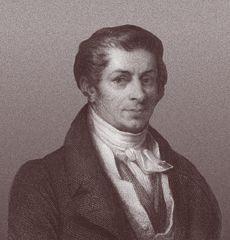
“It is the aim of good government to stimulate production, of bad government to encourage consumption.”
Source: A treatise on political economy
“The haggardness of poverty is everywhere seen contrasted with the sleekness of wealth, the exhorted labour of some compensating for the idleness of others, wretched hovels by the side of stately colonnades, the rags of indigence blended with the ensigns of opulence; in a word, the most useless profusion in the midst of the most urgent wants.”
“But, is it possible for princes and ministers to be enlightened, when private individuals are not so?”
Source: A treatise on political economy: or, The production, distribution and consumption of wealth
“Still how unenlightened and ignorant are the very nations we term civilized!”
“When a tree, a natural product, is felled, is society put into possession of no greater produce than that of the mere labour of the woodman?”
Source: A Treatise on Political Economy; Or, The Production, Distribution, and Consumption of Wealth
“The celebrated Adam Smith was the first to point out the immense increase of production, and the superior perfection of products referable to this division of labour.”
Source: A Treatise on Political Economy; Or, The Production, Distribution, and Consumption of Wealth
“To have never done anything but make the eighteenth part of a pin, is a sorry account for a human being to give of his existence.”
Source: A treatise on political economy
“A shop-keeper in good business is quite as well off as a pedlar that travels the country with his wares on his back. Commercial jealousy is, after all, nothing but prejudice: it is a wild fruit, that will drop of itself when it has arrived at maturity.”
Source: A Treatise on Political Economy; Or, The Production, Distribution, and Consumption of Wealth
“Freedoms and apprenticeships are likewise expedients of police,not of that wholesome branch of police, whose object is the maintenance of the public and private security, and which is neither costly nor vexatious; but of that sort of police which bad governments employ to preserve or extend their personal authority at any expense.”
Source: A treatise on political economy; or, The production, distribution, and consumption of wealth. Tr. by C.R. Prinsep, with notes
“regulation is useful and proper, when aimed at the prevention of fraud or contrivance, manifestly injurious to other kinds of production, or to the public safety, and not at prescribing the nature of the products and the methods of fabrication.”
Source: A Treatise on Political Economy; Or, The Production, Distribution, and Consumption of Wealth
“Some writers maintain arithmetic to be only the only sure guide in political economy; for my part, I see so many detestable systems built upon arithmetical statements, that I am rather inclined to regard that science as the instrument of national calamity.”
Source: A treatise on political economy
“Nothing is more dangerous in practice, than an obstinate, unbending adherence to a system, particularly in its application to the wants and errors of mankind.”
Source: A Treatise on Political Economy; Or, The Production, Distribution, and Consumption of Wealth
“What is the motive which operates in every man's breast to counteract the impulse towards the gratification of his wants and appetites?”
Source: A Treatise on Political Economy: Or, The Production, Distribution, and Consumption of Wealth
“Valuation is vague and arbitrary, when there is no assurance that it will be generally acquiesced in by others.”
Source: A treatise on political economy: or, The production, distribution and consumption of wealth
“Demand and supply are the opposite extremes of the beam, whence depend the scales of dearness and cheapness; the price is the point of equilibrium, where the momentum of the one ceases, and that of the other begins.”
Source: A treatise on political economy
“One product is always ultimately bought with another, even when paid for in the first instance with money.”
Source: A treatise on political economy: or, The production, distribution and consumption of wealth
“A much larger value is consumed in lettuces than in pineapples,throughout Europe at large; and the superb shawls of Cachemere are, in France, a very poor object in trade, in comparison with the plain cotton goods of Rouen.”
“Whence it is evident that the remedy must be adapted to the particular cause of the mischief; consequently, the cause must be ascertained, before the remedy is devised.”
Source: A Treatise on Political Economy; Or, The Production, Distribution, and Consumption of Wealth
“It is a melancholy but an undoubted fact, that, even in the most thriving countries, part of the population annually dies of mere want. Not that all who perish from want absolutely die of hunger; though this calamity is of more frequent occurrence than is generally supposed.”
Source: A treatise on political economy: or, The production, distribution and consumption of wealth
“All travellers agree that protestant are both richer and more populous than catholic countries;and the reason is, because the habits of the former are more conducive to production.”
Source: A treatise on political economy; or, The production, distribution, and consumption of wealth. Tr. by C.R. Prinsep, with notes
“Opulent, civilized, and industrious nations, are greater consumers than poor ones, because they are infinitely greater producers.”
Source: History of Economic Theory: The Selected Writings of Adam Smith, Jean-Baptiste Say, and J.R. McCulloch
“In times of political confusion, and under an arbitrary government, many will prefer to keep their capital inactive, concealed, and unproductive, either of profit or gratification, rather than run the risk of its display. This latter evil is never felt under a good government.”
Source: A Treatise on Political Economy; Or, The Production, Distribution, and Consumption of Wealth
“The luxury of ostentation affords a much less substantial and solid gratification, than the luxury of comfort, if I may be allowed the expression.”
Source: A treatise on political economy, or, the production, distribution, and consumption of wealth
“Every individual, from the common mechanic, that works in wood or clay, to the prime minister that regulates with the dash of his pen the agriculture, the breeding of cattle, the mining, or the commerce of a nation, will perform his business the better, the better he understands the nature of things,and the more his understanding is enlightened.”
Source: History of Economic Theory: The Selected Writings of Adam Smith, Jean-Baptiste Say, and J.R. McCulloch
“An uniformity of weights and measures, arranged upon mathematical principles, would be a benefit to the whole commercial world, if it were wise enough to adopt such an expedient.”
Source: A Treatise on Political Economy; Or, The Production, Distribution, and Consumption of Wealth
“If the community wish to have the benefit of more knowledge and intelligence in the labouring classes, it must dispense it at the public charge.”
Source: A Treatise on Political Economy: Or, The Production, Distribution, and Consumption of Wealth
“The wealthy are generally impressed with an idea, that they shall never stand in need of public charitable relief; but a little less confidence would become them better.”
Source: A Treatise on Political Economy; Or, The Production, Distribution, and Consumption of Wealth
“The best scheme of finance is, to spend as little as possible; and the best tax is always the lightest.”
Source: History of Economic Theory: The Selected Writings of Adam Smith, Jean-Baptiste Say, and J.R. McCulloch
“A science only advances with certainty, when the plan of inquiry and the object of our researches have been clearly defined; otherwise a small number of truths are loosely laid hold of, without their connexion being perceived, and numerous errors, without being enabled to detect their fallacy.”
Source: A Treatise on Political Economy; Or, The Production, Distribution, and Consumption of Wealth
“With respect to the present time, there are few persons who unite the qualifications of good observers with a situation favourable for accurate observation.”
Source: A treatise on political economy: or, The production, distribution and consumption of wealth
“The quantity of money, which is readily parted with to obtain a thing is called its price.”
Source: A Treatise on Political Economy; Or, The Production, Distribution, and Consumption of Wealth
“No human being has the faculty of originally creating matter, which is more than nature itself can do. But any one may avail himself of the agents offered him by nature, to invest matter with utility.”
Source: A Treatise on Political Economy; Or, The Production, Distribution, and Consumption of Wealth
“The wants of mankind are supplied and satisfied out of the gross values produced and created, and not out of the net values only.”
Source: A treatise on political economy
“Capital in the hands of a national government forms a part of the gross national capital.”
Source: A treatise on political economy; or, The production, distribution, and consumption of wealth. Tr. by C.R. Prinsep, with notes
“The love of domination never attains more than a factitious elevation, that is sure to make enemies of all its neighbours.”
Source: A treatise on political economy: or, The production, distribution and consumption of wealth
“The United States will have the honour of proving experimentally, that true policy goes hand in hand with moderation and humanity.”
Source: A Treatise on Political Economy; Or, The Production, Distribution, and Consumption of Wealth
“I have made no distinction between the circulation of goods and of money, because there really is none.”
Source: A treatise on political economy: or, The production, distribution and consumption of wealth
“The day will come, sooner or later, when people will wonder at the necessity of taking all this trouble to expose the folly of a system, so childish and absurd, and yet so often enforced at the point of a bayonet.”
Source: A treatise on political economy
“The ancients, by their system of colonization, made themselves friends all over the known world; the moderns have sought to make subjects, and therefore have made enemies.”
Source: A Treatise on Political Economy: Or, The Production, Distribution, and Consumption of Wealth
“What would people think of a tradesman, that was to give a ball in his shop, hire performers, and hand refreshments about, with a view to benefit his business?”
Source: A treatise on political economy: or, The production, distribution and consumption of wealth
“At Newfoundland, it is said, that dried cod performs the office of money”
Source: A Treatise on Political Economy; Or, The Production, Distribution, and Consumption of Wealth
“And let no government imagine, that, to strip them of the power of defrauding their subjects, is to deprive them of a valuable privilege. A system of swindling can never be long lived, and must infallibly in the end produce much more loss than profit.”
Source: A treatise on political economy
“But what must be the character of that policy, which aims at national prosperity through the impoverishment of a large proportion of the home producers, with a view to supply foreigners at a cheaper rate, and give them all the benifet of the national privation and self denial?”
Source: A Treatise on Political Economy: Or, The Production, Distribution, and Consumption of Wealth
“capital cannot be more beneficially employed, then in strengthening and aiding the productive powers of nature.”
“The sea and wind can at the same time convey my neighbour's vessel and my own.”
Source: A treatise on political economy
“A nation or an individual, will do wisely to direct consumption chiefly to those articles, that are longest time in wearing out, and the most frequently in use.”
Source: A treatise on political economy
“The difficulty lies, not in finding a producer, but in finding a consumer.”
Source: History of Economic Theory: The Selected Writings of Adam Smith, Jean-Baptiste Say, and J.R. McCulloch
“The government has, in all countries, a vast influence, in determining the character of the national consumption; not only because it absolutely directs the consumption of the state itself, but because a great proportion of the consumption of individuals is gained by its will and example.”
Source: History of Economic Theory: The Selected Writings of Adam Smith, Jean-Baptiste Say, and J.R. McCulloch
“It is doubtless very desirable, that private persons should have a correct knowledge of their personal interests; but it must be infinitely more so, that governments should possess that knowledge.”
Source: A Treatise on Political Economy; Or, The Production, Distribution, and Consumption of Wealth
“When war becomes a trade, it benefits, like all other trades, from the division of labour.”
Source: A Treatise on Political Economy; Or, The Production, Distribution, and Consumption of Wealth