Quotessence
Home / Authors / John Fowles
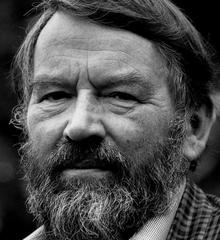
John Fowles

John Fowles Quotes

Novelist

Filter quotes by topic

Famous John Fowles Quotes

“Each death laid a dreadful charge of complicity on the living; each death was incongenerous, its guilt irreducible, its sadness immortal; a bracelet of bright hair about the bone. I did not pray for her, because prayer has no efficacy; I did not cry for her, because only extroverts cry twice; I sat in the silence of that night, that infinite hostility to man, to permanence, to love, remembering her, remembering her.”

“He stared to sea. "I gave up all ideas of practicing medicine. In spite of what I have just said about the wave and the water, in those years in France I am afraid I lived a selfish life. That is, I offered myself every pleasure. I traveled a great deal. I lost some money dabbling in the theatre, but I made much more dabbling on the Bourse. I gained a great many amusing friends, some of whom are now quite famous. But I was never very happy. I suppose I was fortunate. It took me only five years to discover what some rich people never discover — that we all have a certain capacity for happiness and unhappiness. And that the economic hazards of life do not seriously affect it.”

“He knew he was overfastidious. But how could one write history with Macaulay so close behind? Fiction or poetry, in the midst of the greatest galaxy of talent in the history of English literature? How could one be a creative scientist, with Lyell and Darwin still alive? Be a statesman, with Disraeli and Gladstone polarizing all the available space? You will see that Charles set his sights high. Intelligent idlers always have, in order to justify their idleness to their intelligence.”

“Once upon a time there was a young prince who believed in all things but three. He did not believe in princesses, he did not believe in islands, he did not believe in God. His father, the king, told him that such things did not exist. As there were no princesses or islands in his father's domains, and no sign of God, the young prince believed his father. But then, one day, the prince ran away from his palace. He came to the next land. There, to his astonishment, from every coast he saw islands, and on these islands, strange and troubling creatures whom he dared not name. As he was searching for a boat, a man in full evening dress approached him along the shore. Are those real islands?' asked the young prince. Of course they are real islands,' said the man in evening dress. And those strange and troubling creatures?' They are all genuine and authentic princesses.' Then God must exist!' cried the prince. I am God,' replied the man in full evening dress, with a bow. The young prince returned home as quickly as he could. So you are back,' said the father, the king. I have seen islands, I have seen princesses, I have seen God,' said the prince reproachfully. The king was unmoved. Neither real islands, nor real princesses, I have seen God,' said the prince reproachfully. The king was unmoved. Neither real islands, nor real princesses, nor a real God exist.' I saw them!' Tell me how God was dressed.' God was in full evening dress.' Were the sleeves of his coat rolled back?' The prince remembered that they had been. The king smiled. That is the uniform of a magician. You have been deceived.' At this, the prince returned to the next land, and went to the same shore, where once again he came upon the man in full evening dress. My father the king has told me who you are,' said the young prince indignantly. 'You deceived me last time, but not again. Now I know that those are not real islands and real princesses, because you are a magician.' The man on the shore smiled. It is you who are deceived, my boy. In your father's kingdom there are many islands and many princesses. But you are under your father's spell, so you cannot see them.' The prince pensively returned home. When he saw his father, he looked him in the eyes. Father, is it true that you are not a real king, but only a magician?' The king smiled, and rolled back his sleeves. Yes, my son, I am only a magician.' Then the man on the shore was God.' The man on the shore was another magician.' I must know the real truth, the truth beyond magic.' There is no truth beyond magic,' said the king. The prince was full of sadness. He said, 'I will kill myself.' The king by magic caused death to appear. Death stood in the door and beckoned to the prince. The prince shuddered. He remembered the beautiful but unreal islands and the unreal but beautiful princesses. Very well,' he said. 'I can bear it.' You see, my son,' said the king, 'you too now begin to be a magician.”

“Her stare fixed me. Without rancour and without regret; without triumph and without evil; as Desdemona once looked back on Venice. On the incomprehension, the baffled rage of Venice. I had taken myself to be in some way the traitor Iago punished, in an unwritten sixth act. Chained in hell. But I was also Venice; the state left behind; the thing journeyed from.”

“It may have something to do with intelligence, but I am certain it has nothing to do with knowledge - I mean that there are people who have an instinctive yet perfect moral judgment, who can perform the most complex ethical calculations as Indian peasants can sometimes perform astounding mathematical feats in a matter of seconds. Lily was such a person. And I craved her approval.”

“Я мог бы влюбиться в неё по уши и стал бы невыносимо требовательным, предъявляя на неё собственные права; но я слишком часто грешил этим прежде, чтобы не знать, что стремление лишить партнёра независимости прямым путём ведёт к беде. Желание обладать тесно связано с желанием изменить, переделать; а она очень нравилась мне такой, какой была. Так же как фраза «Я верю в Бога» часто означает просто «Я верю, что нет необходимости думать», слова «Я тебя люблю» слишком часто оказываются иносказанием «Я хочу обладать тобою».”

“Seven men inhabit the raft. The pessimist, for whom the good things of life are no more than lures to prolong suffering; the egocentric, whose motto is 'Carpe diem' - enjoy today - and who does his best to get the most comfortable part of the raft himself; the optimist, always scanning the horizon for the promised land; the observer, who finds it enough to write the logbook of the voyage and to note down the behaviour of the sea, the raft and his fellow-victims; the altruist, who finds his reason for being in the need to deny himself and to help others; the stoic, who believes in nothing but his own refusal to jump overboard and end it all; and finally the child, the one born, as some with perfect pitch, with perfect ignorance - the pityfully ubiquitous child, who believes that all will be explained in the end, the nightmare fade and the green shore rise.”

Book:Áristos

“I don't want to live any more. I spend most of my life not wanting to live. The only place I am happy is here where we're being taught, and I have to think of something else, or reading books, or in the cinema. Or in bed. I'm only happy when I forget to exist. When just my eyes or my ears or my skin exist. I can't remember having been happy for two or three years. Since the abortion. All I can remember is forcing myself sometimes to look happy so if I catch sight of my face in the mirror I might kid myself for a moment I really am happy.”

“I am one in a row of specimens. It's when I try to flutter out of line that he hates me. I'm meant to be dead, pinned, always the same, always beautiful. He knows that part of my beauty is being alive, but it's the dead me he wants. He wants me living-but-dead. I felt it terribly strongly today. That my being alive and changing and having a separate mind and having moods and all that was becoming a nuisance. He is solid; immovabile, iron-willed. He showed me one day what he called his killing-bottle. I'm imprisoned in it. Fluttering against the glass. Because I can see through it I still think I can escape. I have hope. But it's all an illusion. A thick round wall of glass.”

“I hate people who collect things and classify things and give them names and then forget all about them. That’s what people are always doing in art. They call a painter an impressionist or a cubist or something and then they put him in a drawer and don’t see him as a living individual painter any more.”