Quotessence
Home / Authors / Judith Lewis Herman
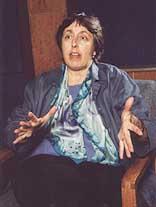
Judith Lewis Herman

Judith Lewis Herman Quotes

Author

Filter quotes by topic

Famous Judith Lewis Herman Quotes

“The ORDINARY RESPONSE TO ATROCITIES is to banish them from consciousness. Certain violations of the social compact are too terrible to utter aloud: this is the meaning of the word unspeakable. Atrocities, however, refuse to be buried. Equally as powerful as the desire to deny atrocities is the conviction that denial does not work. Folk wisdom is filled with ghosts who refuse to rest in their graves until their stories are told. Murder will out. Remembering and telling the truth about terrible events are prerequisites both for the restoration of the social order and for the healing of individual victims. The conflict between the will to deny horrible events and the will to proclaim them aloud is the central dialectic of psychological trauma. People who have survived atrocities often tell their stories in a highly emotional, contradictory, and fragmented manner that undermines their credibility and thereby serves the twin imperatives of truth-telling and secrecy. When the truth is finally recognized, survivors can begin their recovery. But far too often secrecy prevails, and the story of the traumatic event surfaces not as a verbal narrative but as a symptom. The psychological distress symptoms of traumatized people simultaneously call attention to the existence of an unspeakable secret and deflect attention from it. This is most apparent in the way traumatized people alternate between feeling numb and reliving the event. The dialectic of trauma gives rise to complicated, sometimes uncanny alterations of consciousness, which George Orwell, one of the committed truth-tellers of our century, called "doublethink," and which mental health professionals, searching for calm, precise language, call "dissociation." It results in protean, dramatic, and often bizarre symptoms of hysteria which Freud recognized a century ago as disguised communications about sexual abuse in childhood. . . .”

“Further evidence for the pathogenic role of dissociation has come from a largescale clinical and community study of traumatized people conducted by a task force of the American Psychiatric Association. In this study, people who reported having dissociative symptoms were also quite likely to develop persistent somatic symptoms for which no physical cause could be found. They also frequently engaged in self-destructive attacks on their own bodies. The results of these investigations validate the century-old insight that traumatized people relive in their bodies the moments of terror that they can not describe in words. Dissociation appears to be the mechanism by which intense sensory and emotional experiences are disconnected from the social domain of language and memory, the internal mechanism by which terrorized people are silenced.”

“It has become clear that, as Janet observed one hundred years ago, dissociation lies at the heart of the traumatic stress disorders. Studies of survivors of disasters, terrorist attacks, and combat have demonstrated that people who enter a dissociative state at the time of the traumatic event are among most likely to develop long-lasting PTSD.”

“In the absence of strong political movements for human rights, the active process of bearing witness inevitably gives way to the active process of forgetting. Repression, dissociation, and denial are phenomena of social as well as individual consciousness.”