Quotessence
Home / Authors / Lewis B. Smedes
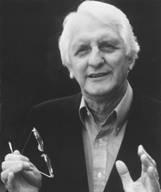
Lewis B. Smedes

Lewis B. Smedes Quotes

Author

Filter quotes by topic

Famous Lewis B. Smedes Quotes

“I worry about fast forgivers. They tend to forgive quickly in order to avoid their pain. Or they forgive fast in order to get an advantage over the people they forgive. And their instant forgiving only makes things worse... People who have been wronged badly and wounded deeply should give themselves time and space before they forgive... There is a right moment to forgive. We cannot predict it in advance; we can only get ourselves ready for it when it arrives... Don't do it quickly, but don't wait too long.”

“Forgiving does not erase the bitter past. A healed memory is not a deleted memory. Instead, forgiving what we cannot forget creates a new way to remember. We change the memory of our past into a hope for our future.”

“To forgive is to set a prisoner free and discover that the prisoner was you.”

“None of us wants to admit that we hate someone... When we deny our hate we detour around the crisis of forgiveness. We suppress our spite, make adjustments, and make believe we are too good to be hateful. But the truth is that we do not dare to risk admitting the hate we feel because we do not dare to risk forgiving the person we hate.”

“Forgiving does not erase the bitter past. A healed memory is not a deleted memory.”

“Forgiving is love's toughest work, and love's biggest risk. If you twist it into something it was never meant to be, it can make you a doormat or an insufferable manipulator. Forgiving seems almost unnatural. Our sense of fairness tells us people should pay for the wrong they do. But forgiving is love's power to break nature's rule.”

“When you give up vengeance, make sure you are not giving up on justice. The line between the two is faint, unsteady, and fine...Vengeance is our own pleasure of seeing someone who hurt us getting it back and then some. Justice, on the other hand, is secure when someone pays a fair penalty for wronging another even if the injured person takes no pleasure in the transaction. Vengeance is personal satisfaction. Justice is moral accounting...Human forgiveness does not do away with human justice.”

“We attach our feelings to the moment when we were hurt, endowing it with immortality. And we let it assault us every time it comes to mind. It travels with us, sleeps with us, hovers over us while we make love, and broods over us while we die. Our hate does not even have the decency to die when those we hate die-for it is a parasite sucking OUR blood, not theirs. There is only one remedy for it. [forgiveness]”

“If we say that monsters [people who do terrible evil] are beyond forgiving, we give them a power they should never have...they are given the power to keep their evil alive in the hearts of those who suffered most. We give them power to condemn their victims to live forever with the hurting memory of their painful pasts. We give the monsters the last word.”

“With a little time, and a little more insight, we begin to see both ourselves and our enemies in humbler profiles. We are not really as innocent as we felt when we were first hurt. And we do not usually have a gigantic monster to forgive; we have a weak, needy, and somewhat stupid human being. When you see your enemy and yourself in the weakness and silliness of the humanity you share, you will make the miracle of forgiving a little easier.”

“The problem with revenge is that it never gets what it wants; it never evens the score. Fairness never comes. The chain reaction set off by every act of vengeance always takes its unhindered course. It ties both the injured and the injurer to an escalator of pain...Why do family feuds go on and on?...the reason is simple: no two people, no two families, ever weigh pain on the same scale.”

“God is the original, master forgiver. Each time we grope our reluctant way through the minor miracle of forgiving, we are imitating his style. I am not at all sure that any of us would have had imagination enough to see the possibilities in this way to heal the wrongs of this life had he not done it first.”

“Forgiving is an affair strictly between a victim and a victimizer. Everyone else should step aside...The worst wounds I ever felt were the ones people gave to my children. Wrong my kids, you wrong me. And my hurt qualifies me to forgive you. But only for the pain you caused me when you wounded them. My children alone are qualified to forgive you for what you did to them.”

“Forgive a wife-slammer if you can. But you don't have to live with him. Forgive a husband who is abusing your children if you can. But only after you kick him out of the house. And if you can't get him out, get help. It's available. In the meantime, don't let him near the kids, and don't let anyone tell you that if you forgive him it means you have to stay with him. [There's an important difference between forgiving a person and tolerating their bad behavior.]”

“Forgiving does not usually happen at once. It is a process, sometimes a long one, especially when it comes to wounds gouged deep. And we must expect some lapses...some people seem to manage to finish off forgiving in one swoop of the heart. But when they do, you can bet they are forgiving flesh wounds. Deeper cuts take more time and can use a second coat.”