Quotessence
Home / Authors / Lewis Carroll Books
Lewis Carroll

Lewis Carroll Books

Writer

Phantasmagoria

A source page for quotes linked to Lewis Carroll.
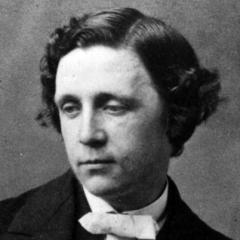
0 quotes

Related Quotes

“A likely story indeed!" said the Pigeon, in a tone of the deepest contempt. "I've seen a good many little girls in my time, but never one with such a neck as that! No, no! You're a serpent; and there's no use denying it. I suppose you'll be telling me next that you never tasted an egg!" "I have tasted eggs, certainly," said Alice, who was a very truthful child; "but little girls eat eggs quite as much as serpents do, you know." "I don't believe it," said the Pigeon; "but if they do, then they're a kind of serpent: that's all I can say.”

“When we were little," the Mock Turtle went on at last, more calmly, though still sobbing a little now and then, "we went to school in the sea. The master was an old Turtle - we used to call him Tortoise -" "Why did you call him Tortoise, if he wasn't one?" Alice asked. "We called him Tortoise because he taught us," said the Mock Turtle angrily: "really you are very dull!”

“I love the stillness of the wood; I love the music of the rill: I love the couch in pensive mood Upon some silent hill. Scarce heard, beneath yon arching trees, The silver-crested ripples pass; and, like a mimic brook, the breeze Whispers among the grass. Here from the world I win release, Nor scorn of men, nor footstep rude, Break into mar the holy peace Of this great solitude. Here may the silent tears I weep Lull the vested spirit into rest, As infants sob themselves to sleep Upon a mothers breast. But when the bitter hour is gone, And the keen throbbing pangs are still, Oh, sweetest then to couch alone Upon some silent hill! To live in joys that once have been, To put the cold world out of sight, And deck life's drear and barren scene With hues of rainbow-light. For what to man the gift of breath, If sorrow be his lot below; If all the day that ends in death Be dark with clouds of woe? Shall the poor transport of an hour Repay long years of sore distress— The fragrance of a lonely flower Make glad the wilderness? Ye golden house of life's young spring, Of innocence, of love and truth! Bright, beyond all imagining, Thou fairy-dream of youth! I'd give all wealth that years have piled, The slow result of Life's decay, To be once more a little child For one bright summer's day.”

“What do you call yourself?" the Fawn said at last. Such a soft sweet voice it had! "I wish I knew!" thought poor Alice. She answered, rather sadly, "Nothing, just now." "Think again," it said: "that won't do." Alice thought, but nothing came of it. "Please, would you tell me what you call yourself?" she said timidly, "I think that might help a little." "I'll tell you, if you'll come a little further on," the Fawn said. "I can't remember here." So they walked on together through the wood, Alice with her arms clasped lovingly round the soft neck of the Fawn, till they came out into another open field, and here the Fawn gave a sudden bound into the air, and shook itself free from Alice's arms. "I'm a Fawn!" it cried out in a voice of delight. "And dear me, you're a human child!" A sudden look of alarm came into its beautiful brown eyes, and in another moment it had darted away at full speed.”

“And how do you know that you're mad? "To begin with," said the Cat, "a dog's not mad. You grant that?" I suppose so, said Alice. "Well then," the Cat went on, "you see a dog growls when it's angry, and wags it's tail when it's pleased. Now I growl when I'm pleased, and wag my tail when I'm angry. Therefore I'm mad.”

“I always thought they were fabulous monsters!" said the Unicorn. "Is it alive?" "It can talk," said Haigha, solemnly. The Unicorn looked dreamily at Alice, and said, "Talk, child." Alice could not help her lips curling up into a smile as she began: "Do you know, I always thought Unicorns were fabulous monsters, too! I never saw one alive before!" "Well, now that we have seen each other," said the Unicorn, "if you'll believe in me, I'll believe in you. Is that a bargain?”

“Twas brillig, and the slithy toves Did gyre and gimble in the wabe; All mimsy were the borogoves, And the mome raths outgrabe. "Beware the Jabberwock, my son The jaws that bite, the claws that catch! Beware the Jubjub bird, and shun The frumious Bandersnatch!" He took his vorpal sword in hand; Long time the manxome foe he sought— So rested he by the Tumtum tree, And stood awhile in thought. And, as in uffish thought he stood, The Jabberwock, with eyes of flame, Came whiffling through the tulgey wood, And burbled as it came! One, two! One, two! And through and through The vorpal blade went snicker-snack! He left it dead, and with its head He went galumphing back. "And hast thou slain the Jabberwock? Come to my arms, my beamish boy! O frabjous day! Callooh! Callay!" He chortled in his joy. 'Twas brillig, and the slithy toves Did gyre and gimble in the wabe; All mimsy were the borogoves, And the mome raths outgrabe.”

“The table was a large one, but the three were all crowded together at one corner of it: 'No room! No room!' they cried out when they saw Alice coming. 'There's plenty of room!' said Alice indignantly, and she sat down in a large arm-chair at one end of the table. 'Have some wine,' the March Hare said in an encouraging tone. Alice looked all round the table, but there was nothing on it but tea. 'I don't see any wine,' she remarked. 'There isn't any,' said the March Hare. 'Then it wasn't very civil of you to offer it,' said Alice angrily. 'It wasn't very civil of you to sit down without being invited,' said the March Hare.”

“Now, what am I to do with this creature when I get it home?" when it grunted again, so violently, that she looked down into its face in some alarm. This time there could be no mistake about it: it was neither more nor less than a pig, and she felt that it would be quite absurd for her to carry it any further. | So she set the little creature down, and felt quite relieved to see it trot away quietly into the wood. "If it had grown up," she said to herself, "it would have made a dreadfully ugly child: but it makes a rather handsome pig, I think." And she began thinking over other children she knew, who might do very well as pigs, and was just saying to herself, "if one only knew the right way to change them--" when she was a little startled by seeing the Cheshire Cat sitting on a bough of a tree a few yards off.”

“A BOAT beneath a sunny sky, Lingering onward dreamily In an evening of July — Children three that nestle near, Eager eye and willing ear, Pleased a simple tale to hear — Long has paled that sunny sky: Echoes fade and memories die: Autumn frosts have slain July. Still she haunts me, phantomwise, Alice moving under skies Never seen by waking eyes. Children yet, the tale to hear, Eager eye and willing ear, Lovingly shall nestle near. In a Wonderland they lie, Dreaming as the days go by, Dreaming as the summers die: Ever drifting down the stream — Lingering in the golden gleam — Life, what is it but a dream?”

“Oh, don't go on like that!" cried the poor Queen, wringing her hands in despair. "Consider what a great girl you are. Consider what a long way you've come today. Consider what o'clock it is. Consider anything, only don't cry!" Alice could not help laughing at this, even in the midst of her tears. "Can you keep from crying by considering things?" she asked. "That's that way it's done," the Queen said with great decision: "nobody can do two things at once, you know.”

“How should I know?" said Alice, surprised at her own courage. "It's no business of mine." The Queen turned crimson with fury, and, after glaring at her for a moment like a wild beast, began screaming "Off with her head! Off with--" "Nonsense!" said Alice, very loudly and decidedly, and the Queen was silent.”

“You alarm me!' said the King. 'I feel faint—Give me a ham sandwich!' On which the Messenger, to Alice's great amusement, opened a bag that hung round his neck, and handed a sandwich to the King, who devoured it greedily. 'Another sandwich!' said the King. 'There's nothing but hay left now,' the Messenger said, peeping into the bag. 'Hay, then,' the King murmured in a faint whisper. Alice was glad to see that it revived him a good deal. 'There's nothing like eating hay when you're faint,' he remarked to her, as he munched away. 'I should think throwing cold water over you would be better,' Alice suggested: 'or some sal-volatile.' 'I didn't say there was nothing better,' the King replied. 'I said there was nothing like it.' Which Alice did not venture to deny.”

“The Unicorn looked dreamily at Alice, and said "Talk, child." Alice could not help her lips curling up into a smile as she began: "Do you know, I always thought Unicorns were fabulous monsters, too? I never saw one alive before!" "Well, now that we have seen each other," said the Unicorn, "If you'll believe in me, I'll believe in you. Is that a bargain?”

“Take off your hat," the King said to the Hatter. "It isn't mine," said the Hatter. "Stolen!" the King exclaimed, turning to the jury, who instantly made a memorandum of the fact. "I keep them to sell," the Hatter added as an explanation; "I've none of my own. I'm a hatter.”

“As children', wrote Alice Raikes (Mrs. Wilson Fox) in The Times, January 22, 1932, 'we lived in Onslow Square and used to play in the garden behind the houses. Charles Dodgson used to stay with an old uncle there, and walk up and down, his hands behind him, on the strip of lawn. One day, hearing my name, he called me to him saying, "So you are another Alice. I'm very found of Alices. Would you like to come and see something which is rather puzzling?" We followed him into his house which opened, as ours did, upon the garden, into a room full of furniture with a tall mirror standing across one corner.' "Now", he said giving me an orange, "first tell me which hand you have got that in." "The right" I said. "Now", he said, "go and stand before that glass, and tell me which hand the little girl you see there has got it in." After some perplexed contemplation, I said, "The left hand." "Exactly," he said, "and how do you explain that?" I couldn't explain it, but seeing that some solution was expected, I ventured, "If I was on the other side of the glass, wouldn't the orange still be in my right hand?" I can remember his laugh. "Well done, little Alice," he said. "The best answer I've heard yet." "I heard no more then, but in after years was told that he said that had given him his first idea for Through the Looking-Glass, a copy of which, together with each of his other books, he regularly sent me.”

“And it certainly did seem a little provoking ('almost as if it happened on purpose,' she thought) that, though she managed to pick plenty of beautiful rushes as the boat glided by, there was always a more lovely one that she couldn't reach. "The prettiest are always further!" she said at last, with a sigh at the obstinacy of the rushes in growing so far off.”

“A few more Rules may fitly be given here, for correspondence that has unfortunately become controversial. One is, don’t repeat yourself. When once you have said your say, fully and clearly, on a certain point, and have failed to convince your friend, drop that subject: to repeat your arguments, all over again, will simply lead to his doing the same; and so you will go on, like a Circulating Decimal. Did you ever know a Circulating Decimal come to an end?”

“She generally gave herself very good advice (though she very seldom followed it), and sometimes she scolded herself so severely as to bring tears into her eyes; and once she remembered trying to box her own ears for having cheated herself in a came of croquet she was playing against herself, for this curious child was very fond of pretending to be two people.”

“I don't know what you mean by 'glory,' " Alice said. Humpty Dumpty smiled contemptuously. "Of course you don't—till I tell you. I meant 'there's a nice knock-down argument for you!' " "But 'glory' doesn't mean 'a nice knock-down argument'," Alice objected. "When I use a word," Humpty Dumpty said, in rather a scornful tone, "it means just what I choose it to mean—neither more nor less." "The question is," said Alice, "whether you can make words mean so many different things." "The question is," said Humpty Dumpty, "which is to be master—that's all.”