“It is not the place that maketh the person, but the person that maketh the place honorable.”
Filter quotes by topic
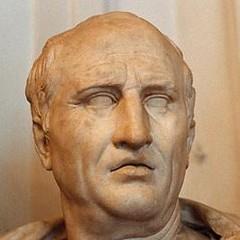
Famous Marcus Tullius Cicero Quotes
“It is difficult to set bounds to the price unless you first set bounds to the wish.”
Source: Select orations
“To wonder at nothing when it happens, to consider nothing impossible before it has come to pass.”
Source: Cicero in twenty-nine volumes
“Democritus maintains that there can be no great poet without a spite of madness.”
“Let arms yield to the toga, let the [victor's] laurel yield to the [orator's] tongue.”
Source: Cicero
“The gods attend to great matters, they neglect small ones.”
Source: Academicae quaestiones
Source: Cicero
“What is impossible by the nature of things is not confirmed by any law.”
“We learn nothing from history except that we learn nothing from history.”
“I remember the very thing that I do not wish to; I cannot forget the things I wish to forget.”
“Peace is so beneficial that the word itself is pleasant to hear.”
“To remain ignorant of history is to remain forever a child”
“To give counsel, as well as to take it, is a feature of true friendship.”
Source: Delphi Complete Works of Cicero (Illustrated)
“There is no being of any race who, if he finds the proper guide, cannot attain to virtue.”
Source: Delphi Complete Works of Cicero (Illustrated)
“A thankful heart is not only the greatest virtue but the parent of all the other virtues.”
“So you see, old age is really not so bad. May you come to know the condition!”
“I wonder that a soothsayer doesn't laugh whenever he sees another soothsayer.”
“Enmity is anger watching the opportunity for revenge.”
Source: M. Tully Cicero's five books of Tusculan disputations, done into Engl. by a gentleman of Christ Church college, Oxford
“Anyone who has got a book collection/library and a garden wants for nothing.”
“Those who do not know history will forever remain children”
“History illumes reality, vitalizes memory, provides guidance in daily life”
“What society does to its children, so will its children do to society.”
“Robbing life of friendship is like robbing the world of the sun.”