“Not to know what happened before means to remain forever a child.”
Filter quotes by topic
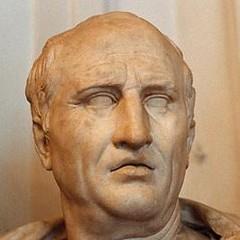
Famous Marcus Tullius Cicero Quotes
Source: Brutus
“To study philosophy is nothing but to prepare one’s self to die.”
“Times are bad. Children no longer obey their parents, and everyone is writing a book.”
“Non nobis solum nati sumus. (Not for ourselves alone are we born.)”
“The life given us, by nature is short; but the memory of a well-spent life is eternal.”
“Our span of life is brief, but is long enough for us to live well and honestly.”
Source: Delphi Complete Works of Cicero (Illustrated)
“Apollo, sacred guard of earth's true core, Whence first came frenzied, wild prophetic word.”
Source: Delphi Complete Works of Cicero (Illustrated)
“A happy life consists in tranquility of mind.”
Source: Delphi Complete Works of Cicero (Illustrated)
“If you would abolish covetousness, you must abolish its mother, profusion.”
“A mental stain can neither be blotted out by the passage of time nor washed away by any waters.”
Source: De Re Publica
Source: Cicero, De Oratore: In Two Volumes
Source: Cicero
“The face is a picture of the mind with the eyes as its interpreter.”
“Few are those who wish to be endowed with virtue rather than to seem so.”
“Time obliterates the fictions of opinion and confirms the decisions of nature.”
“Liberty is rendered even more precious by the recollection of servitude.”
“To be content with what we possess is the greatest and most secure of riches.”
Source: Delphi Complete Works of Cicero (Illustrated)
“To teach is a necessity, to please is a sweetness, to persuade is a victory.”
“Diseases of the soul are more dangerous and more numerous than those of the body.”