Quotessence
Home / Authors / Max Lucado
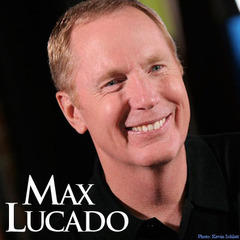
Max Lucado

Max Lucado Quotes

Author

Filter quotes by topic

Famous Max Lucado Quotes

“I think the hardest questions had to do with suffering. It had to do with all of our church members and friends passing through difficult times. Sometimes it's the global climate: tsunamis, earthquakes, radiation. I think these kinds of questions are absolutely the most difficult, yet we need to be ready to respond to them because we have to be able as pastors to walk people through these valleys, these tough times in their lives.”

“There are some people that say I need to be more academic in my teaching, I need to be more disciple developing focus, probably true. But where my heart is, is with people who are just passing through difficult time. I want to put literature in a form that is accessible for people who don't particularly read books.”

“Sovereignty is the term the Bible uses to describe God's perfect control and management of the universe. He preserves and governs every element. He's continually involved with all created things, directing them to act in a way that fulfills his divine purpose. That's why the most stressed-out people are control freaks. They fail at the quest they most pursue. The more they try to control the world, the more they realize they cannot. Life becomes a cycle of anxiety, failure; anxiety, failure; anxiety, failure. We can't take control, because control is not ours to take.”

“The Lord is near! You're not alone. You may feel alone. You may think you're alone. But there's never a moment in which you face life without help. God is near. God repeatedly pledges his proverbial presence to his people. Don't assume God is watching from a distance. Avoid the quicksand that bears the marker "God has left you!" Don't indulge this lie. If you do, your problem will be amplified by a sense of loneliness. It's one thing to face a challenge, but to face it all alone? Isolation creates a downward cycle of fret.”

“Peace happens when people pray. "Cast all your anxiety on him because he cares for you" Casting is an intentional act to relocate an object. Let this "throwing" be your first response to bad news. As you sense anxiety welling up inside you, cast it in the direction of Christ. Do so specifically and immediately. Find a promise of God that fits your problem, and build your prayer around it. These prayers of faith touch the heart of God and activate the angels of heaven. Miracles are set into motion. Your answer may not come overnight, but it will come. And you will overcome.”

“Gratitude is a mindful awareness of the benefits of life. It's the greatest of virtues. Studies have linked the emotion with a variety of positive effects. Grateful people tend to be more empathetic and forgiving of others. People who keep a gratitude journal are more likely to have a positive outlook on life. Grateful individuals demonstrate less envy, materialism, and self-centeredness. Gratitude improves self-esteem and enhances relationships, quality of sleep, and longevity.”

“Be careful what you think, because your thoughts run your life. Do you want to be happy tomorrow? Then sow seeds of happiness today -count blessings, memorize Bible verses, pray, sing hymns, spend time with encouraging people. Do you want to guarantee tomorrow's misery? Then wallow in a mental mud pit of self-pity or guilt or anxiety today assume the worst, beat yourself up, rehearse your regrets, complain to complainers.”

“When you are in the final days of your life, what will you want? Will you hug that college degree in the walnut frame? Will you ask to be carried to the garage so you can sit in your car? Will you find comfort in rereading your financial statement? Of course not. What will matter then will be people. If relationships will matter most then, shouldn't they matter most now?”

“God wants us to know we are saved, for saved people are dangerous people, willing to face off with the world, unafraid of the consequences since they know that, whatever happens, they will have eternal life.”

“God sees us with the eyes of a Father. He sees our defects, errors, and blemishes. But He also sees our value. What did Jesus know that enabled Him to do what He did? Here’s part of the answer: He knew the value of people. He knew that each human being is a treasure. And because He did, people were not a source of stress, but a source of joy.”

“Fear never wrote a symphony or poem, negotiated a peace treaty, or cured a disease. Fear never pulled a family out of poverty or a country out of bigotry. Fear never saved a marriage or a business. Courage did that. Faith did that. People who refused to consult or cower to their timidities did that. But fear itself? Fear herds us into a prison and slams the doors. Wouldn't it be great to walk out?”

“I choose joy... I will invite my God to be the God of circumstance. I will refuse the temptation to be cynical... the tool of the lazy thinker. I will refuse to see people as anything less than human beings, created by God. I will refuse to see any problem as anything less than an opportunity to see God.”

“You want to make a difference in your world? Live a holy life: Be faithful to your spouse. Be the one at the office who refuses to cheat. Be the neighbor who acts neighbors. Be the employee who does the work and doesn't complain. Pay your bills. Do your part and enjoy life. Don't speak one message and live another. People are watching the way we act more than they are listening to what we say.”

“When we look at the love of Christ, we make a wonderful discovery. Love is more a decision than an emotion! Christ-like love applauds good behavior. At the same time Christ-like love refuses to endorse misbehavior. Jesus loved His apostles, but He wasn't silent when they were faithless. Jesus loved the people in the temple, but He didn't sit still when they were hypocritical.”

“Our kids were God's kids first... We tend to forget this fact, regarding our children as "our" children, as though we have the final say in their health and welfare. We don't. All people are God's people, including the small people who sit at our tables.”