Quotessence
Home / Authors / Michael Kenna
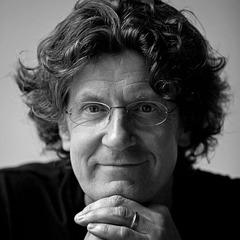
Michael Kenna

Michael Kenna Quotes

Photographer

Filter quotes by topic

Famous Michael Kenna Quotes

“Sometimes the most interesting visual phenomena occur when you least expect it. Other times, you think youre getting something amazing and the photographs turn out to be boring and predictable. So I think thats why, a long time ago, I consciously tried to let go of artists angst, and instead just hope for the best and enjoy it. I love the journey as much as the destination. If I wasnt a photographer, Id still be a traveler.”

“In my photographic work I'm generally attracted to places that contain memories, history, atmospheres and stories. I'm interested in the places where people have lived, worked and played. I look for traces of the past, visual fingerprints, evidence of activities - they fire my imagination and connect into my own personal experiences. Using the analogy of the theater, I would say that I like to photograph the empty stage, before or after the performance, even in between acts. I love the atmosphere of anticipation, the feeling in the air that events have happened, or will happen soon.”

“Approaching subject matter to photograph is like meeting a person and beginning a conversation. How does one know ahead of time where that will lead, what the subject matter will be, how intimate it will become, how long the potential relationship will last? Certainly, a sense of curiosity and a willingness to be patient to allow the subject matter to reveal itself are important elements in this process.”

“I believe that every photographer, every artist, should choose materials and equipment based on their own vision. I don't believe that non-digital is necessarily better than digital, or the reverse for that matter. They are just different, and it is my preference and choice to remain with the traditional silver process, at least for the time being.”

“Of course, the whole photographic process has been made much faster, cleaner and far more accessible to people by digital innovations, which is really great. Everybody now has a camera, often as part of our phone, and most of these cameras require little to no technical training. An enormous variety of apps also enable us to take short cuts to finished images. We hardly need to even think anymore.”

“Time is of the essence, particularly if we're sending images out on social media. The reality is that the majority of images are only viewed for a few seconds, often on a phone or computer. There are so many images freely available that it takes a lot of will power to concentrate and prolong the gaze on one picture at the expense of the thousands of others waiting to be viewed!”

“Everybody now has a camera, whether it is a professional instrument or just part of a phone. Landscape photography is a pastime enjoyed by more and more. Getting it right is not an issue. It is difficult to make a mistake with the sophisticated technology we now have. Making a personal and creative image is a far greater challenge.”

“The photographer Ruth Bernhard used to tell me that this is like asking somebody how they evolved their signature. It is not something I've ever worked on consciously. I think style is just the end result of personal experience. It would be problematic for me to photograph in another style. I'm drawn to places and subject matter that have personal connections for me and I photograph in a way that seems right. Where does it all come from, who knows?”

“I do have strong convictions and political opinions, but I don't think it's necessary to imbue my photographic work with them. I use photography as a vessel for visual material to flow through, to encourage conversation with the viewer. I try to present a catalyst and invite viewers to tell their own stories.”

“I find that when one has worked long enough, technical know-how becomes almost irrelevant. In photography, it's not difficult to reach a technical level where you don't need to think about the technique any more. I think there is far too much literature and far too much emphasis upon the techniques of photography. The make of camera and type of film we happen to use has little bearing on the results.”

“It's possible to think of photography as an act of editing, a matter of where you put your rectangle pull it out or take it away. Sometimes people ask me about films, cameras and development times in order to find out how to do landscape photography. The first thing I do in landscape photography is go out there and talk to the land - form a relationship, ask permission, it's not about going out there like some paparazzi with a Leica and snapping a few pictures, before running off to print them.”

“The first time, I usually skim off the outer layer and end up with photographs that are fairly obvious. The second time, I have to look a little deeper. The images get more interesting. The third time it is even more challenging and on each subsequent occasion, the images should get stronger, but it takes more effort to get them.”

“Getting photographs is not the most important thing. For me it's the act of photographing. It's enlightening, therapeutic and satisfying, because the very process forces me to connect with the world. When you make four-hour exposures in the middle of the night, you inevitably slow down and begin to observe and appreciate more what's going on around you. In our fast-paced, modern world, it's a luxury to be able to watch the stars move across the sky.”