Quotessence
Home / Authors / Michel de Certeau Books
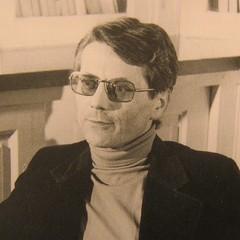
Michel de Certeau

Michel de Certeau Books

Author

Arts de Faire

A source page for quotes linked to Michel de Certeau.
0 quotes

Related Quotes

“Their story begins on ground level, with footsteps. They are myriad, but do not compose a series. They cannot be counted because each unit has a qualitative character: a style of tactile apprehension and kinesthetic appropriation. Their swarming mass is an innumerable collection of singularities. Their intertwined paths give their shape to spaces. They weave places together. In that respect, pedestrian movements form one of these 'real systems whose existence in fact makes up the city.' They are not localized; it is rather they that spatialize. They are no more inserted within a container than those Chinese character speakers sketch out on their hands with their fingertips.”

“On the elementary level it has in effect a threefold “uttering” function: it is a process of appropriation of the topographic system by the pedestrian (just as the speaker appropriates and assumes language); it is a spatial realization of the site (just as the act of speaking is a sonic realization of language); lastly, it implies relationships among distinct positions, i.e. pragmatic “contracts” in the form of movements (just as verbal utterance is “allocution”, “places the others” before the speaker, and sets up contracts between fellow speakers. A first definition of walking thus seems to be a space of uttering.”

“To walk is to lack a place. It is the indefinite process of being absent and in search of a proper. The moving about that the city mutliplies and concentrates makes the city itself an immense social experience of lacking a place -- an experience that is, to be sure, broken up into countless tiny deportations (displacements and walks), compensated for by the relationships and intersections of these exoduses that intertwine and create an urban fabric, and placed under the sign of what ought to be, ultimately, the place but is only a name, the City...a universe of rented spaces haunted by a nowhere or by dreamed-of places.”

“The sick man is taken away by the institution that takes charge not of the individual, but of his illness, an isolated object transformed or eliminated by technicians devoted to the defense of health the way others are attached to the defense of law and order or tidiness.”

“First, if it is true that a spatial order organizes an ensemble of possibilities (e.g., by a place in which one can move) and interdictions (e.g., by a wall that prevents one from going further), than the walked actualizes some of these possibilities. In that way, he makes them exist as well as emerge. But he also moves them about and he invents others, since the crossing, drifting away, or improvisation of walking privilege, transform, or abandon spatial elements.”

“It is as though the practices organizing a bustling city were characterized by [city practitioners', everyday citizens'] blindness. The neworks of these moving, intersecting writings compose a manifold story that has neither author nor spectator, shaped out of fragments of trajectories and alterations of spaces: in relation to representations, it remains daily and indefinitely other.”

“Places are fragmentary and inward-turning histories, pasts that others are not allowed to read, accumulated times that can be unfolded but like stories held in reserve, remaining in an enigmatic state, symbolizations encysted in the pain or pleasure of he body. 'I feel good here': the well-being under-expressed in the language it appears in like a fleeting glimmer is a spatial practice.”

“Political organizations have slowly substituted themselves for the Churches as the places of believing practices, but for this very reason, they seem to have been haunted by the return of a very ancient (preChristian) and very “pagan” alliance between power and religion. It is as though now that religion has ceased to be an autonomous power (the “power of religion,” people used to say), politics has once again become religious.”

“The sick man must follow his illness to the place where it is treated... He is set aside in one of the technical and secret zones (hospitals, prisons, refuse dumps) which relieve the living of everything that might hinder the chain of production and consumption, and which repair and select what can be sent back up to the surface of progress.”

“A place (lieu) is the order (of whatever kind) in accord with which elements are distributed in relationships of coexistence. It thus excludes the possibility of two thing being in the same location (place). The law of the 'proper' rules in the place: the elements taken into consideration are beside one another, each situated in its own 'proper' and distinct location, a location it defines. A place is thus an instantaneous configuration of positions. It implies an indication of stability.”

“They become liberated spaces that can be occupied. A rich indetermination gives them, by means of a semantic rarefaction, the function of articulating a second, poetic geography on top of the geography of the literal, forbidden or permitted meaning. They insinuate other routes into the functionalist and historical order of movement. Walking follows them: 'I fill this great empty space with a beautiful name.'”