Quotessence
Home / Authors / Orson Scott Card
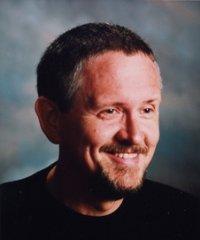
Orson Scott Card

Orson Scott Card Quotes

Novelist

Filter quotes by topic

Famous Orson Scott Card Quotes

“You grow a whole lot more as a writer by getting old stories out of the house and letting new ones come in and live with you until they grow up and are ready to go. Don't let the old ones stay there and grow fat and cranky and eat all the food out of the refrigerator. You have dozens of generations of stories inside you, but the only way to make room for the new ones is to write the old ones and mail them off.”

“In a way, being a Mormon prepares you to deal with science fiction, because we live simultaneously in two very different cultures. The result is that we all know what it's like to be strangers in a strange land. It's not just a coincidence that there are so many effective Mormon science fiction writers. We don't regard being an alien as an alien experience. But it also means that we're not surprised when people don't understand what we're saying or what we think.”

“...You believe that the kind of story you want to tell might be best received by the science fiction and fantasy audience. I hope you're right, because in many ways this is the best audience in the world to write for. They're open-minded and intelligent. They want to think as well as feel, understand as well as dream. Above all, they want to be led into places that no one has ever visited before. It's a privilege to tell stories to these readers, and an honour when they applaud the tale you tell.”

“If you give orders and explain nothing, you might get obedience, but you'll get no creativity. If you tell them your purpose, then when your original plan is shown to be faulty, they'll find another way to achieve your goal. Explaining to your men doesn't weaken their respect for you, it proves your respect for them.”

“In the moment when I truly understand my enemy, understand him well enough to defeat him, then in that very moment I also love him. I think it’s impossible to really understand somebody, what they want, what they believe, and not love them the way they love themselves. And then, in that very moment when I love them.... I destroy them.”

“Miro, I'm so sorry. I always felt such pity for you humans because you could only think of one thing at a time and your memories were so imperfect and . . . now I realize that just getting through the day without killing somebody can be an achievement." It gets to be a habit. Most of us manage to keep our body count quite low. It's the neighborly way to live.”

“As a species, we have evolved to survive. And the way we do it is by straining and straining and, at last, every few generaitons, giving brith to genius. The one who invents the wheel. And light. And flight. The one who builds a city, a nation, an empire...I'll put it bluntly. Human beings are free excpet when humanity needs them. Maybe humanity needs you. To do something. Maybe humanity needs me - to find out what you're good for.”

“With false names, on the right nets, they could be anybody. Old men, middle-aged women, anybody, as long as they were careful about the way they wrote. All that anyone would see were their words, their ideas. Every citizen started equal, on the nets.”

“That was interesting, to find that it wasn't hunger that caused children to become bullies on the street. The bulliness was already in the child, and whatever the stakes were, they would find a way to act as they needed to act. … Intelligence and education, which all these children had, apparently didn't make any important difference in human nature.”

“Like running the hurdles. Work so hard, jump over every one, fast, high enough but no higher, because you can't afford to hang in the air. And then, when the race is over, you're dripping with sweat, either they beat you or you beat them ... and then a couple of guys come out and move the hurdles out of the way. Turns out they were nothing. All that work to jump over them, but now they're gone.”

“I learned to separate the story from the writing, probably the most important thing that any storyteller has to learn-that there are a thousand right ways to tell a story, and ten million wrong ones, and you're a lot more likely to find one of the latter than the former your first time through the tale.”

“There was no name for the disease; his body had gone insane, forgotten the blueprint by which human beings were built. Even now the disease still lives on in his children. Not in our bodies, but in our souls. We exist where normal human children are expected to be; we're even shaped the same. But each of us in our own way has been replaced by an imitation child, shaped out of a twisted, fetid, lipidous goiter that grew out of Father's soul.”