Quotessence
Home / Authors / Pierre-Joseph Proudhon Books
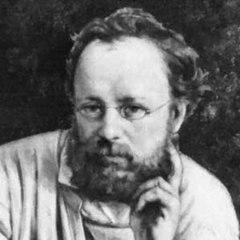
Pierre-Joseph Proudhon

Pierre-Joseph Proudhon Books

Author

What is Property?

A source page for quotes linked to Pierre-Joseph Proudhon.
0 quotes

Related Quotes

“What, I ask, has the fixed and solid nature of the earth to do with the right of appropriation? (...) But the creator of the land does not sell it: he gives it; and, in giving it, he is no respecter of persons. Why, then, are some of his children regarded as legitimate, while others are treated as bastards? If the equality of shares was an original right, why is the inequality of conditions a posthumous right?”

“The purchaser draws boundaries, fences himself in, and says, “This is mine; each one by himself, each one for himself.” Here, then, is a piece of land upon which, henceforth, no one has a right to step, save the proprietor and his friends; which can benefit nobody, save the proprietor and his servants. Let these sales multiply, and soon the people — who have been neither able nor willing to sell, and who have received none of the proceeds of the sale — will have nowhere to rest, no place of shelter, no ground to till. They will die of hunger at the proprietor’s door, on the edge of that property which was their birthright; and the proprietor, watching them die, will exclaim, “So perish idlers and vagrants!”

“I protest that in criticizing property, or rather the whole mass of institutions of which property is the pivot, I have never intended either to attack individual rights, based upon existing laws, or to contest the legitimacy of acquired possessions, or to demand an arbitrary division of goods, or to place any obstacle to the free and regular acquisition, by sale and exchange, of property, or even to forbid or suppress, by sovereign degree, ground rent and interest on capital. I think that all these manifestations of human activity should remain free and voluntary for all: I ask for them no modifications, restrictions or suppressions, other than those which result naturally and of necessity from the universalisation of the principle of reciprocity which I propose.”

“Descartes, reasoning unconsciously according to the prejudices of the old metaphysics, and seeking an unshakable foundation for philosophy, an aliquid inconcussum, as it was said, imagined that he had found it in the self, and posited this principle: I think, therefore I am; Cogito, ergo sum. Descartes did not realize that his base, supposedly immobile, was mobility itself. Cogito, I think—these words express movement; and the conclusion, according to the original sense of the verb to be, sum, ειναι, ou חיח, (haïah), is still movement. He should have said: Moveor, ergo fio, I move, therefore I become!”

“Ontology, as a science of substances and causes, is impossible; We know beings only by their relations: however, as it is necessary, for the needs of science, to distinguish in each of its aspects this great whole that we call the UNIVERSE, we have given special names to things known and unknown, to the visible and invisible, to those that we know and that we believe.”

“...if there be some points which correspondence can never settle, but which can be made clear by conversation in two minutes, at other times just the opposite is the case: an objection clearly stated in writing, a doubt well expressed, which elicits a direct and positive reply, helps things along more than ten hours of oral intercourse!”

“Does it seem to you impossible to imagine anything more inextricable than the social contract, when you think of the frightful number of relations that it must regulate -- something like squaring the circle, or finding perpetual motion? That is the reason why, wearied of the struggle, you fall back on absolutism and force.”

“Communism--the first expression of the social nature--is the first term of social development--the thesis; property, the reverse of communism, is the second term--the antithesis. When we have discovered the third term, the synthesis, we shall have the required solution.”

“Tormented by conflicting feelings, I appealed to reason ; and it is reason which, amid so many dogmatic contradictions, now forces the hypothesis upon me. A priori dogmatism, applying itself to God, has proved fruitless: who knows whither the hypothesis, in its turn, will lead us? I will explain therefore how, studying in the silence of my heart, and far from every human consideration, the mystery of social revolutions, God, the great unknown, has become for me an hypothesis, I mean a necessary dialectical tool.”

“To be governed is to be watched, inspected, spied upon, directed, law-ridden, regulated, penned up, indoctrinated, preached at, checked, appraised, seized, censured, commanded, by beings who have neither title, nor knowledge, nor virtue. To be governed is to have every operation, every transaction, every movement noted, registered, counted, rated, stamped, measured, numbered, assessed, licensed, refused, authorized, indorsed, admonished, prevented, reformed, redressed, corrected.”