Quotessence
Home / Authors / Ralph Waldo Emerson
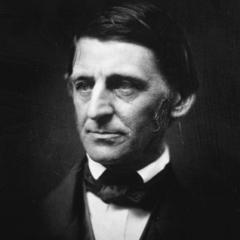
Ralph Waldo Emerson

Ralph Waldo Emerson Quotes

Essayist

Filter quotes by topic

Famous Ralph Waldo Emerson Quotes

“Those who are esteemed umpires of taste, are often persons who have acquired some knowledge of admired pictures or sculptures, and have an inclination for whatever is elegant; but if you inquire whether they are beautiful souls, and whether their own acts are like fair pictures, you learn that they are selfish and sensual. Their cultivation is local, as if you should rub a log of dry wood in one spot to produce fire, all the rest remaining cold. Their knowledge of the fine arts is some study of rules and particulars, or some limited judgment of color or form which is exercised for amusement or for show. It is a proof of the shallowness of the doctrine of beauty, as it lies in the minds of our amateurs, that men seem to have lost the perception of the instant dependence of form upon soul.”

“The world thus exists to the soul to satisfy the desire of beauty. This element I call an ultimate end. No reason can be asked or given why the soul seeks beauty. Beauty, in its largest and profoundest sense, is one expression for the universe. God is the all-fair. Truth, and goodness, and beauty, are but different faces of the same All. But beauty in nature is not ultimate. It is the herald of inward and eternal beauty, and is not alone a solid and satisfactory good. It must stand as a part, and not as yet the last or highest expression of the final cause of Nature.”

“Things are pretty, graceful, rich, elegant, handsome, but until they speak to the imagination, not yet beautiful. This is the reason why beauty is still escaping out of all analysis. It is not yet possessed, it cannot be handled. …It instantly deserts possession, and flies to an object in the horizon. If I could put my hand on the north star, would it be as beautiful? The sea is lovely, but when we bathe in it, the beauty forsakes all the near water. For the imagination and senses cannot be gratified at the same time.”

“Flowers and fruits are always fit presents; flowers, because they are a proud assertion that a ray of beauty outvalues all the utilities of the world. These gay natures contrast with the somewhat stern countenance of ordinary nature: they are like music heard out of a work-house. Nature does not cocker us; we are children, not pets; she is not fond; everything is dealt to us without fear or favor, after severe universal laws. Yet these delicate flowers look like the frolic and interference of love and beauty. Men use to tell us that we love flattery even though we are not deceived by it, because it shows that we are of importance enough to be courted. Something like that pleasure, the flowers give us: what am I to whom these sweet hints are addressed?”

“Nothing is arbitrary, nothing is insulated in beauty. It depends forever on the necessary and the useful. The plumage of the bird, the mimic plumage of the insect, has a reason for its rich colors in the constitution of the animal. Fitness is so inseparable an accompaniment of beauty, that it, has been taken for it.”

“Wherever snow falls, or water flows, or birds fly, wherever day and night meet in twilight, wherever the blue heaven is hung by clouds, or sown with stars, wherever are forms with transparent boundaries, wherever are outlets into celestial space, wherever is danger, and awe, and love, there is Beauty, plenteous as rain, shed for thee, and though thou shouldest walk the world over, thou shalt not be able to find a condition inopportune or ignoble.”

“To be yourself in a world that is constantly trying to make you something else is the greatest accomplishment.”

“Though we travel the world over to find the beautiful, we must carry it with us or we find it not.”