Quotessence
Home / Authors / Shane Black Books
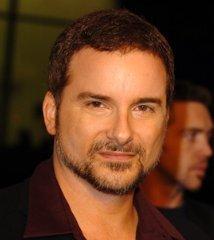
Shane Black

Shane Black Books

Screenwriter

No books found for this author.

Related Quotes

“Sometimes I'll have a scene that strikes me, I just feel like writing a scene, a mini-story that seems like it might lead somewhere. But that is such a tentative, fishing-hook way to go about it that these days I've found it's easier to kind of at least have your concept and start attaching things to a skeleton. So I try to find the armature, the kind of backbone of it first that you can start to hang those scenes on.”

“Going to UCLA, as far as I'm concerned, afforded me two things. One was the advantage of meeting friends and getting to know a group of guys I hung out with, was chummy with. All of us eventually had success with film. Making films, cutting our own little movies together, 3 in the morning going out and shooting stuff, finding gels that people had thrown away, making our own lights. It was like a frat house for film geeks, the Pad O' Guys. That's what being at UCLA afforded me.”

“You have to be in California in order to write or direct movies. People say, "Oh, I'm gonna do it from Pittsburgh. I'm just gonna deliver scripts or fly out, like, once, then fly back." You have to make a full commitment. You have to actually get on a plane, come to L.A., rent a place, and live there. And that's how you forge your career. Not just sort of haphazardly. Once you've got a few hits under your belt, assuming you do, then go back and move away and correspond with the studio.”

“I felt that in a way, I hated the writing process so much. It's excruciating, as I'm sure you know, and so lonely being in the solitary prison of my office. A lot of brain-wracking. It just felt like it was so much hard work, and I would send it away. I felt as though I was doing all of this heavy lifting, this weightlifting, every day, all day. It was excruciating. And I stayed skinny, and someone else got all the muscles. I was eating all my vegetables, but then I wouldn't get dessert. To me, directing is the dessert.”

“I think the most important thing is to, without belligerence, stand up for what want. Argue compellingly if someone tries to change your script. Yeah, legally they can if they want to. But rather than give up, as some of the writers do, and just wail about how your script got rewritten, it's much more difficult - but well within the realm of possibility - to argue very sincerely, calmly, and reasonably from your point of view, such that the director or the producer might decide, "All right, let's do it that way."”

“You can win as long as you chose your battles. You can win more arguments then you might think as a writer, even though you legally have no recourse, and your script can get muddied and altered in any way possible. You can use reason, logic, and passion to argue persuasively for a case in your favor. So what I've learned is to just basically not buckle - not be belligerent, not be angry, not throw fits, but just not buckle.”

“When you are making a lot of money people forget you are trying to be creative and they picture you laughing all the way to the bank ... especially with an action script, automatically it gets boo-hooed as being worthless. It was very difficult to hear that sort of thing and I lost a good many friends over money issues because they didn't have money or their scripts weren't selling and mine were.”

“It really started after The Long Kiss Goodnight sold for just a sinful amount of money. People were angry that I took the money. People offer you $4 million for a script - what are you going to say? "No, I'd rather sell it for $100,000"? But it engendered so much anger, I lost friends over it. And no one talked about the creative content of anything I did any more. They all just assumed I was this guy with a formula, a hack formula.”

“What I've learned being a writer is to just basically not buckle - not be belligerent, not be angry, not throw fits. Though there are times where you have to stand up and yell. If I've got to throw a chair, I'll throw a chair. There was a meekness about me when I started, and I think the meekness has sort of evaporated. I hope that it's left behind a more passionate person, not a meaner person. So I guess that's what I've learned.”

“Here's what I didn't know when I was starting out that I now know…I thought when you were starting out it was really hard to write because you hadn't broken in yet, you hadn't really hit your stride yet. What I found out paradoxically is that the next script you write doesn't get easier because you wrote one before…each one gets harder by a factor of 10.”

“I do think the challenge, in a way for me, is to write a narrative film and when you finish watching it you feel like it's a collage. You tell the narrative, you tell the story, but you feel like you've created this tapestry. But it also has a shape, a story. So I think there's a middle ground that I try to strike... away from where everyone else seems ready to go, which is, setup, payoff. You know, He's afraid of water, oh, and at the end he's swimming in water - oh, my God. I hate that stuff.”