Quotessence
Home / Authors / Sherwood Anderson
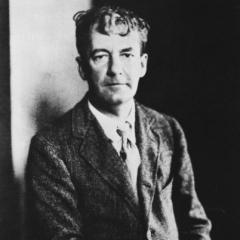
Sherwood Anderson

Sherwood Anderson Quotes

Novelist

Filter quotes by topic

Famous Sherwood Anderson Quotes

“Father was made for romance. For him there was no such thing as a fact.”

“The father spent his time talking and thinking of religion. He proclaimed himself an agnostic and was so absorbed in destroying the ideas of God that had crept into the minds of his neighbors that he never saw God manifesting himself in the little child that, half forgotten, lived here and there on the bounty of her dead mother's relatives.”

“It may be true of all relationships, not only between fathers and sons, but between men and women. Nothing seems fixed. Everything is always changing. We seem to have very little control over our emotional life.”

“The fruition of the year had come and the night should have been fine with a moon in the sky and the crisp sharp promise of frost in the air, but it wasn't that way. It rained and little puddles of water shone under the street lamps on Main Street. In the woods in the darkness beyond the Fair Ground water dripped from the black trees.”

“From the place by the railing at the edge of the tracks on the summer evening I return across the city to my own room. I am vividly aware of my own life that escaped the winter on the boat. How many such lives I have lived. Then I only made a dollar and a half a day and now I sometimes make more than that in a few minutes. How wonderful to be able to write words. ... Again I begin the endless game of reconstructing my own life, jerking it out of the shell that dies, striving to breathe into it beauty and meaning. ... I wonder why my life, why all lives, are not more beautiful.”

“Her thoughts ran away to her girlhood with its passionate longing for adventure and she remembered the arms of men that had held her when adventure was a possible thing for her. Particularly she remembered one who had for a time been her lover and who in the moment of his passion had cried out to her more than a hundred times, saying the same words madly over and over: "You dear! You dear! You lovely dear!" The words, she thought, expressed something she would have liked to have achieved in life.”

“From being quite sure of himself and his future he becomes not at all sure. If he be an imaginative boy a door is torn open and for the first time he looks out upon the world, seeing, as though they marched in procession before him, the countless figures of men who before his time have come out of nothingness into the world, lived their lives and again disappeared into nothingness. The sadness of sophistication has come to the boy.”

“On the trees are only a few gnarled apples that the pickers have rejected. They look like the knuckles of Doctor Reefy's hands. One nibbles at them and they are delicious. Into a little round place at the side of the apple has been gathered all its sweetness. One runs from tree to tree over the frosted ground picking the gnarled, twisted apples and filling his pockets with them. Only the few know the sweetness of the twisted apples.”

“Love is like a wind stirring the grass beneath trees on a black night,' he had said. 'You must not try to make love definite. It is the divine accident of life. If you try to be definite and sure about it and to live beneath the trees, where soft night winds blow, the long hot day of disappointment comes swiftly and the gritty dust from passing wagons gathers upon lips inflamed and made tender by kisses.”

“I know about her, although she has never crossed my path," he said softly. "I know about her struggles and her defeats. It is because of her defeats that she is to me the lovely one. Out of her defeats she has been born a new quality in woman. I have a name for it. I call it Tandy. I made up the name when I was a true dreamer and before my body became vile. It is the quality of being strong to be loved. It is something men need from women and that they do not get.”

“As time passed and he grew to know people better, he began to think of himself as an extraordinary man, one set apart from his fellows. He wanted terribly to make his life a thing of great importance, and as he looked about at his fellow men and saw how like clods they lived it seemed to him that he could not bear to become also such a clod.”

“I go about looking at horses and cattle. They eat grass, make love, work when they have to, bear their young. I am sick with envy of them.”