Quotessence
Home / Authors / Sherwood Anderson Books
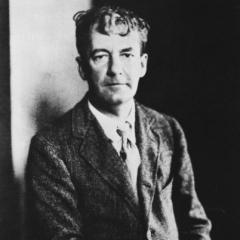
Sherwood Anderson

Sherwood Anderson Books

Novelist

Winesburg, Ohio

A source page for quotes linked to Sherwood Anderson.
0 quotes

Poor White

A source page for quotes linked to Sherwood Anderson.

0 quotes

A new testament

A source page for quotes linked to Sherwood Anderson.

0 quotes

Short Shorts

A source page for quotes linked to Sherwood Anderson.

0 quotes

THE

A source page for quotes linked to Sherwood Anderson.

0 quotes

Related Quotes

“But these notes make no pretense of being a record of fact. That isn't their object. They are merely notes of impressions, a record of vagrant thoughts, hopes, ideas that have floated through the mind of one present-day American. It is likely that I have not, and will not, put into them one truth, measuring by the ordinary standards of truth. It is my aim to be true to the essence of things. That's what I'm after.”

“In principio, quando il mondo era giovane, c'erano molti pensieri ma non esisteva nulla si simile a una verità. Le verità le fabbricò l'uomo, e ogni verità fu composta da un grande numero di pensieri imprecisi. Così in tutto il mondo ci furono verità. Ed erano meravigliose. Il vecchio aveva elencato nel suo libro centinaia di verità. Io non cercherò di riferirvele tutte. C'erano la verità della verginità e la verità della passione, la verità della ricchezza e quella della povertà, della modestia e dello sperpero, dell'indifferenza e dell'entusiasmo. Centinaia e centinaia erano le verità, e tutte meravigliose. Poi veniva la gente. Ognuno, appena compariva, si gettava su una delle verità e se ne impadroniva; alcuni, molto forti, arrivavano a possederne una dozzina contemporaneamente. Erano le verità a trasformare la gente in caricature grottesche. Il vecchio aveva una sua complessa teoria a questo proposito. Era sua opinione che quando qualcuno s'impadroniva di una verità, e diceva che quella era la sua verità e si sforzava di vivere secondo essa, allora costui si trasformava in una caricatura, e la verità che abbracciava in una menzogna.”

“There is a time in the life of every boy when he for the first time takes the backward view of life. Perhaps that is the moment when he crosses the line into manhood. The boy is walking through the street of his town. He is thinking of the future and of the figure he will cut in the world. Ambitions and regrets awake within him. Suddenly something happens; he stops under a tree and waits as for a voice calling his name. Ghosts of old things creep into his consciousness; the voices outside of himself whisper a message concerning the limitations of life. From being quite sure of himself and his future he becomes not at all sure. If he be an imaginative boy a door is torn open and for the first time he looks out upon the world, seeing, as though they marched in procession before him, the countless figures of men who before his time have come out of nothingness into the world, lived their lives and again disappeared into nothingness. The sadness of sophistication has come to the boy. With a little gasp he sees himself as merely a leaf blown by the wind through the streets of his village. He knows that in spite of all the stout talk of his fellows he must live and die in uncertainty, a thing blown by the winds, a thing destined like corn to wilt in the sun.”

“Doctor Parcival began to plead with George Willard. 'You must pay attention to me,' he urged. 'If something happens you will be able to write the book that I may never get written. The idea is very simple, so simple that if you are not careful you will forget it. It is this - that everyone in the world is Christ and they are all crucified. That's what I want to say. Don't you forget that. Whatever happens, don't you dare let yourself forget that.”

“The object of art is not to make salable pictures. It is to save yourself. The fools who write articles about me think that one morning I suddenly decided to write and began to produce masterpieces. There is no special trick about writing or painting either. I wrote constantly for 15 years before I produced anything with any solidity to it.... The thing of course, is to make yourself alive. Most people remain all of their lives in a stupor. The point of being an artist is that you may live.... You won't arrive. It is an endless search.”

“The fools who write articles about me think that one morning I suddenly decided to write and began to produce masterpieces. There is no special trick about writing, or painting either. I wrote constantly for 15 years before I produced anything with any solidity to it.”

“I am constantly amazed at how little painters know about painting, writers about writing, merchants about business, manufacturers about manufacturing. Most men just drift.”

“There is a kind of shrewdness many men have that enables them to get money. It is the shrewdness of the fox after the chicken. A low order of mentality often goes with it.”

“Draw things that have some meaning to you. An apple, what does it mean? The object drawn doesn't matter so much. It's what you feel about it, what it means to you. A masterpiece could be made of a dish of turnips.”

“Next to occupation is the building up of good taste. That is difficult, slow work. Few achieve it. It means all the difference in the world in the end.”

“You must not become a mere peddler of words. The thing to learn is to know what people are thinking about, not what they say.”

“Those who are to follow the arts should have a training in what is called poverty. Given a comfortable middle-class start in life, the artist is almost sure to end up by becoming a bellyacher, constantly complaining because the public does not rush forward at once to proclaim him.”

“If our family was poor, of what did our poverty consist? If our clothes were torn the torn places only let in the sun and wind. In the winter we had no overcoats, but that only meant we ran rather than loitered.”

“There is a note that comes into the human voice by which you may know real weariness. It comes when one has been trying with all his heart and soul to think his way along some difficult road of thought. Of a sudden he finds himself unable to go on. Something within him stops. A tiny explosion takes place. He bursts into words and talks, perhaps foolishly. Little side currents of his nature he didn't know were there run out and get themselves expressed. It is at such times that a man boasts, uses big words, makes a fool of himself in general.”

“In Middle America men are awakening. Like awkward and untrained boys we begin to turn toward maturity and with our awakening we hunger for song. But in our towns and fields there are few memory haunted places. Here we stand in roaring city streets, on steaming coal heaps, in the shadow of factories from which come only the grinding roar of machines. We do not sing but mutter in the darkness. Our lips are cracked with dust and with the heat of furnaces. We but mutter and feel our way toward the promise of song.”